
What should a delivery drone look like?
[[{“value”:”
What should a delivery drone look like?
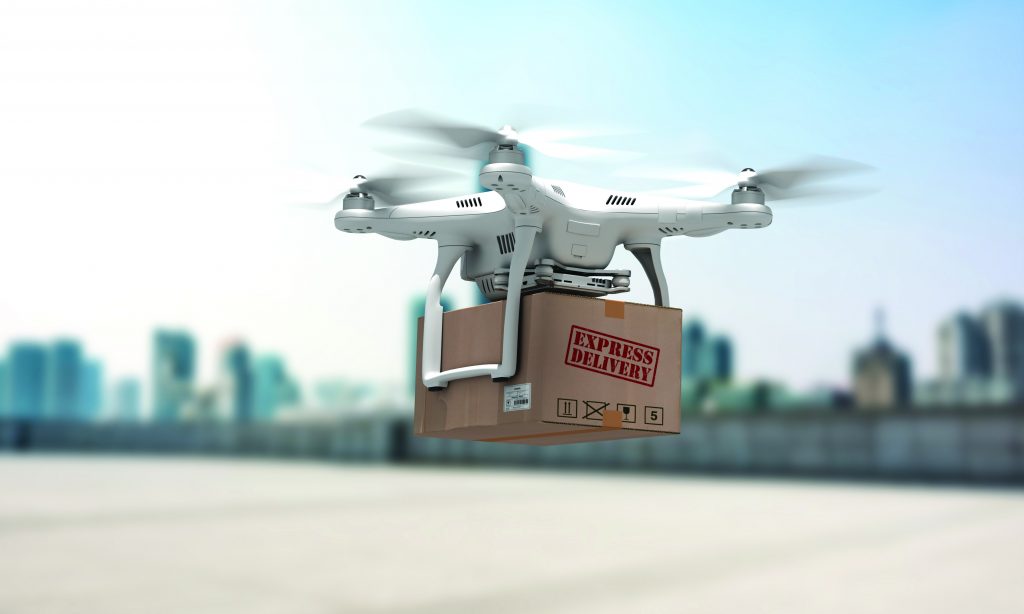
Imagine sitting in a park and ordering food, but instead of it arriving by car or bike, it is delivered by a drone. How would you feel? For his PhD at Eindhoven University of Technology in the Netherlands, Dr Shiva Nischal Lingam studied drone deliveries, with the goal of improving the experience for both recipients and bystanders in public places.
Talk like a research and development engineer
Defibrillator – a medical device used to restart a patient’s heart
Drone – an aircraft or small flying device that does not have a pilot but is controlled remotely
User-centred design – an approach to designing technology in which the people who will use or be affected by the technology have a say in how it is designed
Have you ever received a delivery from a drone? If not, it might not be long until you do, as drones are increasingly being used to deliver food and medical supplies. Manna Air Delivery, for example, has made over 250,000 flights in Ireland, Finland and the US since 2020, partnering with companies such as Deliveroo to deliver food, clothing and pharmaceuticals to customers. Zipline has been delivering life-saving medicines and blood supplies to hospitals across Rwanda since 2018.
As a PhD researcher at Eindhoven University of Technology, Dr Shiva Nischal Lingam studied the challenges of using drones to make deliveries in public spaces. He hopes his work will help policymakers develop guidelines that will reduce the uncertainties about drone deliveries for people and the environment, and improve the process for everyone involved.
Why use drones for deliveries?
“Drones are already being used to deliver everyday items such as groceries, takeaway food and online shopping orders, as well as urgent supplies such as medicines and medical equipment,” says Nischal. “They can be used to deliver items in emergency situations, such as defibrillators to heart attack patients or rescue equipment to hard-to-reach, disaster-affected areas.”
Because they can fly directly to a location, drones are a fast and efficient way to deliver items. Drone deliveries can be much quicker for remote and rural areas that would take a while to reach via road. They are beneficial in cities because as well as being able to avoid traffic, they also reduce the number of delivery vehicles on roads and so reduce congestion and carbon emissions.
Despite these advantages, many people feel uncertain about drone deliveries. Concerns often revolve around drone noise, the unpredictability of drone movements, and their environmental impact. To manage this, Nischal investigated how people interpret and react to drones in public spaces, and asked how they think drones should be designed to improve human-drone interactions.
Why did Nischal take a user-centred approach?
“User-centred design means understanding users’ needs, behaviours and concerns first, then designing solutions to address them,” says Nischal. “We chose to take this approach because if drones are only designed for performance or efficiency, they may still cause confusion, discomfort or safety concerns for people around them.”
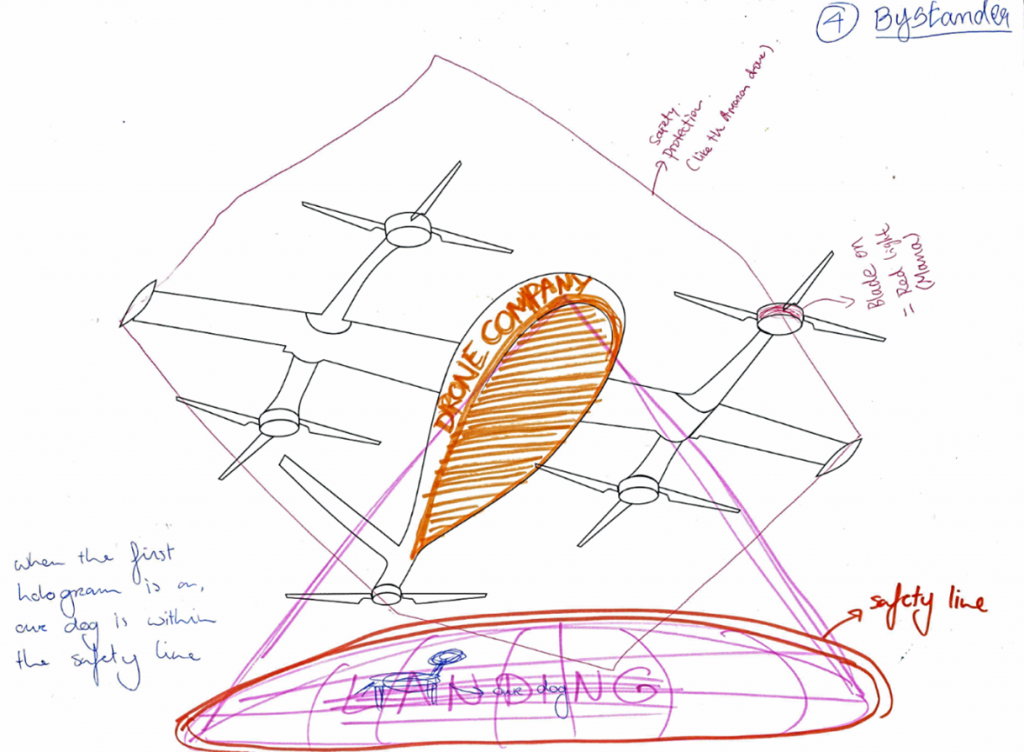
In Nischal’s user-centred design project, he recruited participants to take part in focus groups. Participants were asked to imagine an interaction with a delivery drone in a public space, such as a park, either as the recipient of the delivery or as a bystander who is just watching. Nischal asked participants what their reaction to the drone would be, what factors might make them feel uncertain, and what information they would need to feel at ease. In their groups, participants drew storyboards to illustrate the scenes they expected during a human-drone interaction in a public space. They also drew sketches of drones to highlight design features they thought would help drones communicate with members of the public.
What did the study reveal?
A key finding from the focus groups was that both recipients and bystanders felt uncertain about the intentions of a drone, such as whether it was about to land, move closer, drop a package or leave. “Recipients felt uncertain about whether the drone was ‘their’ drone, while bystanders felt uncertain about the purpose of the drone,” says Nischal. “Such feelings can lead to a lack of clarity, making people feel confused, cautious or even unsafe.”
Reference
https://doi.org/10.33424/FUTURUM704
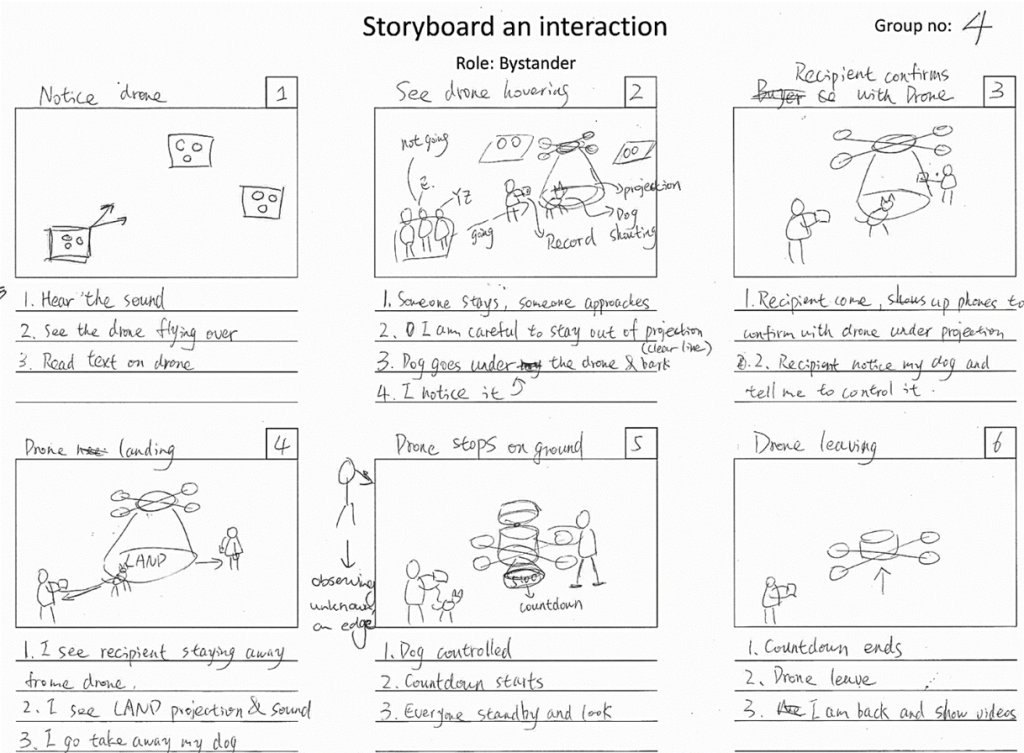


Bystander reactions were varied, ranging from curiosity and attempts to engage with the drone, to disengagement and moving away. “This can lead to unpredictable behaviours and safety concerns in public spaces such as parks,” explains Nischal. Bystanders also raised concerns about privacy and the nuisance of propeller noises. “For some bystanders, the drone created a sense of being disturbed in what is normally a calm public space,” says Nischal.
As recipients had ordered the delivery, they were expecting a drone to arrive and so were less uncertain about its presence in a public park. However, they still felt uncertain about how to confirm that the drone was delivering to them and where they should stand while it made its delivery.
As both recipients and bystanders, participants expressed concerns over the environmental impact of drones and how to ensure they would interact safely with any wildlife in the area.
How could delivery drones be improved?
Nischal’s study highlighted the current lack of clear communication from drones, which reduces trust and affects the comfort of everyone involved. To address this issue, participants suggested adding features such as audio and visual elements to drones. “For example, several participant sketches showed a light projecting from the drone onto the ground to indicate the delivery location when the drone descends to deliver a package,” says Nischal. “They also suggested that blinking lights and audio warnings could indicate landing or take-off, as well as keeping bystanders at a safe distance.”
To reduce uncertainty about the drone’s intention, participants suggested that a drone’s appearance should be designed with logos and colours that people would recognise. For example, a food delivery drone from Uber Eats should be branded as such, while a medical drone delivering a defibrillator should have similar colours to an ambulance.
As drone delivery becomes more common across the world, Nischal hopes his work will help guide policymakers to develop regulations that make both recipients and bystanders feel comfortable, safe and at ease with drones operating in public spaces.
 Dr Shiva Nischal Lingam
Previously: PhD Researcher, Department of Industrial Design, Eindhoven University of Technology, The Netherlands
Currently: Research and Development Engineer, Department of Aerospace Operations Safety and Human Performance, Royal Netherlands Aerospace Centre, The Netherlands
Field of research: Human-drone interactions
Research paper: Human interactions with delivery drones in public spaces: design recommendations from recipient and bystander perspectives. Lingam, S.N. et al. (2025) doi: 10.3389/frobt.2025.1580289
Funder: This research was supported by the Dutch Research Council (NWO) through the project ‘Safety Solutions for Autonomous Vehicle Integration in Urban Mobility: Efficient and Reliable Acting in an Uncertain and Unreliable World’ (NWA.1292.19.298). The research was part of a collaboration between Eindhoven University of Technology (TU/e) and Royal Netherlands Aerospace Centre (NLR). The contents are solely the responsibility of the authors and do not necessarily represent the official views of NWO, TU/e and NLR.
Do you have a question for Nischal?
Write it in the comments box below and he will get back to you. (Remember, researchers are very busy people, so you may have to wait a few days.)
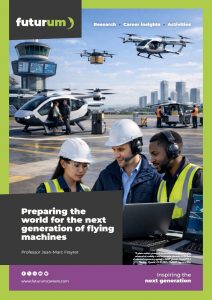
Learn how industrial engineers are preparing to integrate flying technologies such as drones into city infrastructure:
futurumcareers.com/preparing-the-world-for-the-next-generation-of-flying-machines
The post What should a delivery drone look like? appeared first on Futurum.
“}]]