
Understanding the hidden world beneath our feet: building tools for studying soil organisms
[[{“value”:”
Understanding the hidden world beneath our feet: building tools for studying soil organisms
Every square metre of soil is teeming with tiny organisms, such as nematodes, which play essential roles in soil stability and fertility, nutrient recycling, and pest management. However, studying these organisms can be incredibly difficult due to their tiny size and huge numbers. That is why Dr Camila Filgueiras, a soil ecologist at the University of North Carolina Asheville in the US, and her students have been developing new technologies to shine a light on this hidden world.
Talk like a soil ecologist
Arthropod – an invertebrate with a segmented body, hard external shell or exoskeleton, and jointed legs, such as an insect, spider or crustacean
Bacteria – single-celled microorganisms that live in almost every environment on Earth
Entomopathogenic nematode – a nematode that infects and kills insects
Flow cytometer – a machine that analyses cells or small organisms as they flow through a narrow stream of liquid
Machine learning – a type of artificial intelligence that learns patterns from data to identify, categorise or make predictions without needing fixed instructions
Nematode – a microscopic roundworm that lives in soil, water, plants or animals
Parasite – an organism that lives on or inside another organism and harms it
Substrate – the non-living material in a sample, such as soil, sand or organic debris
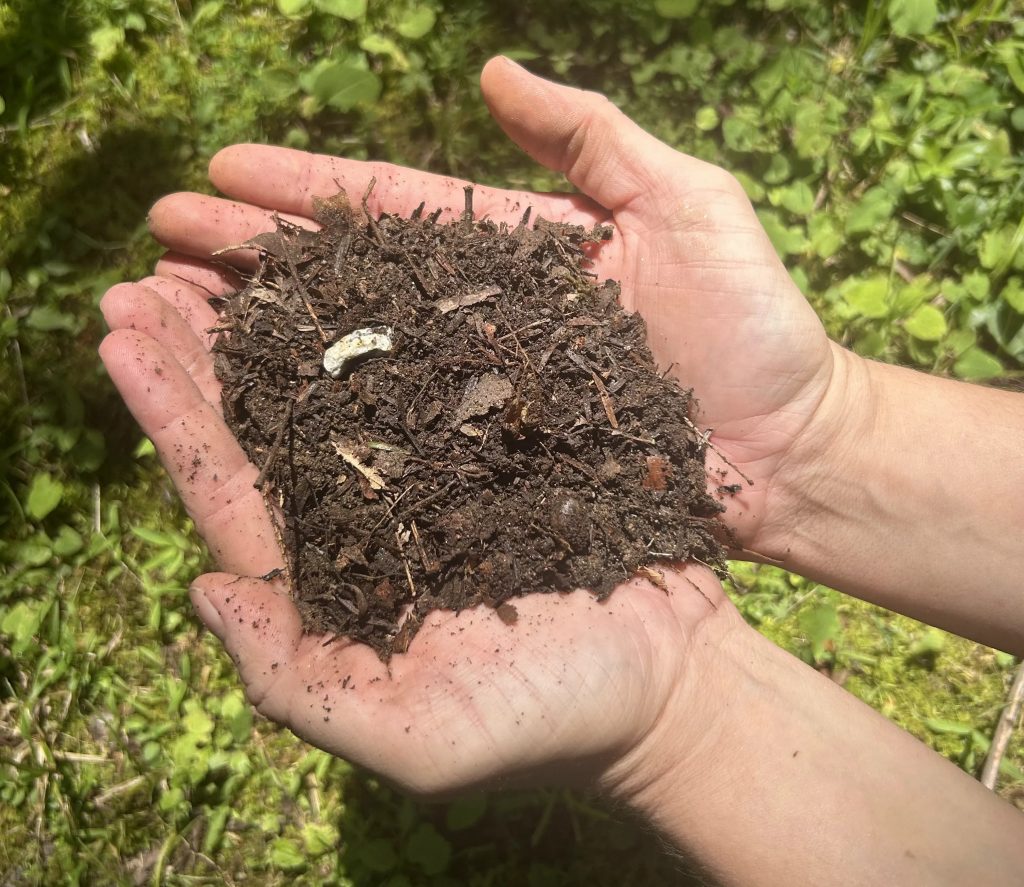
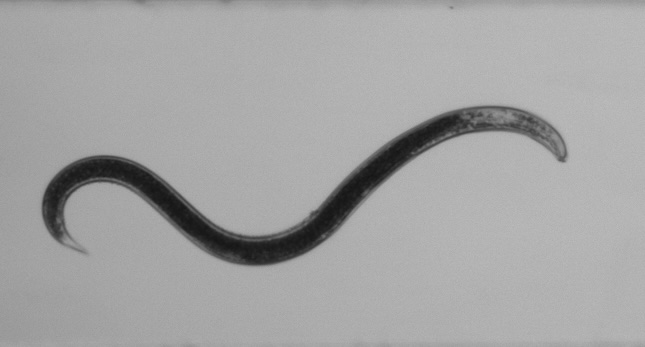
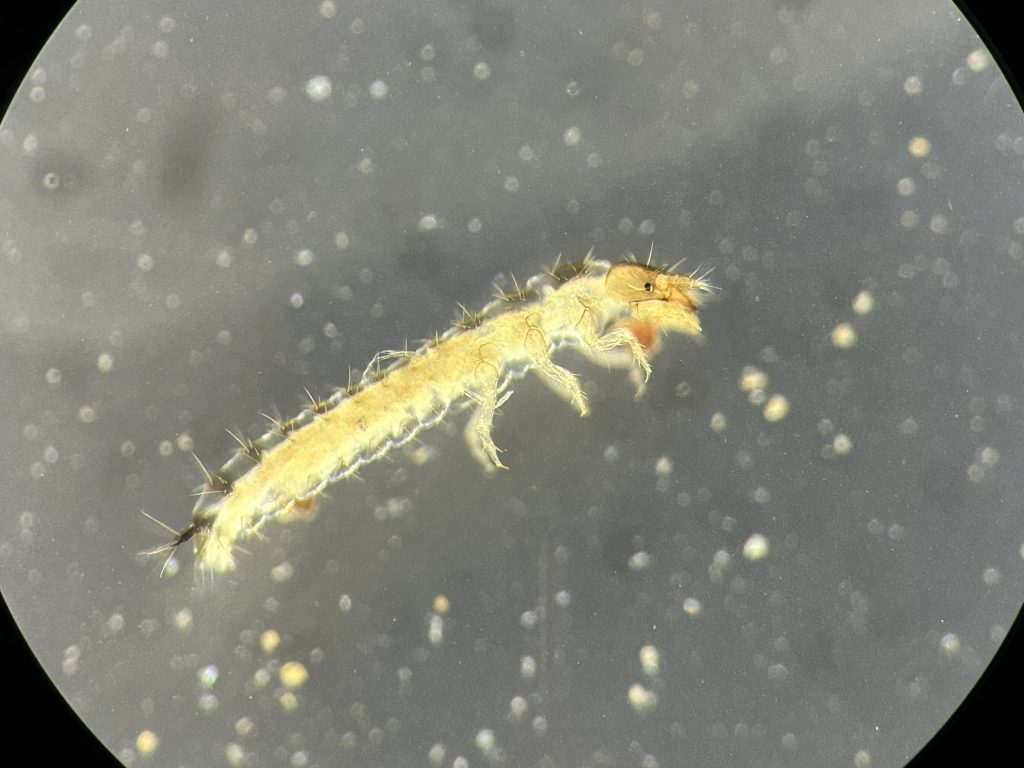
If you go digging in the dirt with a microscope in hand, you might discover nematodes – microscopic creatures that hold clues to the health of soil ecosystems. “Nematodes are tiny, worm-shaped animals that live almost everywhere on Earth – and are unbelievably abundant in soil,” says soil ecologist Dr Camila Filgueiras from the University of North Carolina Asheville. “In a single square metre of healthy soil, it is common to find millions of nematodes living alongside hundreds of arthropods and billions of bacteria.” These nematodes help recycle nutrients, support plant growth and keep soils healthy. Some nematodes are parasites, whereas others are beneficial. Camila and her team study entomopathogenic nematodes – tiny roundworms that infect and kill insect pests, effectively acting as living, biological pesticides.
Dirt difficulties
Soil is an incredibly difficult environment to study. “Every footprint we leave covers millions of organisms that we cannot see without laborious extraction and microscopy,” says Camila. Traditional methods for studying nematodes have limitations. For example, the Baermann funnel technique collects nematodes by allowing them to move from a sample of soil through a mesh filter into water. However, typical recovery is only around 15%, and results change with soil type, moisture and how the funnel is built. The white trap method is used to rear nematodes from infected insects, which are collected as they emerge from their hosts. However, the Petri dishes in which these traps are set up are easily contaminated.
Soil-sampling solutions
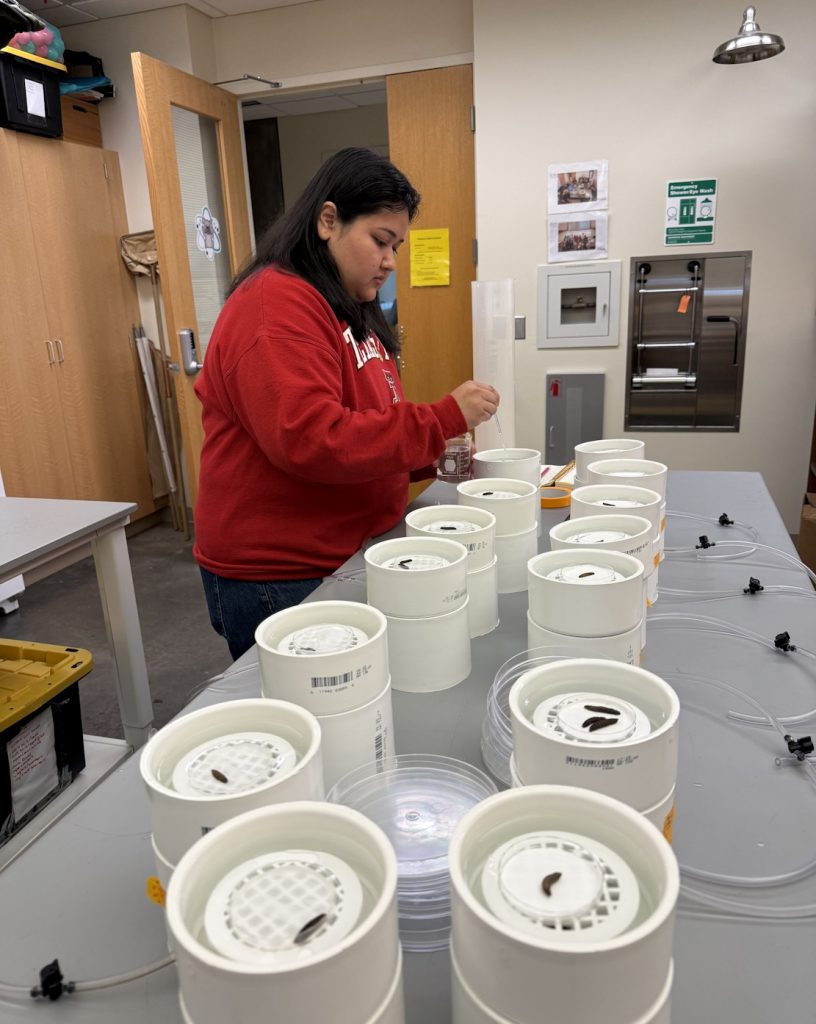
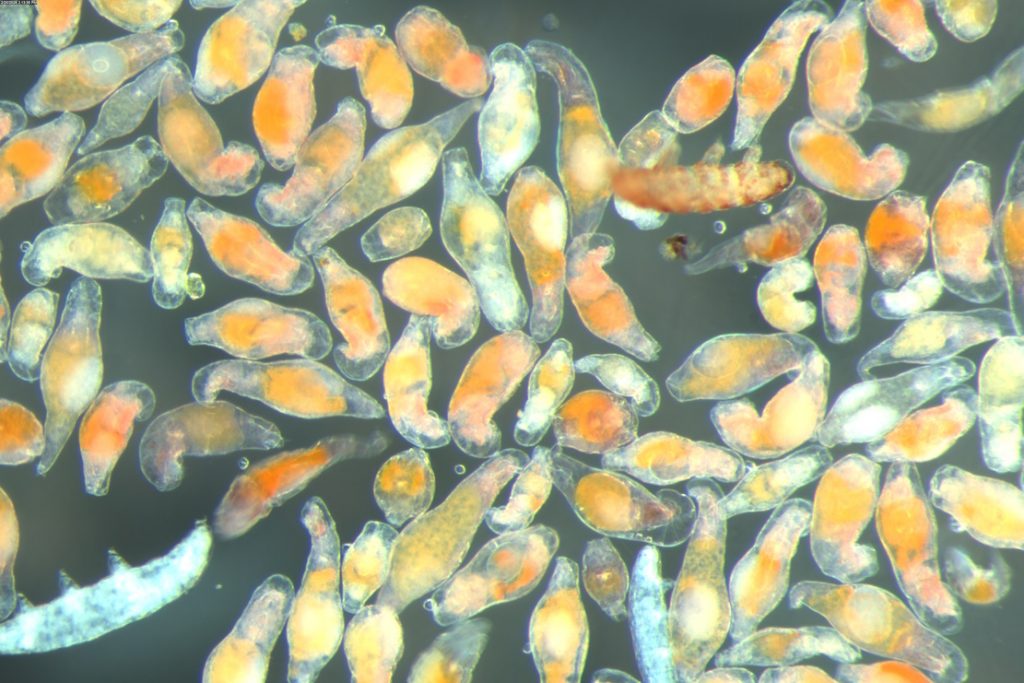
Camila and her students have developed the NEMA Device to both extract nematodes from soil and rear more for further study, using just one piece of equipment. A soil sample is wrapped in a porous tissue inside a simple device. Nematodes swim into surrounding water and are collected after 24 hours. The same device can then be used to rear nematodes: infected insect larvae are placed inside, and newly emerging nematodes move into the surrounding water where they can be collected. Because the system remains sealed, the risk of contamination is reduced.
“The biggest challenge was designing something that was efficient and standardised but simple enough to be built and used anywhere – including in field settings or in labs with limited budgets,” says Camila. “We overcame this by deliberately working with everyday plumbing parts that are cheap, light and easy to replace, and by combining extraction and rearing into a single unit so that researchers don’t need two different set-ups.”
Trials demonstrated that the NEMA Device extracted significantly more nematodes than the Baermann funnel and was able to produce the same number of juveniles per host as the white trap method, but with less chance of contamination. “In addition, the NEMA Device is portable, easy to take apart and clean, and inexpensive,” says Camila. “It also combines two separate workflows in a single piece of equipment.”
Counting and cataloguing the uncountable
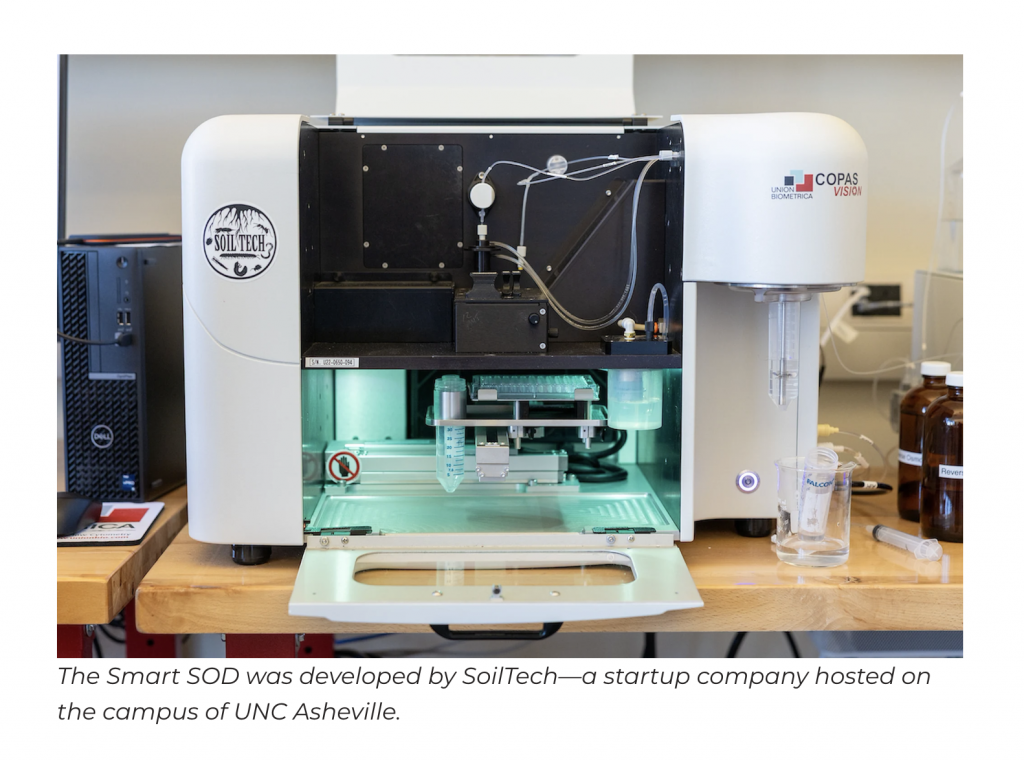
To examine soil-dwelling organisms further, Camila and her students developed the Smart Soil Organism Detector (Smart SOD). “This is an instrument-plus-software pipeline designed to do something that has been almost impossible until now: take a soil sample and quickly extract, identify and count living soil organisms by species without killing them,” says Camila.
Smart SOD combines a custom flow cytometer and a fast, high-resolution camera. “A soil sample is diluted in water, passed through a mesh filter, and then pushed gently through a narrow flow cell,” says Camila. Lasers and a camera create a unique ‘fingerprint’ for each organism that flows through the instrument based on physical characteristics. “Living individuals are physically sorted into separate compartments with a small puff of air, so they stay alive for further study,” explains Camila. Machine learning models, trained on known organisms, can use the fingerprints and photographs to identify the organisms.
Developing Smart SOD came with its own challenges. “We had to make sense of a huge amount of multi-dimensional data, separate organisms from ‘background’ substrate, and train machine learning models on uneven cultures,” says Camila. “We solved these problems step-by-step: tuning the flow cytometer and lasers against beads of known size, using machine learning to cleanly distinguish between substrate and nematodes, and thoroughly testing the models to make sure they worked accurately on new samples.”
Trials found that Smart SOD is fast, accurate and capable of keeping organisms alive for further study. It can distinguish between living and dead nematodes, separate nematodes from sand and soil, and identify other soil-dwellers such as mites and small insects. “Preliminary work suggests the same pipeline will work for organisms as small as fungal spores and as large as visible arthropods,” says Camila. “The long-term vision is a shared, open library of machine-learning models for soil organisms around the world, giving us a practical way to monitor global soil biodiversity.”
Simplifying soil studies
Camila has founded a start-up company, SoilTech, to scale up the technologies she and her students have invented. “Our hope is that these tools lower the barrier to working with soil life,” she concludes. The NEMA Device can help scientists collect and rear nematodes anywhere in the world and can support farmers with sustainable pest management, while Smart SOD can identify soil organisms in minutes with minimal training needed. “New tools like the NEMA Device and Smart SOD make it possible to look at thousands of individual soil organisms quickly, accurately and non-destructively,” says Camila. “Soil biodiversity is enormous and almost completely unexplored, and you are the generation that will finally get to see it!”
Reference
https://doi.org/10.33424/FUTURUM710
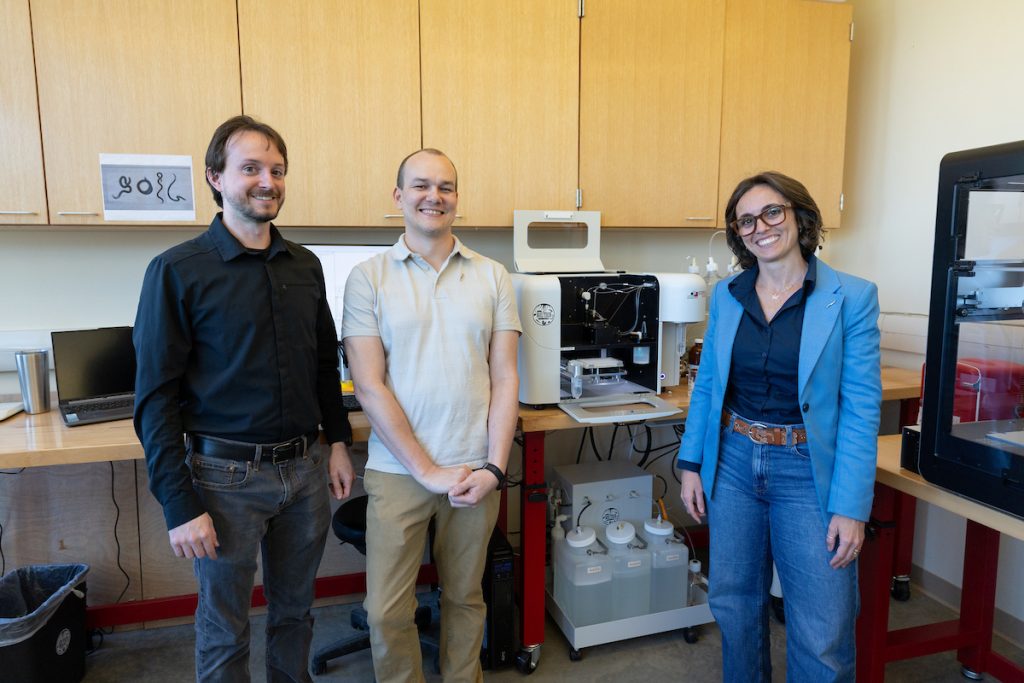
 Dr Camila Filgueiras
Associate Professor, Biology Department, University of North Carolina Asheville, USA
Field of research: Soil ecology
Research project: Soil ecology, biological control and new technologies for studying soil organisms
Funders: California Institute for Biodiversity; North Carolina Biotechnology Center; University of North Carolina Asheville
Websites: nemalab.org and soiltech.bio
About soil ecology
“Soil is one of the most diverse yet least understood ecosystems on Earth,” says Camila. “The organisms living in just a square metre of healthy soil drive nutrient cycling, support agriculture, shape natural ecosystems and help regulate the global climate. Soil organisms also affect human health directly – they suppress plant and animal pathogens, they are a major source of antibiotics, and they underpin the biological control of pests.”
Human activities such as land-use change, pollution and intensive agriculture are altering soil ecosystems faster than scientists can study them. Camila believes that the development of tools such as the NEMA Device and Smart SOD is essential for monitoring changes in soil ecosystems, such as how they respond to agricultural management and a changing climate.
“What I love most about this job is that every new tool we build lets us ask questions we could not answer before,” says Camila. “There is a real sense of opening a door into a previously hidden world, and doing that work alongside students, who bring fresh ideas and energy, is the best part.”
Importantly, students can contribute to the field early in their careers. “My lab is set up so that undergraduate students are collaborators, not just observers,” explains Camila. “Students help design experiments, build soil technologies like the NEMA Device, extract and rear nematodes, and appear as co-authors on our papers. You do not have to wait until graduate school to do real science!”
Pathway from school to soil ecology
“Soil ecology sits at the meeting point of several subjects,” says Camila. “Biology is the starting point – especially ecology, microbiology and invertebrate zoology. And chemistry helps you understand the soil itself, plant nutrition and how organisms interact with their environment.”
“Mathematics and statistics are surprisingly important,” says Camila. “A lot of modern soil science is about analysing patterns in big datasets. Computer science and a bit of coding make a huge difference, because tools like Smart SOD rely on machine learning and image analysis.”
“Environmental science, geology and Earth science give you the wider picture of how soils form and how they interact with climate, water and land use,” says Camila.
Explore careers in soil ecology
“My first piece of advice is simple – get your hands in the soil!” says Camila, “Volunteer at a local farm, community garden or natural-area restoration project. Use a hand lens or microscope to look at what is in a teaspoon of soil.”
Soil ecology is a practical, interdisciplinary field, providing a doorway to careers in research, agriculture or biotechnology.
“Organisations like the Soil Science Society of America, the Society of Nematologists and the Global Soil Biodiversity Initiative all have student-friendly resources, photo galleries and citation-quality articles online,” says Camila.
“Reach out to university labs – many soil ecologists are happy to host students for tours or summer research projects,” says Camila. “We love welcoming students to the NEMA Lab!”
As undergraduate students, Maria Escobedo and Michael O’Cain worked with Camila in the NEMA Lab.
Meet Maria
 Animals and nature have fascinated me since childhood. I would rent books from the local library and read about different ecosystems and their creatures. When I started university, Dr Filgueiras offered the opportunity to work in the NEMA Lab, which is where my passion for ecology grew. Working with insects and sharing that knowledge cultivated my enthusiasm and curiosity.
After graduation, I became a laboratory technician for SoilTech and used Smart SOD to process soil samples. I also trained Smart SOD to identify microscopic organisms and developed protocols for the proper use and maintenance of the instrument.
The NEMA Lab and SoilTech were pivotal in helping me grow. I gained friends and built connections with like-minded people who value sharing science. My confidence in public speaking greatly improved and I became less shy. And I learnt the value of insects and their importance in our world.
The NEMA Lab and SoilTech also taught me important skills such as conducting, writing about and presenting research, which helped me obtain a research assistant role in an entomology and horticulture lab in Australia, where I am now studying for a master’s degree. The support, experience and skills I developed through my involvement with the NEMA Lab and SoilTech prepared me for the next steps in my career.
My favourite fact about nematodes is that plant-parasitic nematodes have a small appendage that they use to infect root-systems, like a tiny personal sword. They are like the narwhals of the soil biome!
Maria’s top tips
1. Don’t be afraid to ask questions or for help. Teachers and more experienced students will be happy to help you succeed, if only you ask for their support.
2. Be organised with your time and responsibilities.
3. Try something at least once before dismissing it. That group or activity could be something that interests you or helps you achieve your goals.
Meet Michael
 I live in a region with an abundance of plant biodiversity and the prospect of being able to understand what I was seeing inspired me to study biology. However, I didn’t start studying biology until I turned 30 – it is important to know that you shouldn’t be afraid to change your mind as you move through life.
Dr Filgueiras was my zoology teacher during the time Smart SOD was being designed. Although I didn’t help build it, I’ve since put in many hours working with the instrument, so I’ve become well acquainted with the technology.
I love working at SoilTech because I enjoy the exploratory nature of our lab. I also love having the opportunity to show other people the tiny wildlife we work with. Aside from providing me with employment that allows me to use the skills I gained as a biology undergraduate, SoilTech has given me the opportunity to continue practising scientific research and communication.
SoilTech is currently partnering with the All Taxa Biodiversity Inventory in California to collect, scan and catalogue every single species of soil organism in the state of California! It’s a massive undertaking, but amazing to see the diversity of the soil organisms.
When I started seeing how many tiny organisms can be pulled from a single spoonful of soil, I began to feel exceedingly large! It also made me think that perhaps humans should be considered ‘megafauna’ on a planet that seems to be predominantly inhabited by organisms less than a millimetre long.
Michael’s top tips
1. Look around your community for events or programmes that align with your interests and volunteer with local organisations.
2. Life is about living, so try different things and see what feels good.
Do you have a question for the team?
Write it in the comments box below and they will get back to you. (Remember, researchers are very busy people, so you may have to wait a few days.)
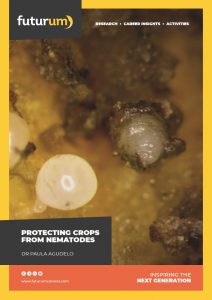
Learn how scientists are protecting crops from parasitic nematodes:
The post Understanding the hidden world beneath our feet: building tools for studying soil organisms appeared first on Futurum.
“}]]