

Semiconductors in space: how can we protect computer chips from radiation?
[[{“value”:”
Semiconductors in space: how can we protect computer chips from radiation?
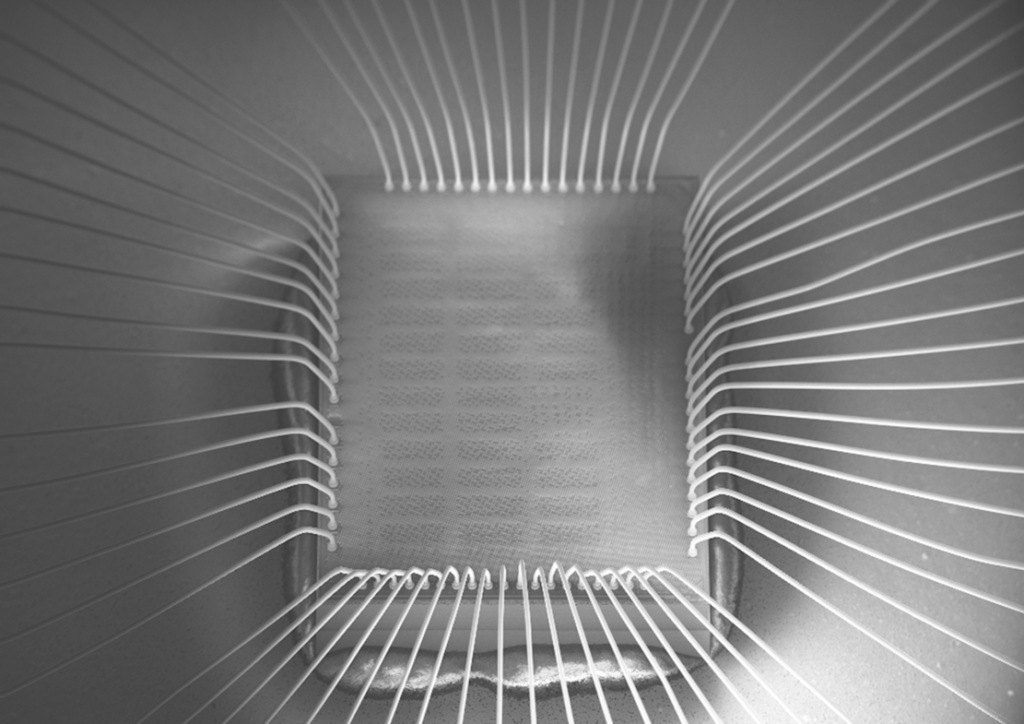
Computer chips are found all over our modern world in devices ranging from laptops and smartphones to motorbikes and washing machines. But what happens when you send a computer chip into outer space? Professor Li Chen from the University of Saskatchewan in Canada runs the STARR-Lab where his team investigates the effects of radiation on semiconductors and designs new chips that work reliably in the harsh conditions of space.
Talk like a electrical engineer
Complementary metal-oxide-semiconductor technology (CMOS) — the standard process used to build computer chips, allowing billions of transistors to be packed onto each chip
Microcontroller — a tiny, self-contained computer on a single chip
Open-source — when the original design or source code for a digital resource is publicly accessible
Semiconductor — a material that can act as a conductor and an insulator, often used to make transistors
Transistor — a device used to switch electrical signals on or off, serving as a core component of computer chips
Have you ever heard of complementary metal-oxide-semiconductor technology? If the answer is no, don’t worry – most people haven’t either. Despite its complicated name and relative obscurity, you probably use this technology every day.
“Complementary metal-oxide-semiconductor technology, usually shortened to CMOS, is the foundation of almost every modern computer chip,” says Professor Li Chen from the University of Saskatchewan. “This is the technology that allows us to have enormous computing power in a device that is as small as our fingernails.”
CMOS computer chips contain billions of microscopic switches called transistors that are used to represent information in binary code, a series of 1s and 0s. Digital circuits use voltage levels to represent 1s and 0s and a network of transistors to manipulate and store those values. “By themselves, these transistors aren’t particularly useful,” says Li. “But if you connect billions of them together in carefully designed patterns and configurations, they can perform calculations, store information, process images and even run artificial intelligence.”
CMOS is used to build the computer chips found in electronic devices that you probably use every day, from your mobile phone to your microwave. But the technology is also used in more complicated devices such as X-ray machines, particle colliders and even satellites.
CMOS in satellites
Like many other devices that we rely on, satellites are packed full of computer chips. “These chips control power, communications, navigation, scientific instruments and autonomous decision-making,” explains Li. “You can think of them as the satellite’s brain and central nervous system – without them, satellites would just be useless hunks of metal floating around our planet.”
However, electronics that work perfectly on Earth can behave very differently when they are launched out of the safety of our atmosphere. “Space is an extremely unforgiving environment,” says Li. “Temperatures can change dramatically, there is no air and it’s difficult to send people up to repair a broken component.” But Li’s research group is particularly interested in one particular extra-terrestrial issue: radiation. “Spacecraft are constantly exposed to radiation from the Sun and from energetic particles travelling through the universe,” says Li. “Just as excessive radiation can damage the cells in our bodies, it can also damage the tiny electronic structures inside a computer chip.”
The problem with radiation
As a radioactive particle passes through a chip, it leaves behind a trail of electrical charge which can interfere with the chip’s transistors, pressing switches that weren’t meant to be pressed. “Radiation can instantly change stored data, corrupt a calculation, interrupt a program or cause a sudden surge of power,” says Li. “It can also produce gradual damage over time, causing a chip to become slower, consume more power or stop working altogether.”
For a spacecraft that is hundreds or even millions of miles from Earth, a tiny electronic error can have serious consequences. Understanding how radiation affects computer chips is therefore essential for building spacecraft that can operate reliably for years without repair.
The STARR-Lab
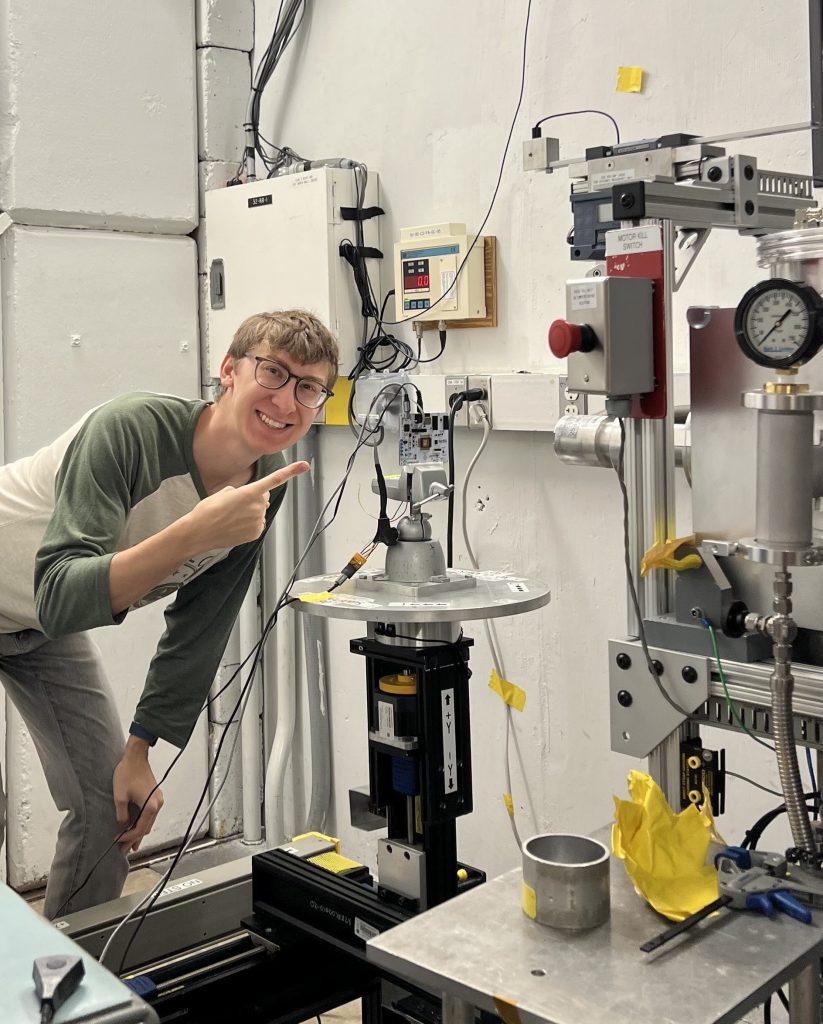
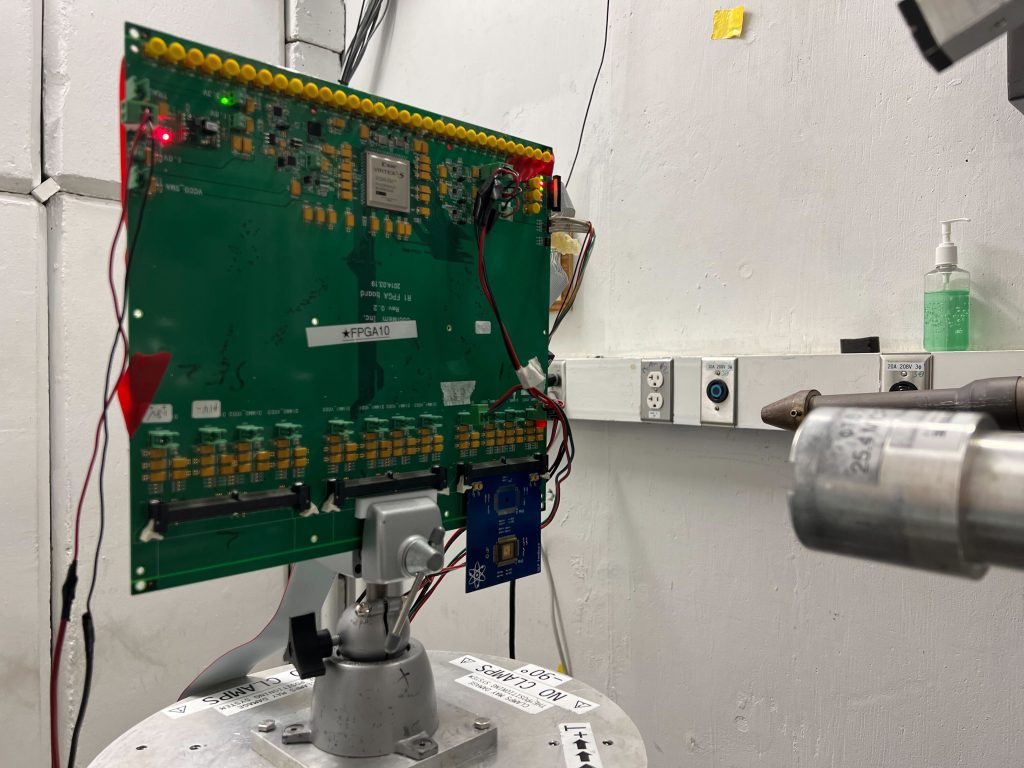
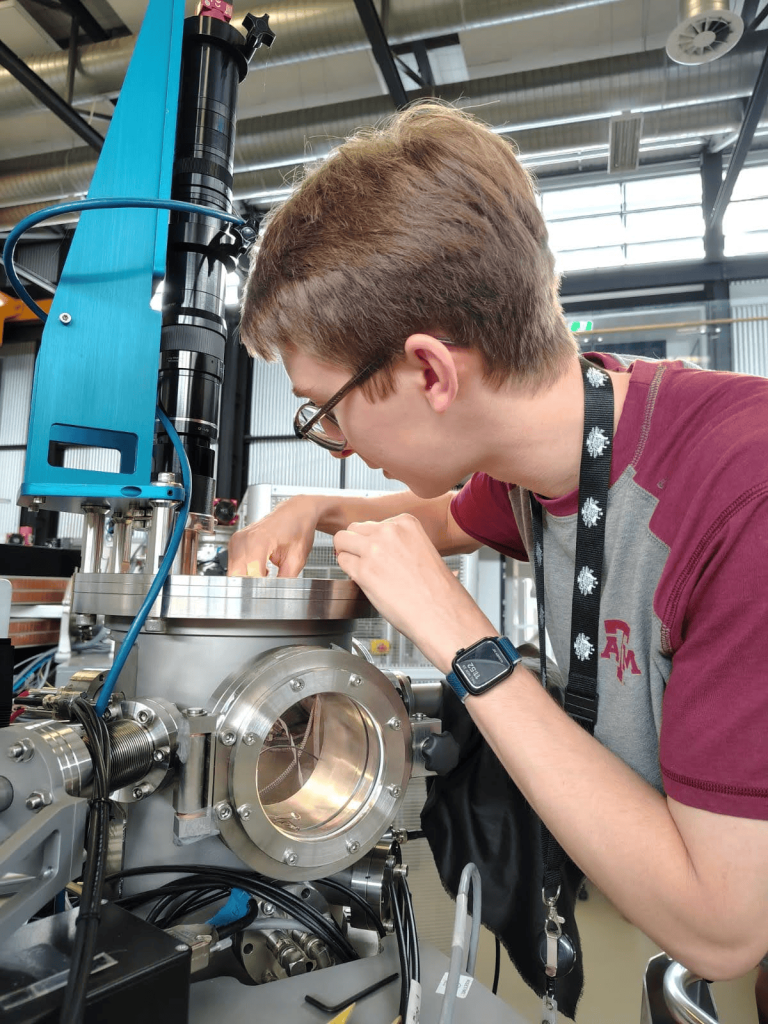
In the STARR-Lab, Li and his team recreate space-like environments in controlled laboratories. “We take computer chips – sometimes commercially available devices and sometimes custom chips we have designed ourselves – and we operate them while exposing them to radiation,” he explains. “We use particle accelerators to bombard the chips with radiation while our equipment checks whether the chip is calculating correctly, storing the right information and consuming the expected amount of power.”
Once they have identified the chips’ most sensitive and failure-prone areas, Li’s researchers design new chips that are better able to withstand radiation. “People often assume that radiation-hardened electronics must be made from exotic materials or wrapped in thick shielding,” says Li. “However, radiation can still pass through substantial shielding, and every extra kilogram is expensive to launch into space.”
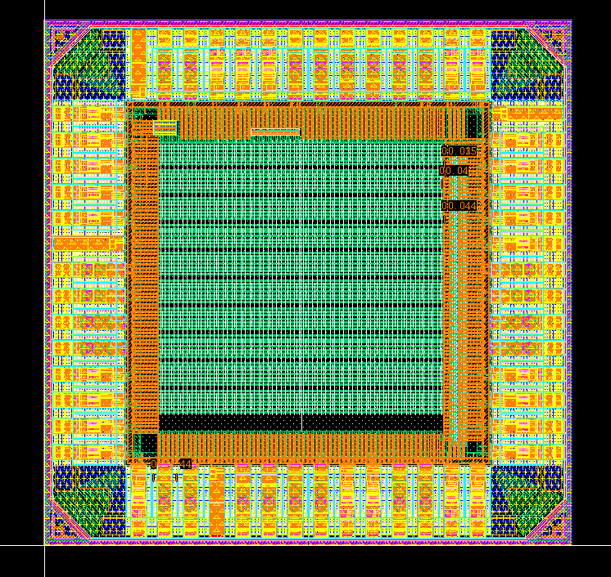
Instead, Li’s team makes the circuits themselves more resilient. “We use many of the same manufacturing processes as commercial semiconductor companies, but we arrange and connect the transistors in clever ways,” explains Li. “Sensitive transistors can be separated or duplicated so that one particle is less likely to disrupt them all at once and information can be stored in circuits that check one another, allowing an error to be detected and corrected almost immediately.”
Li compares this process to designing buildings in earthquake-prone areas. “We cannot prevent the earthquake from happening, but we can design the structure in clever ways so that it doesn’t collapse,” he says.
The StarRISC programme
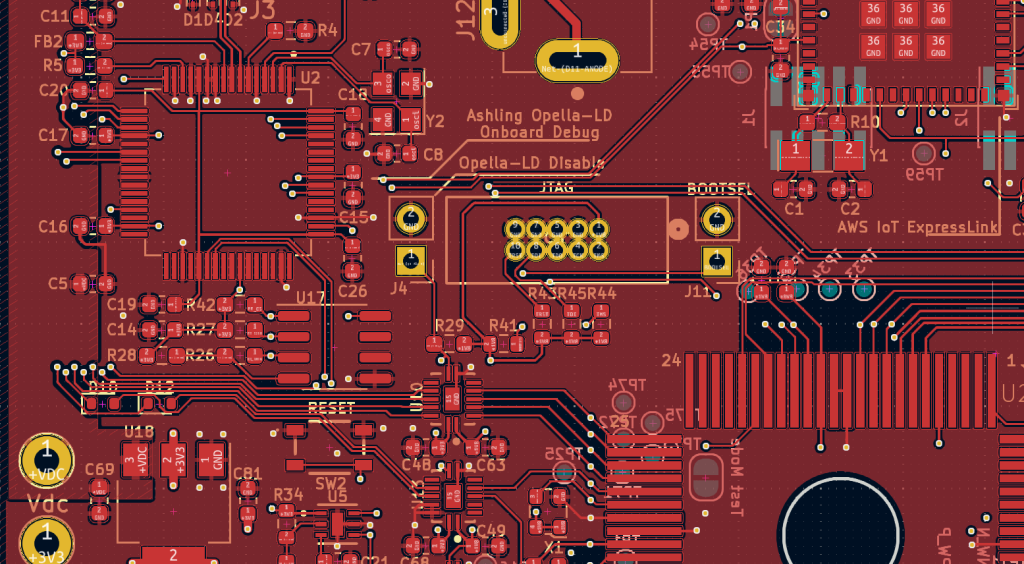
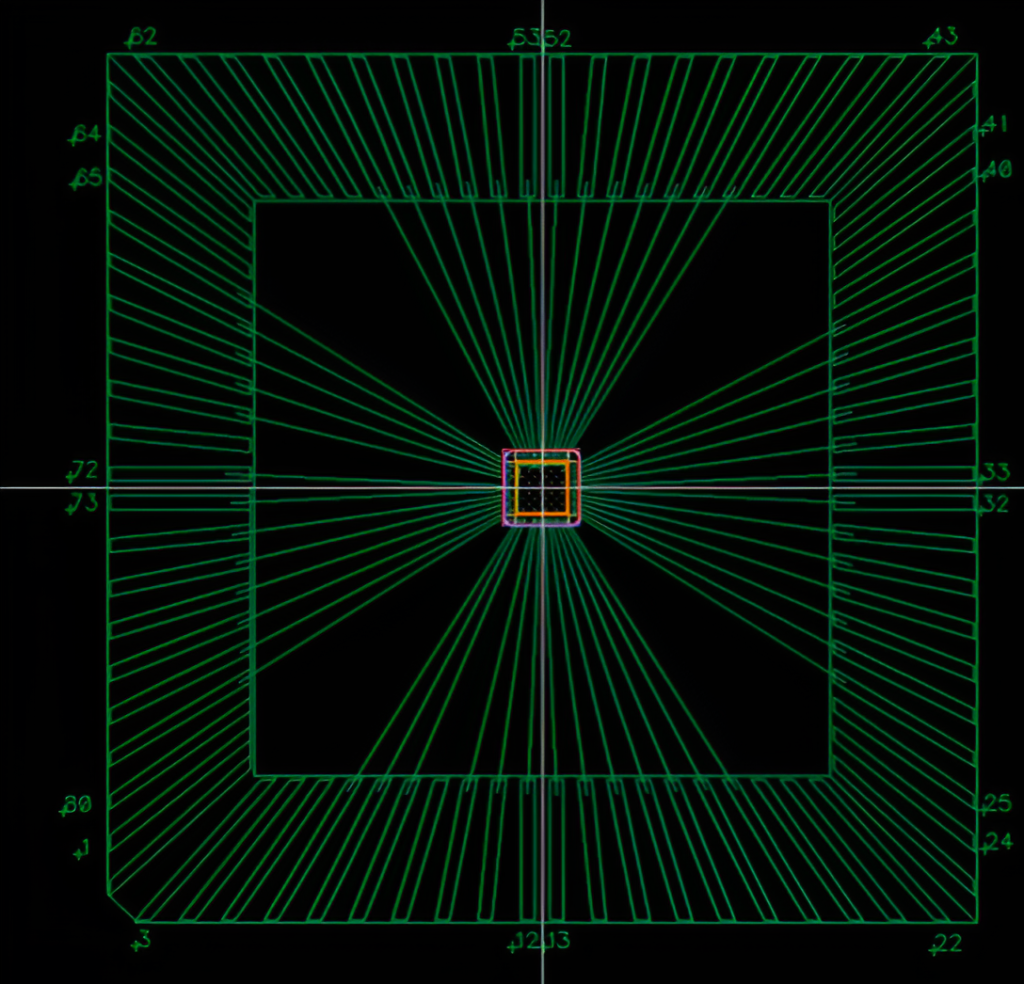
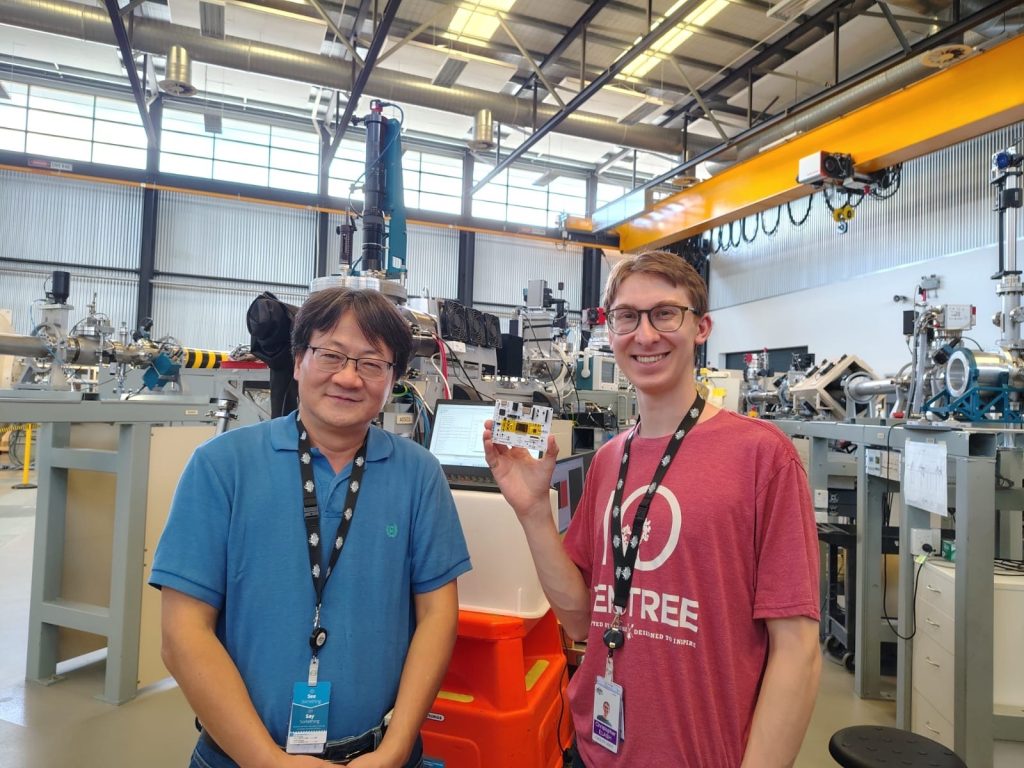
StarRISC is the latest computer chip to be developed by the STARR-Lab. “It is a microcontroller (essentially a small but complete computer on a single chip) designed to be capable, energy-efficient and highly resistant to radiation,” explains Li. “It combines years of radiation-hardening research from our laboratory with an open-source processor design from the OpenHW Foundation.” If it is successful, StarRISC could be the first fully Canadian-designed computer chip of its kind to operate in space.
“Our next goal is to keep building upon the success of StarRISC,” says Li. “We know how to make the processor reliable, so now we want to give it much more computing power.” Modern spacecraft are expected to process large amounts of information by themselves, rather than sending every piece of data back to Earth. “A satellite might need to identify a wildfire in an image, navigate autonomously or make decisions when communication with Earth is delayed,” explains Li. “These tasks increasingly involve artificial intelligence, which demands lots of computing power.” With the second generation of StarRISC currently being developed, Li and his team at the STARR-Lab will be supporting the future of space exploration.
Professor Li Chen
Department of Electrical and Computer Engineering, University of Saskatchewan, Canada
Fields of research: Electrical engineering; computer engineering
Research project: Testing and designing radiation-resistant computer chips in the STARR-Lab
Reference
https://doi.org/10.33424/FUTURUM731
About electrical engineering
“Almost everyone interacts with the work of electrical engineers from the moment they wake up,” says Li. “They help generate the power in our homes, build communication networks, design smartphones and computers, develop medical equipment, create the electronics used in cars, aircraft and spacecraft, and so much more!”
What makes the field especially exciting is its enormous range of scale. “An electrical engineer might work on a power station large enough to supply a city or on a transistor so small that its most important features are only a few atoms across,” explains Li. “Our modern world depends on the work of electrical engineers, and the next generation will be able to push the boundaries even further in areas such as artificial intelligence, renewable energy, robotics, quantum computing and space exploration.”
“One of the most rewarding parts of electrical engineering is seeing an idea become something real,” continues Li. “A project may begin as just a drawing on a board, a computer simulation or a few lines of code, but eventually you may be able to hold the finished device in your hand and watch it work. That is such a rewarding feeling.”
As an electrical engineer, you will have to solve complex problems. “There may be ten different ways to solve the same problem, each with different costs, risks and advantages,” says Li. “The challenge is not simply finding one answer, but deciding which answer works best in the real world. That uncertainty can be difficult, but it is also what makes engineering so interesting and creative.”
You can prepare for these challenges by developing your critical-thinking, problem-solving and communication skills. “You should also become comfortable with trying an idea, discovering that it doesn’t work and improving it,” advises Li. “In engineering, failure is often not the end of an experiment – it is the information that leads to the next one.”
Pathway from school to electrical engineering
“Mathematics and physics provide an important foundation because they are necessary to understand how electricity, forces and energy behave,” advises Li. “Computing and programming are also increasingly valuable, as modern electrical systems usually combine hardware and software.”
Practical experience is just as important as learning technical information. “You can learn a great deal from a textbook, but building something teaches you in a way that a book alone cannot provide,” says Li.
Join robotics clubs, electronics projects, coding groups or other industrial-arts courses. “Even a simple project, such as using a sensor to switch on a light, can introduce you to the same process of designing, testing and improving that professional engineers use,” says Li.
Explore careers in electrical engineering
“An electrical engineer might design power lines that stretch across many miles, antennas that communicate with satellites, autonomous machines that explore mines or transistors that are far too small to see with the human eye,” says Li. “The kinds of careers that are possible are too long to list!”
Other potential careers include working with computer simulations, medical devices, renewable energy, robotics, nanomaterials or spacecraft systems. “There is something for anyone who enjoys technology, especially those interested in using it to solve problems and improve people’s lives,” enthuses Li.
Explore the websites of the Institute of Electrical and Electronics Engineers and the Institution of Engineering and Technology to learn more about careers in this field.
Meet Li
When I was younger, I was interested in electronics and small science projects. For example, I made small steam boats (by filling empty eggs with water and burning a candle underneath them), a simple prototype of a stealth periscope and a magnetic coil for weight lifting. These simple scientific projects were guided by my dad’s magazines and books, which inspired my curiosity in science and engineering.
I love working with and training students. Taking part in our research can help them achieve their career goals.
I am driven by curiosity and a desire to understand how complex electronic systems behave under challenging conditions, particularly in radiation environments. This motivation led me to specialise in semiconductor reliability in space.
Perseverance has been critical to my career. Research in electrical engineering often involves long-term projects, experimental setbacks and difficult technical problems. The ability to remain focused and continuously seek solutions has been important throughout my career.
I have benefited from interdisciplinary collaboration. Research into the effects of radiation requires expertise in device physics, circuit design, semiconductor technology, computer engineering and reliability analysis. Working with researchers from different backgrounds has broadened my perspective and enabled more impactful research outcomes.
I usually unwind by spending time with my family, taking walks and playing badminton. These activities help me disconnect from daily research challenges, maintain balance and return to work with renewed energy and a fresh perspective.
Li’s top tip
Curiosity and persistence are often more valuable for an engineer than already knowing the answer.
Do you have a question for Li?
Write it in the comments box below and he will get back to you. (Remember, researchers are very busy people, so you may have to wait a few days.)

Learn about other scientists working with transistors and semiconductors
futurumcareers.com/how-can-the-transistors-in-your-smartphone-form-quantum-dots
The post Semiconductors in space: how can we protect computer chips from radiation? appeared first on Futurum.
“}]]