
Redlining: how do racially-biased financial practices affect health?
[[{“value”:”
Redlining: how do racially-biased financial practices affect health?
In the 1930s, the US government began ‘redlining’ – demarcating poor neighbourhoods, often home to Black and immigrant populations, as risky for financial investment. Dr Andrea Richardson from the RAND Corporation in the US is investigating how that decision has led to cascading impacts and inequities to this day – not least how people from redlined neighbourhoods are more likely to suffer from obesity and other health conditions.
Talk like a nutrition epidemiologist
Body mass index (BMI) – a measurement used to assess if someone is a healthy weight, calculated by dividing body weight by height
Epidemiology – the study of health and disease within populations
Home Owners’ Loan Corporation (HOLC) – a US agency set up in the 1930s to refinance home mortgages
Obesity – a complex chronic disease defined by an excessive accumulation of body fat that poses risks to health
Mortgage – a loan for the purchase of property
Redlining – a discriminatory practice where neighbourhoods’ credit-worthiness ratings were conflated with race
Socioeconomic – related to social and economic factors
Throughout the 1930s, the US was wracked by economic hardship in the form of the Great Depression. Almost everybody in the country was affected and millions found themselves without income. In an attempt to help homeowners pay their mortgages, the government created the Home Owners’ Loan Corporation (HOLC), which offered financial relief to those unable to make payments through no fault of their own. “A few years later, HOLC produced maps that rated neighbourhoods based on how safe or risky they were for investment,” says Dr Andrea Richardson from the RAND Corporation. “The mapmakers factored in details such as the condition of houses but also the race and ethnic background of the people who lived there.”
These HOLC maps reflected decades of structural discrimination. At the bottom of their rating scale were the red-marked neighbourhoods – a practice that became known as redlining. “These neighbourhoods were often where Black families and immigrant communities lived,” says Andrea. “This reinforced racial and economic segregation, which went on to affect families for generations.” It is unknown if the maps had any influence on mortgage lending, but they mirror the racist attitudes entrenched in the real estate industry.
“Although the Civil Rights Act of 1968 formally prohibited redlining, informal practices of housing discrimination still persist today,” says Andrea. “People in formerly redlined neighbourhoods may still face discrimination when seeking investment and mortgages.” If someone is denied a mortgage by a lender, such as a bank, they become locked in to the expenses of renting, without the benefits of home ownership.
These biased mortgage practices mean that people living in historically redlined neighbourhoods may still experience the negative impacts of redlining, not just in terms of their ability to secure a mortgage or their financial security, but also in terms of their health. According to a growing body of research, this location-based housing discrimination can lead to poor health outcomes.
Redlining ramifications
Health is complicated; as well as your biology and lifestyle choices, it depends on your environment and the lifestyle opportunities available to you. Andrea suspected that redlining may be connected to health because of how it prevents investment in certain neighbourhoods, and there is plenty of evidence to support this theory. “For instance, in Chicago, it was found that Black women living in areas with a history of redlining were more likely to have premature births,” says Andrea. “Another study in Atlanta found higher rates of death from breast cancer in women from such neighbourhoods.”
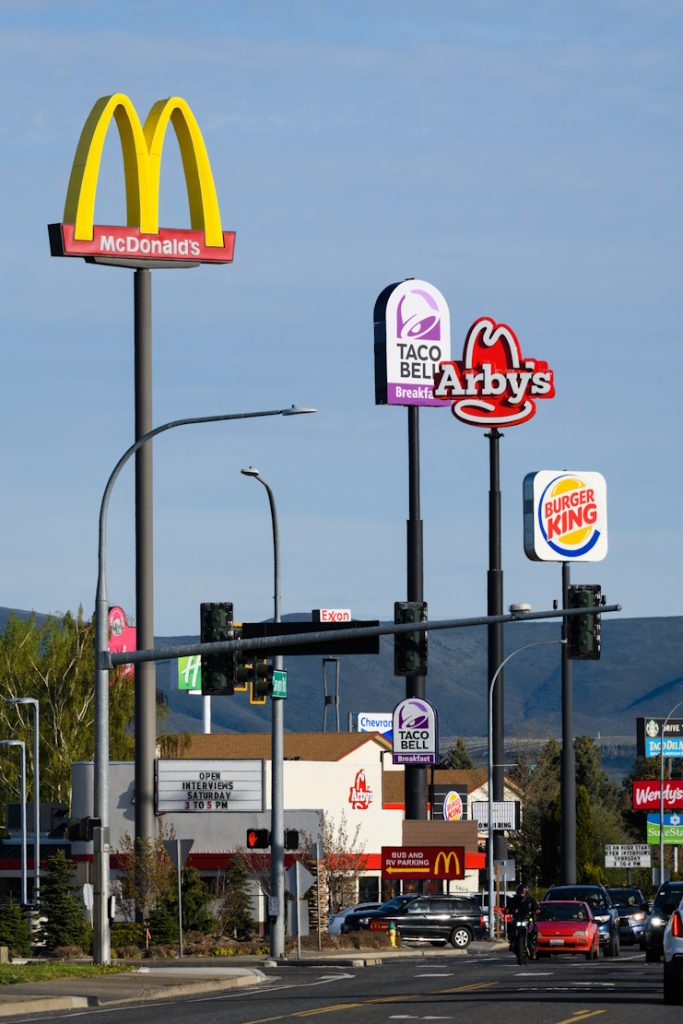
In her current research, Andrea is focusing on obesity, characterised by high body mass index (BMI). While obesity is often thought of as an individual issue, the truth is far more complicated. “Obesity is influenced both by biology and environment,” says Andrea. “For instance, if a neighbourhood has fewer healthy grocery options and fewer safe places to exercise, the community may be more prone to obesity.” It is unclear how much historical redlining drove neighbourhood factors that increase today’s residents’ obesity risk.
Honing in on health
Andrea and her team used data from the Coronary Artery Risk Development Study (CARDIA), which tracked the health of over 5,000 people from 1985 to 2016. “The study followed Black and white adults who were 18-30 years old when the study started,” says Andrea. “The study collected detailed data on diet, medical health, physical activity, neighbourhood environments and social background.”
Participants were from four US cities heavily affected by redlining: Birmingham, Alabama; Chicago, Illinois; Minneapolis, Minnesota; and Oakland, California. “We used CARDIA data to see how past and current mortgage lending discrimination may influence BMI, diet and levels of physical activity,” says Andrea.
First of all, the team wanted to examine the link between historical redlining and neighbourhood economic conditions from 1985 onwards. “The results were clear,” says Andrea. “Neighbourhoods historically marked as ‘high-risk’ by the HOLC remained more socioeconomically deprived 55 years later than other areas.” This was one of the first pieces of evidence the team gathered about the far-reaching impacts of those red lines drawn many years ago.
When the team examined how these factors relate to health, things became more complicated – though the trends were clear. “This long-term disadvantage may have led to poorer diet quality for all groups,” says Andrea. “For white adults and men, living in historically redlined neighbourhoods was linked to higher BMI, but for women and Black adults, the relationships were more nuanced.” For all groups, the link between historical redlining and socioeconomic deprivation was present.
“These results highlight that the connections between redlining, neighbourhood environments, gender, race and BMI are complex and can differ across groups,” says Andrea. “Overall, the study suggests that the economic disadvantages created by housing discrimination many decades ago still affect health and body weight differences across race and gender today.”
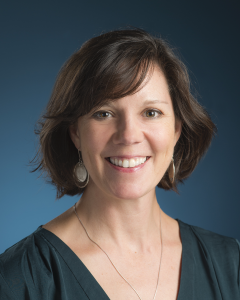
Dr Andrea Richardson
Senior Policy Researcher, RAND; Professor, RAND School of Public Policy, USA
Fields of research: Nutrition epidemiology; health disparities; neighbourhoods and social equity
Research project: Investigating the impacts of racial disparities in mortgage lending on obesity
Funders: US National Institutes of Health (NIH)
Research reported in this publication was supported by the National Heart, Lung, And Blood Institute of the National Institutes of Health under Award Number R01HL155187. The content is solely the responsibility of the authors and does not necessarily represent the official views of the National Institutes of Health.
Reference
https://doi.org/10.33424/FUTURUM693

The Home Owners’ Loan Corporation created maps that rated neighbourhoods based on how safe or risky they were for investment. © Shutterstock.com/Andrey_Popov






About nutrition epidemiology
Nutrition epidemiology investigates the relationship between diet and health outcomes – how the types of food we eat can either cause or prevent diseases. “I love how broad our field is,” says Andrea. “We all eat, but how and what we eat varies for so many reasons from individual choices to policy decisions.” The field is broad but also deep, encompassing the molecular mechanisms involved in digestion and investigating how the nutrients that enter our body interact with our cells and tissues.
For many nutrition epidemiologists, such as Andrea, the global obesity epidemic is a focus of their work. In 2022, the World Health Organization estimated that 1 in 8 people in the world were living with obesity – double what the number was in 1990. Given that rates are going up in both developed and developing countries and across many different demographics, there is no simple explanation for this growth. Though fewer active lifestyles and increased consumption of processed foods are thought to be key drivers, a huge range of socioeconomic factors are likely at play – and nutrition epidemiologists are committed to untangling and tackling these issues.
“So many people are unable to achieve nutritious diets, and policy efforts will rely on good science to address this,” says Andrea. “At the same time, there is increasing interest in how the body responds to food – especially in preventing chronic diseases.” This creates a huge range of research opportunities for the next generation of nutrition epidemiologists.
Pathway from school to nutrition epidemiology
Nutrition epidemiology draws strongly on both mathematics and medicine, so building skills in these areas is vital. At school, mathematics, statistics, biology and chemistry will help you build a strong foundation.
At university, courses in biology, biochemistry, nutrition and epidemiology can all lead to a career in the field.
Explore careers in nutrition epidemiology
The RAND Corporation, where Andrea works, has a huge range of freely available studies on contemporary topics, including nutrition and health.
To learn more about obesity and to connect with professionals working in the field, Andrea recommends looking into The Obesity Society.
Meet Andrea
I studied for a master’s degree in public health with a focus on genetic epidemiology. Straight after graduation, I started working with nutrition epidemiologist Marjorie McCullough at the American Cancer Society, which sparked my interest in diet and its links to health. Over the next ten years, I supported research groups and became increasingly concerned by the obesity epidemic I saw growing in every dataset I used.
This motivated me to get my doctorate. I realised I needed a better foundation in methods to answer the research questions I cared about. I went back to school when my sons were five and seven years old. It was harder than I thought it would be, but so worth it. It is a challenge to balance career goals with family, but it forces me to constantly re-evaluate my priorities.
I first heard about redlining on a radio programme while in my car. I was incensed that I was never taught this in school: how deeply entrenched racism is, and how it continues to support unjust structural barriers. Then it hit me that the CARDIA cohort was the perfect group for examining how redlining relates to obesity.
Building multi-faceted research programmes like this gets me excited. I am often jumping between projects and proposals, so sometimes I turn off email alerts and focus my time on the questions that interest me the most. I aim to continue to learn and grow professionally, and mentor more students and early-career researchers.
Andrea’s top tips
1. Follow your interests and never give up.
2. It’s really important to fail. These are the moments we learn the most.
Do you have a question for Andrea?
Write it in the comments box below and she will get back to you. (Remember, researchers are very busy people, so you may have to wait a few days.)

Learn more about the difficulties that people face when trying to buy a home:
The post Redlining: how do racially-biased financial practices affect health? appeared first on Futurum.
“}]]