
Putting the right technology into the right hands
[[{“value”:”
Putting the right technology into the right hands
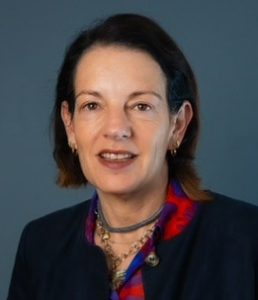
By providing technology and learning programmes to under-resourced schools in South Africa, iSchoolAfrica Education Trust is empowering learners and teachers alike. Founder and Director Michelle Lissoos tells us how the organisation is working to ensure all learners can access meaningful, inclusive learning opportunities.
What motivated you to set up iSchoolAfrica? What was the ‘educational change’ that you wanted to see happen?
We were seeing Apple technology having an incredible impact in private schools, and, at the same time, we were seeing the divide getting bigger and bigger between resourced and under-resourced schools. We were also seeing compromised, low-quality devices being ‘dumped’ on marginalised communities. With that in mind, iSchoolAfrica was established in 2009 to bring the world’s best technology and education practices to under-resourced schools, to empower all educators and learners.
iSchoolAfrica wants to see a South Africa where every learner has the same access to the tools and education that can help them reach their full potential. At its heart, iSchoolAfrica is working to create empowered teachers, confident learners and inclusive education for all.
Why is technology so closely linked to reducing inequalities and enhancing opportunities?
When the right technology is placed into the right hands, it truly becomes a powerful equaliser. In a world where education, employment, communication, financial services and healthcare are increasingly digital, those without access are automatically excluded. Technology breaks down the barriers of geography, disability and limited resources — connecting rural learners to global knowledge, giving children with disabilities tools to communicate and learn independently, and equipping young people with the digital skills demanded by the modern economy. It does more than provide information; it builds confidence, creativity and agency. When access is equitable and supported by strong teaching, technology can give our youth the opportunity to be active participants in shaping their own futures.
How does iSchoolAfrica facilitate inclusivity in education?
Everything we do is about inclusivity in education; all our programmes are designed in ways that ensure all learners — especially those who are marginalised or have disabilities — can access meaningful learning opportunities
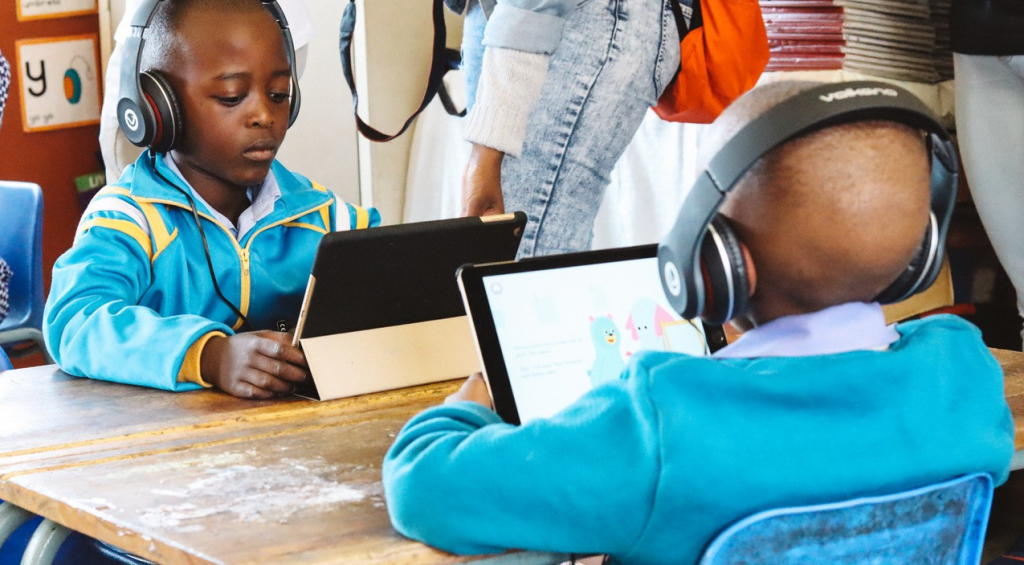
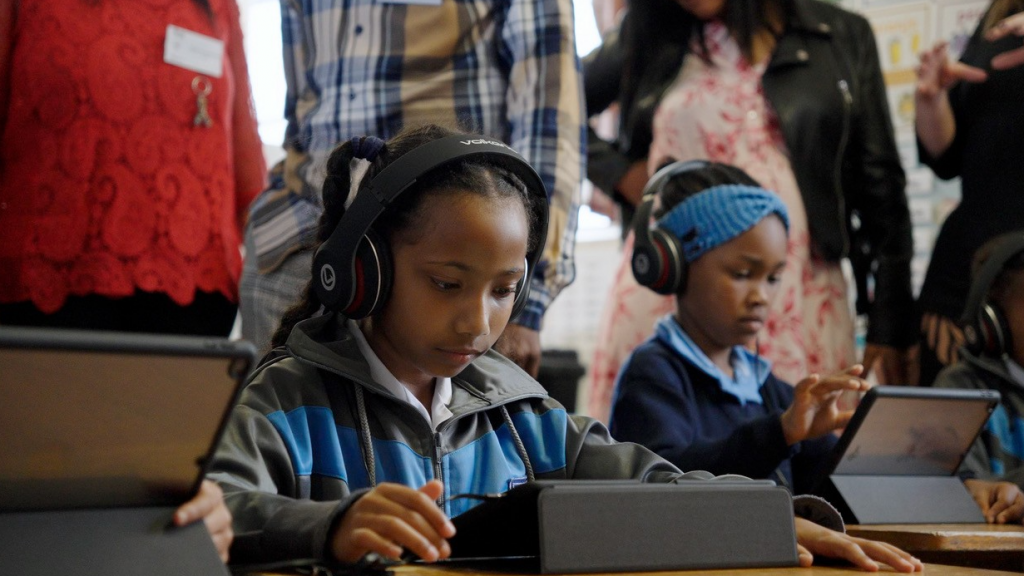
iSchoolAfrica equips under-resourced schools with secure mobile iPad labs, pre-loaded with curriculum-aligned educational apps and software tailored for learners with different needs. iPad’s built in accessibility features support learners with disabilities, helping make learning more inclusive. These tools support students with autism, visual impairment, deafness, cerebral palsy, dyslexia and other challenges, allowing them to engage with curriculum content in ways that work for them. Mobile device management software keeps the iPads secure – so they can be tracked and deactivated when they leave the school premises.
But inclusivity isn’t only about the tools — iSchoolAfrica trains and mentors teachers to use technology effectively and to adapt teaching practices for diverse learning needs. This builds confidence and capacity within schools to sustain inclusive learning long-term.
What learning programmes do you offer schools, and how do these work?
Our learning programmes are designed to integrate iPad technology meaningfully into everyday teaching and learning – not as an ‘add-on’, but as a powerful enabler of deeper understanding, creativity and future-ready skills.
Our key programmes include:
Numeracy and Literacy Programme – for early learning and foundation phase. Curriculum-aligned digital learning using iPad technology to strengthen literacy, numeracy and critical thinking in the early years.
Coding and Robotics Programme – we bring Apple’s Everyone Can Code project to schools, providing a full coding curriculum, from block-based coding concepts to app development.
Disability and Inclusion Programme – a specialised programme supporting learners with disabilities through assistive technology and inclusive teaching strategies.
Media Change Makers Programme – designed to empower young people to become agents of change through media and storytelling.
How does iSchoolAfrica’s work empower both students and teachers?
iSchoolAfrica empowers learners by giving them access to technology that unlocks creativity, critical thinking and opportunity. Through interactive digital lessons, coding and robotics, and inclusive assistive tools, they build confidence as they develop real-world skills and gain exposure to future career pathways.
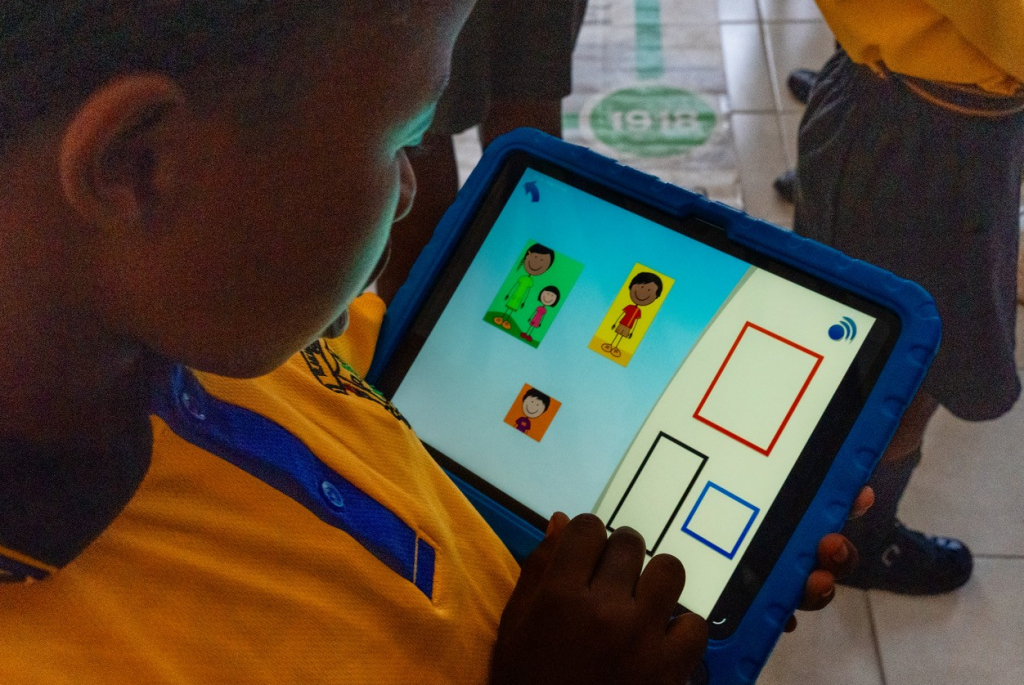
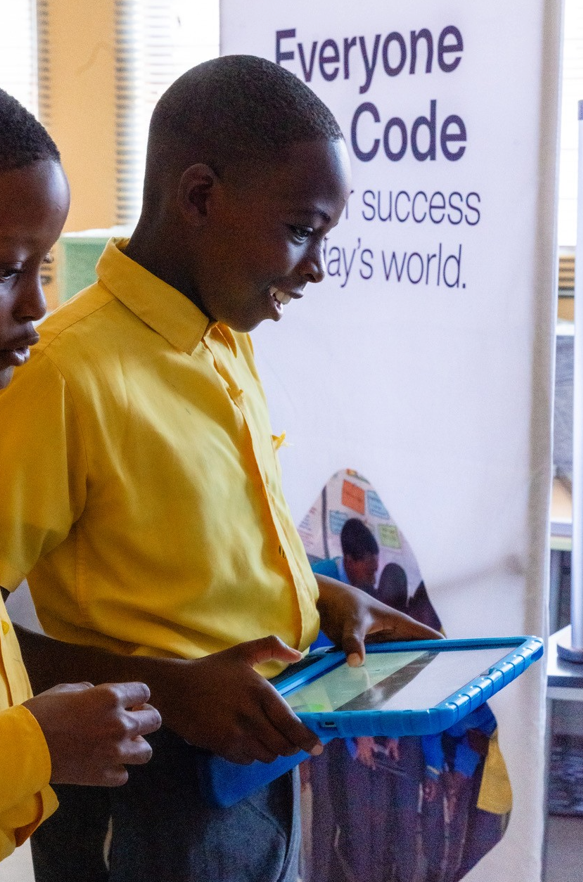
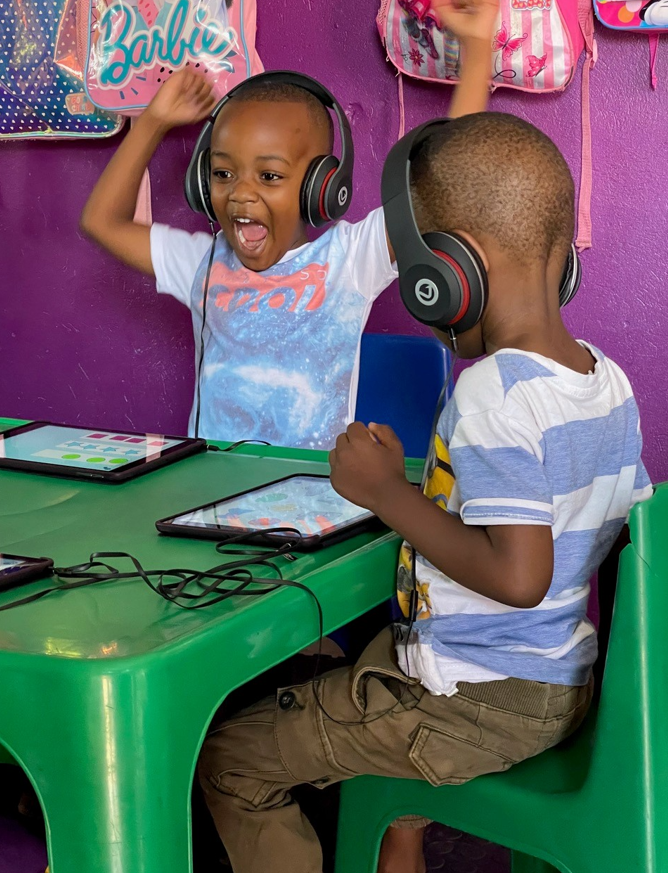
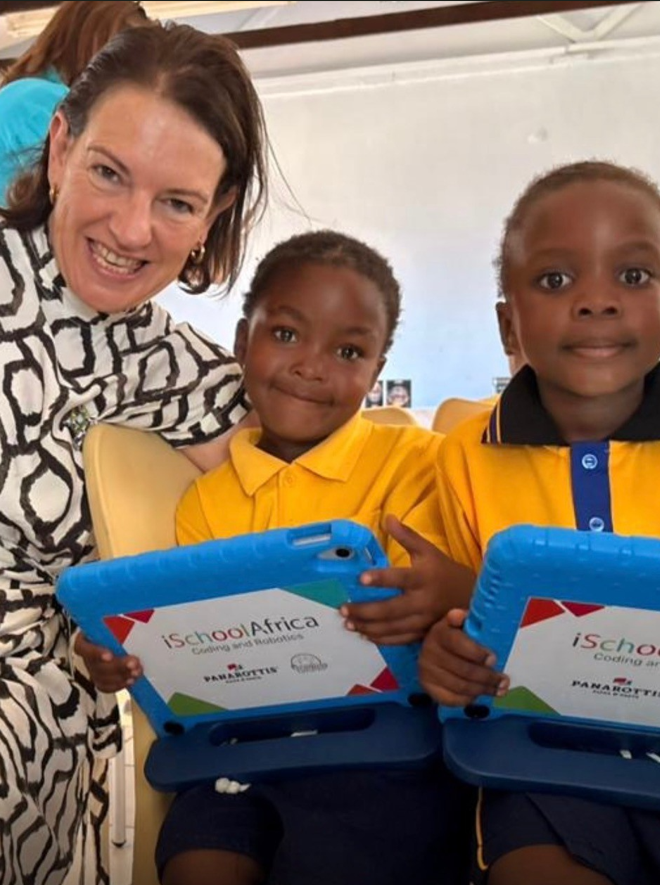
Every iSchoolAfrica programme includes educator support and mentoring. Programme champions are also appointed in each school. iSchoolAfrica builds educator confidence, competence and leadership in a digital world. Through structured training, ongoing coaching and classroom-based support, educators learn how to integrate technology meaningfully into the curriculum. Teachers are also awarded the global recognition of Apple Teacher. An ongoing support network of best practice is created.
Who are the iSchoolAfrica facilitators, and what support do they offer schools?
iSchoolAfrica Facilitators are trained specialists in education technology integration. They work on the ground at each school, where an iSchoolAfrica programme is implemented. They support and mentor the educators to ensure confidence and independence.
What collaborations make iSchoolAfrica’s work possible?
Partnerships and collaboration are key to iSchoolAfrica’s success and sustainability. Our work is made possible through a wide range of partnerships with private companies, non-government organisations (NGOs), foundations and community organisations. And, of course, central to all our programmes is the commitment of school leaders, educators and learners.
What impact has iSchoolAfrica had so far?
Since its formation in 2009, iSchoolAfrica has had a significant and measurable impact on South Africa’s education landscape. Over 340 schools have participated in iSchoolAfrica’s programmes. Our initiative has impacted more than 120,000 learners from Early Childhood Development through Grade 12. Over 3,500 teachers have been trained to integrate technology and learner-centred practices effectively in the classroom.
What have been the highlights for you, personally?
I am very proud of the impact iSchoolAfrica has made. The highlights for me are always seeing the personal triumphs of our programme: a Grade 1 learner in a rural village gets access to personalised numeracy and literacy lessons; a child in hospital does not miss out on school learning; township teenagers make movies on issues that are important to them; a non-verbal learner with autism communicates for the first time; deaf youth become successful app developers; teachers thrive as they see their learners succeed – this is the everyday life of iSchoolAfrica.
What’s next for iSchoolAfrica?
iSchoolAfrica is always looking for ways to scale and strengthen partnerships for increased impact and reach. We look forward to new, innovative ways of increasing access to quality education. It will be exciting to see how AI will assist this.

 linkedin.com/company/iSchoolAfrica
  facebook.com/ischoolafrica
  https://www.youtube.com/channel/UCtSLoyaxL1IlbB6FbrdhLZQ
Do you have a question for Michelle?

Read about how Scottish Teachers Advancing Computing Science (STACS) is advance computing science in Scotland:
www.futurumcareers.com/championing-computing-science
The post Putting the right technology into the right hands appeared first on Futurum.
“}]]