
Liberté, Égalité, Unpacking Protests Abroad-é
[[{“value”:”
In recent weeks, countries around the globe have seen strikes, rallies, and social movements driven by change and criticism of government policies. When choosing to study abroad, it’s impossible to guarantee you won’t encounter political uncertainty, but being present during these moments offers a VIP perspective on a country’s culture.
Since the start of the semester in Paris, students have been frequently alerted about local demonstrations. Many of these demonstrations don’t receive international media coverage, and you might not even know about them. In fact, I was leaving the metro with a friend when we started hearing noises and music. What we initially thought was a street concert turned out to be a manifestation for immigrant rights and housing. One could be casually walking around Paris and encounter a peaceful gathering of this kind.
This is partly due to how deeply normalized civic engagement is in France. While La Révolution Française is a fascinating historical event in textbooks, it also helped establish a proud tradition of public assembly. Although the Revolution was extreme, it set the foundation for modern French civic participation.
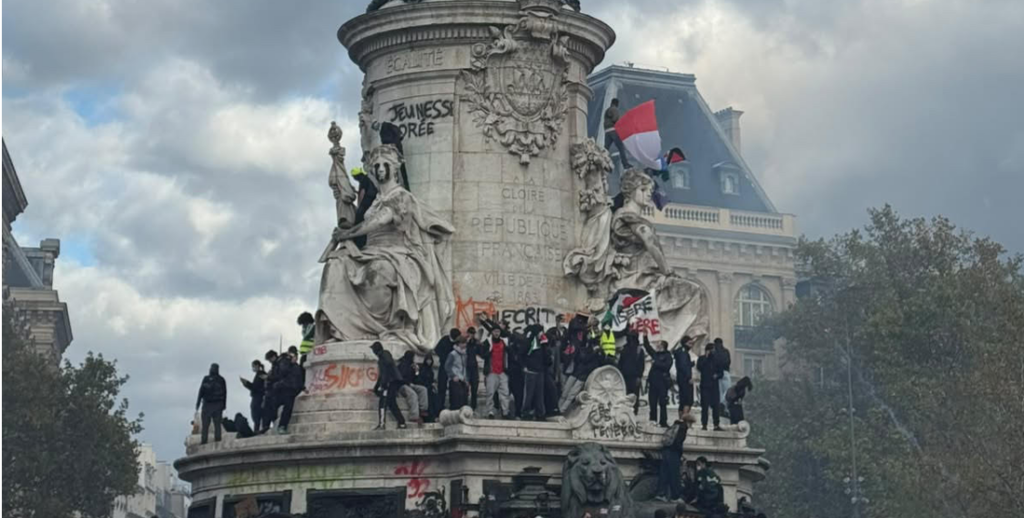
Recently, global media focused heavily on the riot in Paris on October 17, which shocked many due to property damage and clashes. However, those violent scenes do not represent how the vast majority of French protests operate, nor does the blanket media coverage reflect daily life across the entire city.
Legal VS Illegal Manifestation
If you choose to come to Paris, you should know the difference between legal and illegal manifestations: A legal protest has identified organizers and a pre-defined route or gathering point. Contrastingly, an illegal protest does not have planned routes coordinated with the government and NO structured legal protection.
As an international student abroad, you should NEVER engage in a manifestation, especially if it’s illegal. Yet, as we say back home, “the curiosity killed the cat,” and the only way to truly know if a manifestation is legal or not is by checking the organizers and the official permit.
What Happened on October 17th?
One of my closest friends in Paris lives in Place de la République, the place where historically demonstrations and manifestations began. She happily explained that the beginning of the demonstration was peaceful and non-violent. As peaceful demonstrators left, the violent individuals remained and evoked what the media has shown to the rest of the world.
Coming Abroad to Paris in Spring 2027? Here’s what you should know.
If you’re coming to Paris next semester, you should be aware that presidential elections will take place in April. Be ready and prepared to see demonstrations around the city, but don’t be scared. Legal demonstrations are announced through communication channels such as Instagram, WhatsApp Communities, and even your institution via email, so you are always aware and informed of when they take place and what areas to avoid.
You should remember that being part of manifestations is a threat to your visa status. Although demonstrations can be a great way of understanding a culture, it should be observed from far away. As seen on October 17th, peaceful demonstrations can turn violent easily.
Despite that, remember to enjoy your time and be aware that, in contemporary French society, liberté remains an active, lived concept.
The post Liberté, Égalité, Unpacking Protests Abroad-é appeared first on Off-Campus Study.
“}]]