
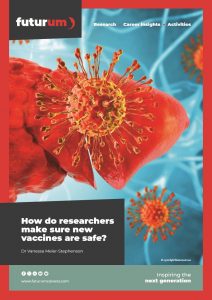
How do researchers make sure new vaccines are safe?
[[{“value”:”
How do researchers make sure new vaccines are safe?
Clinical trials are a rigorous and time-consuming part of medical research, with new drugs or vaccines sometimes taking ten to fifteen years to complete. At the University of Alberta in Canada, Dr Vanessa Meier-Stephenson is trialling a new vaccine for hepatitis C, using several specialist techniques, such as a ‘double-blinded’ approach, to make sure the vaccine is safe and reliable.
Talk like a medical researcher
Adjuvant – an ingredient in vaccines and medicines that strengthens the body’s immune response
Antiviral – a medicine that treats viral infections or viral diseases
Double-blinded – a type of clinical trial where the participants and researchers are unaware of who has received the vaccine and who has received a placebo
E1 and E2 – the surface proteins of the hepatitis C virus that allow it to bind to a cell
Efficacy – the ability of something to produce the intended result
Hepatitis C – a virus which can result in serious liver damage and liver cancer
Phlebotomy – the process of making a puncture in a vein, usually for the purpose of taking blood
Placebo – a treatment that does not contain the active therapy and should therefore produce no physiological effect
Stability testing – testing a product over time to see if it remains stable
T-cell – a type of immune cell that helps the body recognise and fight diseases
Hepatitis C is a virus that infects the liver and is potentially life-threatening if left untreated. According to the World Health Organization, over 240,000 people died from hepatitis C in 2022. Despite decades of research into the field, there is currently still no vaccine for the disease.
At the University of Alberta, Dr Vanessa Meier-Stephenson is a doctor and researcher who is testing a vaccine for hepatitis C. “The University of Alberta is an incredible place for this kind of work,” she says. “Dr Lorne Tyrrell, who developed the first antiviral for hepatitis B, and Sir Michael Houghton, the Nobel Prize winner for the co-discovery of hepatitis C, both work just down the hall from me!”
What is in the new vaccine?
Vaccines are made up of carefully chosen ingredients which all work together to produce the desired effect of fighting the infection. Often, these ingredients include strands of genetic information, adjuvants or specific proteins.
The hepatitis C vaccine that Vanessa is trialling is the next generation of a vaccine developed by Sir Michael Houghton and his team. “Their first-generation vaccine, which was mixed with a different adjuvant, was tested in chimpanzees and showed positive effects,” explains Vanessa. “In 2010, a variation was given to humans in a trial in the US which tested three different doses of the E1 and E2 proteins. They found the lowest dose worked just as well as the higher doses.”
This time, the E1 and E2 proteins inside the vaccine have been produced a little differently. The proteins have also been paired with a stronger adjuvant, in the hope that this will stimulate T-cells more effectively.
Testing time
Once a new vaccine has been developed, the product goes through rigorous pre-clinical testing (which involves animal testing), toxicity screening and stability testing. It then goes through a clinical trial to ensure it is safe and effective for human use. Even though a version of the vaccine that Vanessa is studying has previously been tested in humans, the product must still go through this full process, as the combination of the new adjuvant with the E1 and E2 proteins might cause a different reaction.
One of the final checkboxes for the vaccine is its stability, as Health Canada (the regulatory agency) needs to know that the vaccine components do not fluctuate over time. “We have to prove that the vaccine is biochemically and biologically exactly the same today as it was six months ago,” explains Vanessa. “This involves challenging the product with different temperatures and other environmental factors to ensure its consistency and safety over time.”
While the quality control team completes the stability testing, Vanessa and other members of her team – such as her study coordinator Kelly Kim – can start planning the structure of the clinical trial. “Kelly handles all aspects of the trial, including setting up the protocols, organising the regulatory paperwork, recruiting and screening participants, visit coordination, phlebotomy, follow-up checks, documentation, and on and on!” says Vanessa.
How is the trial structured?
The clinical trial of this hepatitis C vaccine will involve 27 participants, with three taking part in the first stage, and 24 taking part in the second. “The first stage involves staggered dosing and extreme scrutiny,” says Vanessa. The team will monitor the three participants closely for any signs of a negative reaction and make sure there are no unexpected side effects to the vaccine. “In a clinical trial, every little detail is pertinent,” emphasises Vanessa. Once the team is satisfied with the initial safety stage, the trial will move into the second stage with the remaining 24 participants.
Reference
https://doi.org/10.33424/FUTURUM695
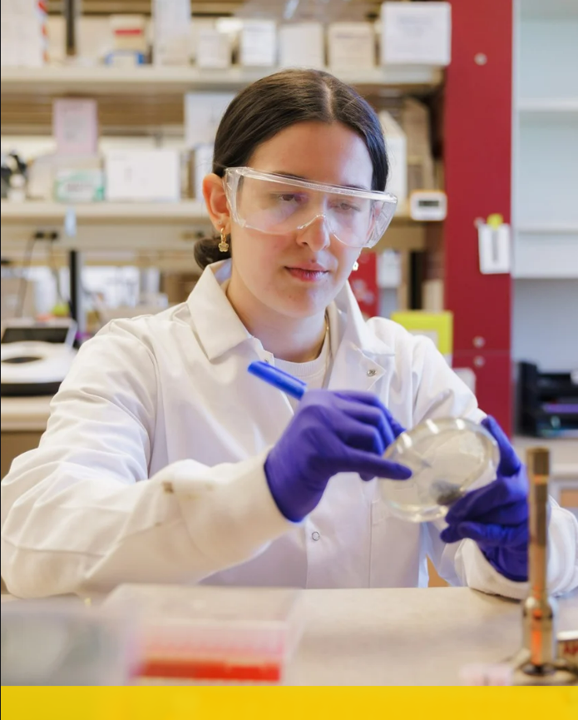
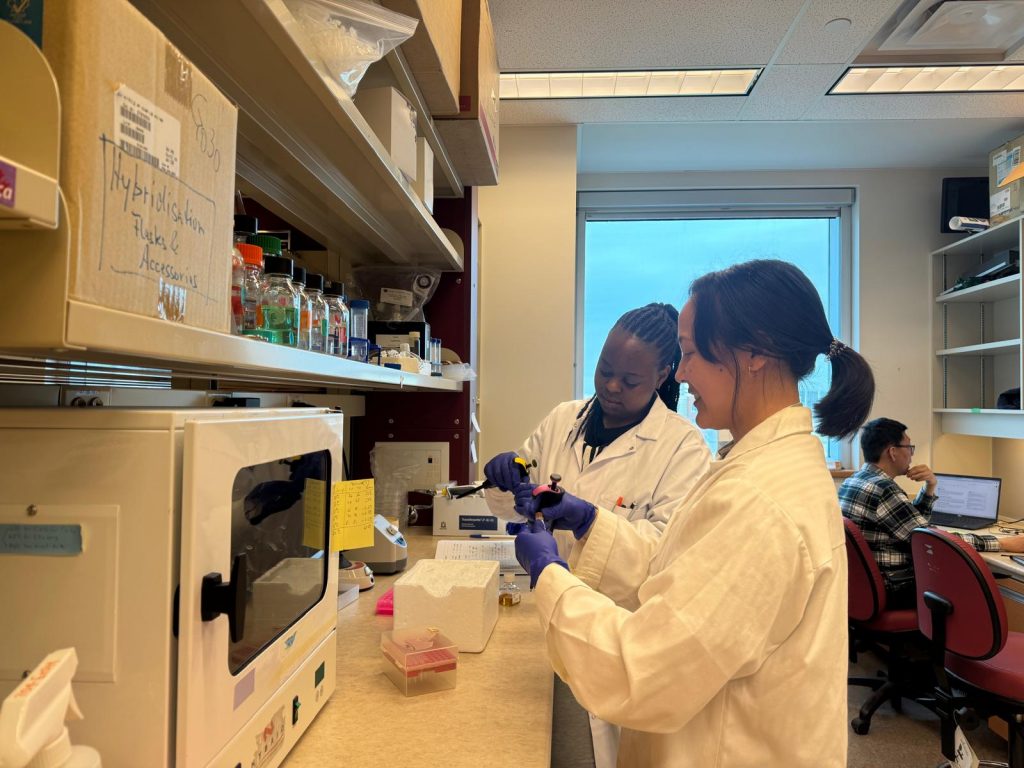
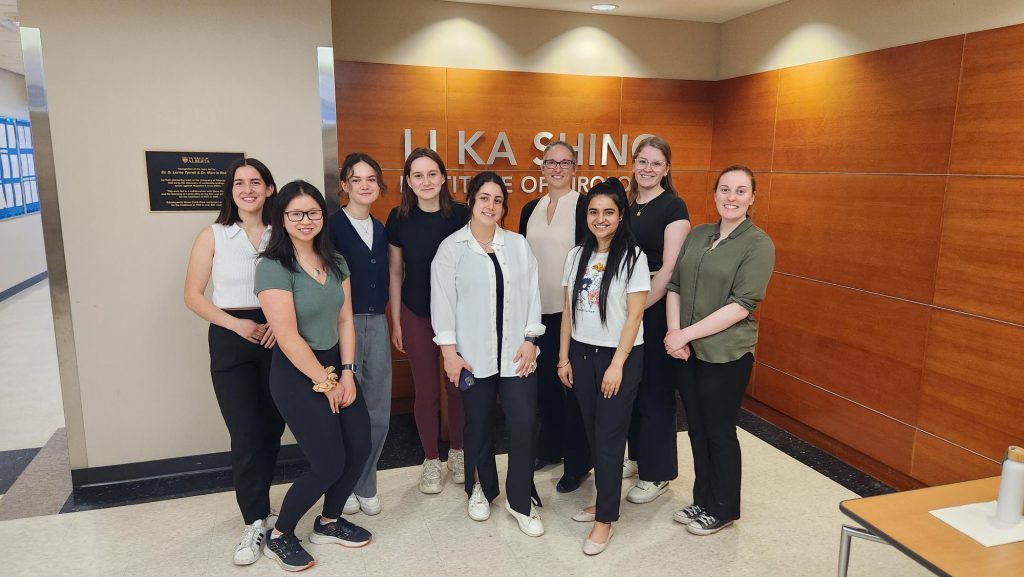
Vanessa’s research group at a team meeting in 2024.
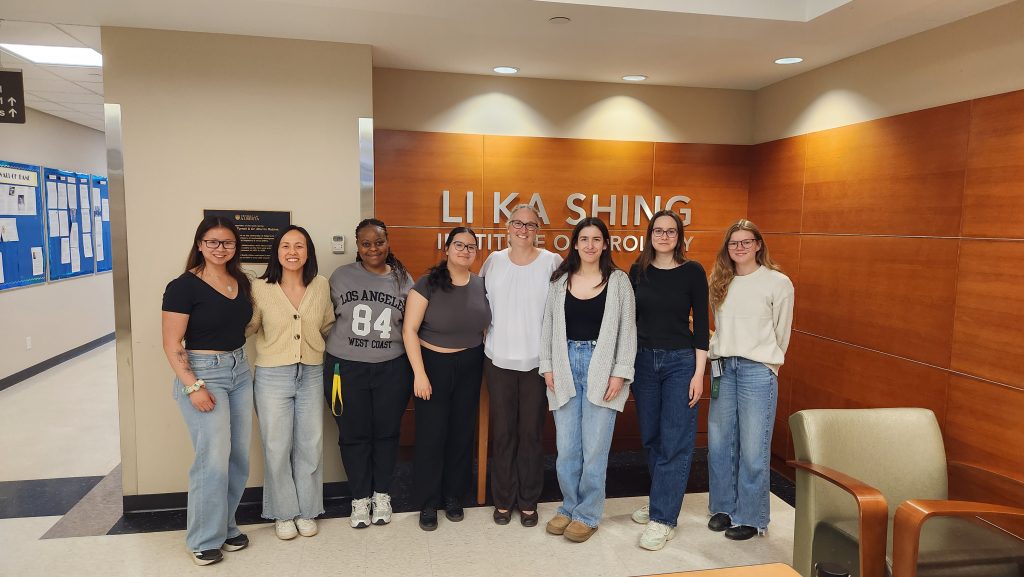
Vanessa’s research group at a team meeting in 2026.
“In the randomised controlled trial stage, half of the participants will receive the actual vaccine product, while the other half will receive a placebo,” explains Vanessa. This stage of the trial will also take a ‘double-blinded’ approach, where both the participants and the clinical team are ‘blind’ to which patients have taken the placebo vaccine. Instead, the vaccine will be administrated by a nurse who is not involved in the data collection, and the syringe will also be covered in tape so the participants cannot guess which mixture they are receiving.
“It’s important to do this sort of blinding to ensure we’re capturing every little detail,” says Vanessa. “For example, if you thought you’d been given the placebo, you might not report the upset stomach you had later that day, or if we saw an abnormality on a test, we might interpret it less significantly if we knew it was a placebo case.” This part of the trial also demands an extremely high level of scrutiny. “Even minor abnormalities in blood tests that I might normally dismiss as a clinician will get documented,” says Vanessa.
What next for the team?
Vanessa and the team have planned out their clinical trial and are confirming stability testing to ensure that their vaccine is safe and stable enough for the rest of the work to start. “We are right at the starting line of the next stage,” says Vanessa. “We have the required approvals from Health Canada, animal studies are complete, and we have our recruitment materials ready to go.”
Through teamwork and collaborative efforts, the team will soon know if the E1 and E2 proteins, alongside the stronger adjuvant, in the new vaccine will create the desired immune response. It is an exciting point in the journey for the research team.
 Dr Vanessa Meier- Stephenson
Assistant Professor, Faculty of Medicine & Dentistry, Medicine Department,
University of Alberta, Canada
Field of research: Infectious diseases
Research project: Running a double-blinded clinical trial of a hepatitis C vaccine
Funders: Li Ka Shing Applied Virology Institute; Canadian Institutes of Health Research (CIHR)
About medical research
Medical research is an exciting area of healthcare where scientists work together on pioneering studies to improve patient care and patient experience. “Medical research is always evolving,” says Vanessa. “It is common for clinical trials to explore drugs, such as medicines, vaccines and natural health products, or the development of devices, such as diagnostic tests, implantable devices and wearable devices.”
Science conducted in the laboratory can provide discoveries that have practical, ‘real world’ medical applications for patients, a research process termed ‘bench to bedside’. But it is not only scientists who work in medical research. “Doctors, nurses and coordinators working directly with patients can work in research,” says Vanessa. “Their involvement also provides discoveries that go into clinical trials.”
The introduction of artificial intelligence (AI) to the field is leading to a wide range of possibilities for the next generation of researchers. “What role does AI play in human research, and how will it impact medicine? Can it be integrated into or enhance certain areas in research?” asks Vanessa. “I would argue that it’s less a case of ‘AI will take over’ or ‘AI will take our jobs’ and more about trying to understand how, with the support of AI, we can increase our efficiencies to achieve the many goals of medical research.”
Pathway from school to medical research
Working in medical research requires a mix of scientific knowledge and interpersonal skills. “It is helpful to know basic sciences (i.e., biology, chemistry) to understand the science behind the research, but we mustn’t forget that social sciences are equally important because most medical research relies on human interactions,” says Vanessa.
At university, study a bachelor’s degree in biology, biochemistry, pharmacy or a similar field. Take extra courses in communication or volunteer in a customer service environment to develop your interpersonal skills. “I would recommend students take whichever courses/subjects interest them most at the time,” adds Vanessa.
To work in research, you will typically need at least a bachelor’s degree. Many researchers complete a topic-focused master’s degree or develop a high-level of expertise with a PhD.
If you live in Alberta, have a look at the University of Alberta High School Youth Researcher Summer Program. “This programme gives high school students the chance to take part in a health-related research project and get paid a stipend over the summer,” says Vanessa.
Explore careers in medical research
“Start with the basics,” says Vanessa. “Try to find opportunities (paid or unpaid) where you can learn more about what research is about and what it can entail. There are institutions, researchers and companies who are constantly seeking people. Be proactive and take the initiative to reach out to them.”
Watch this video of Vanessa working in her lab and explaining her job.
There are many ways to be involved in medical research. “Research work is diverse. There are studies involving bench/wet lab work, chart review work, patient/ participant-facing work and so on, which means there is more than one type of area that may pique your interest,” says Vanessa.
The Certified Clinical Research Professionals Society has some useful information about the different roles and responsibilities in medical research.
Meet Vanessa
Being a doctor and a researcher can be highly stressful. There are a lot of demands on my time, and I want to ensure I’m doing my best in all areas. The implications of poor performance on the clinical side might impact a patient’s length of stay in hospital or, in the worst-case scenarios, their health or life. The implications of performing poorly in the lab are wasted materials and time, so the stakes are much lower, but we need to ensure we’re doing good research or we won’t be able to retain funding. The stresses are different for my different roles, and if a patient (or trial participant) has an issue that comes up that I need to address, all other things take a backseat until it’s been dealt with.
My patients continue to remind me of the bigger picture of what we’re doing. In my lab, it’s the excitement of discovery – the potentials and ‘what ifs’. It’s also incredibly rewarding to be part of those ‘aha’ moments, when a student finally figures out a challenging experiment they’ve been working on or comes up with a neat idea for what to do next based on their data. What drives me to do the clinical trial work is the potential to bring a basic science discovery into the medical realm where it can actually benefit patients – from bench to bedside.
Science is absolutely a team effort; there is no way I could do this alone. On the clinical trial, I work with many other clinicians who help monitor patients to spread the workload. And we have research nurses and pharmacy personnel who also have important roles in the trial process. The most central member of our team is our study coordinator, Kelly. She’s the one who keeps us all organised and ensures the day-to-day operations run smoothly.
Vanessa’s top tips
1. Don’t feel forced into a specific path. Keep looking for opportunities and seek diverse experiences.
2. It’s okay to not have everything figured out — just work hard at each thing you do, and you’ll learn more about yourself and your passions along the way.
3. Don’t internalise failure. If an experiment doesn’t work, ask why and learn from it. Sometimes, a ‘failed’ experiment opens up a whole new area of discovery.
Meet Kelly
 Kelly Kim, Study Coordinator, Hepatitis C vaccine clinical trial
When I was growing up, my dad couldn’t run or play with me like the other able-bodied dads could with their kids, as he had a severe limp which limited his mobility. There was a part of me that was determined to become a doctor to fix his leg, and my enthusiasm and passion for medicine took effect from there.
My career has been shaped by curiosity. As an undergraduate student, I volunteered at my local children’s hospital. The opportunity to support research within the emergency department arose, and I’ve been working in research ever since!
My role as Study Coordinator involves reviewing and developing protocols, informed consent forms, data collection forms, databases and manuals; submitting to our local ethics board; recruiting and following up with participants; communicating with study/clinical care teams and the participants; being organised and detail-oriented; prioritising deadlines; and managing day to day activities, just to name a few!
While the fundamentals of research remain the same, every study is different and you need to start anew for each study you work on. Figuring out the logistics of how best to run the study with the resources you are allocated is a massive jigsaw puzzle.
The rewarding part is when you get a study up and running seamlessly and you’re one step closer to success and completion. Somehow, whatever you think will work in theory doesn’t translate into practice, so you end up troubleshooting until you get it just right. But that’s the beauty of working in research because you really don’t know what to expect. It keeps you on your toes!
Kelly’s top tips
1. There are no ‘dumb’ questions so keep asking them! Keep engaging with the work even if it makes you uncomfortable and uncertain.
2. Keep learning, because that’s how you’ll increase your potential. Don’t limit yourself by what you believe is the extent of your abilities and capabilities.
Do you have a question for Vanessa or Kelly?
Write it in the comments box below and they will get back to you. (Remember, researchers are very busy people, so you may have to wait a few days.)

Learn more about how medical researchers conduct clinical trials:
The post How do researchers make sure new vaccines are safe? appeared first on Futurum.
“}]]