

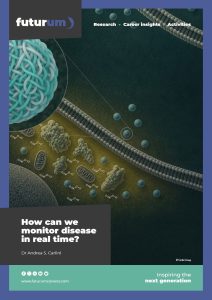
How can we monitor disease in real time?
[[{“value”:”
How can we monitor disease in real time?
What if we could detect diseases before they made us ill and monitor their progression in real time? Well, at the University of California Santa Barbara in the US, Dr Andrea Carlini leads a research group that is creating chemical probes that can do just that. These structurally-responsive polymers change their shape when they interact with biomarkers of disease, opening up new possibilities for smart biomaterials and wearable sensors.
Talk like a biomaterials scientist
Reactive oxygen and nitrogen species (RONS) – highly reactive molecules containing oxygen or nitrogen that are naturally produced by the body but can be harmful when they build up
Biomarker – a measurable indicator that gives scientists information about a biological process, such as a disease or a response to treatment
Peroxynitrite – a disease-specific biomarker, which is a particularly harmful and highly reactive type of RONS that can damage DNA and proteins
Polymer – a long, chain-like molecule made from many smaller molecules
Piezoelectrics – materials that convert mechanical stress into electrical signals (and vice versa), commonly used in self-powered digital sensing devices
Imagine a device that could monitor your health and tell when you’re getting sick before you even start to feel unwell. With such a device, you could take proactive steps to stop the illness progressing and your doctor could monitor treatments in real time. At the University of California Santa Barbara, a research group led by Dr Andrea Carlini is creating new chemical sensors that can detect and monitor diseases. Their aim is to combine these sensors with wearable and implantable devices to improve healthcare.
What are reactive oxygen and nitrogen species?
“Reactive oxygen and nitrogen species, or RONS, are highly reactive chemicals that our cells produce naturally,” explains Andrea. “In small amounts, they help cells communicate and fight infection.” However, if too many RONS are produced, they can damage proteins, fats and DNA. This is known as oxidative stress and it happens in many diseases including cancer, heart disease, injuries and brain disorders.
“My lab studies RONS because they act like early warning signals,” says Andrea. “By measuring when and where they appear, we can track how a disease starts, progresses and responds to treatment.” Instead of only seeing the damage after it happens, Andrea and her team are creating sensors that track RONS so that they can watch how diseases progress in real-time.
What is peroxynitrite?
Peroxynitrite is a particularly harmful type of RONS made up of three oxygen atoms and one nitrogen atom. Healthy tissue produces very small amounts of it, but stressed, inflamed or diseased tissue produces a lot. This makes peroxynitrite a useful biomarker – something that we can measure to track a disease.
“The challenge is that peroxynitrite is short-lived, highly reactive and hard to see directly,” says Andrea. “Despite these challenges, scientists already have some useful methods for detecting it.” Some methods detect the damage peroxynitrite leaves behind, such as modified proteins, while others use fluorescent molecules that light up when they react with it. “Although these approaches are useful, most only provide a short snapshot,” says Andrea. “The traditional chemical probes used to detect peroxynitrite are small, so they are quickly consumed or cleared from the body, making it difficult to continuously track how a disease changes over time.”
What are structurally-responsive polymers?
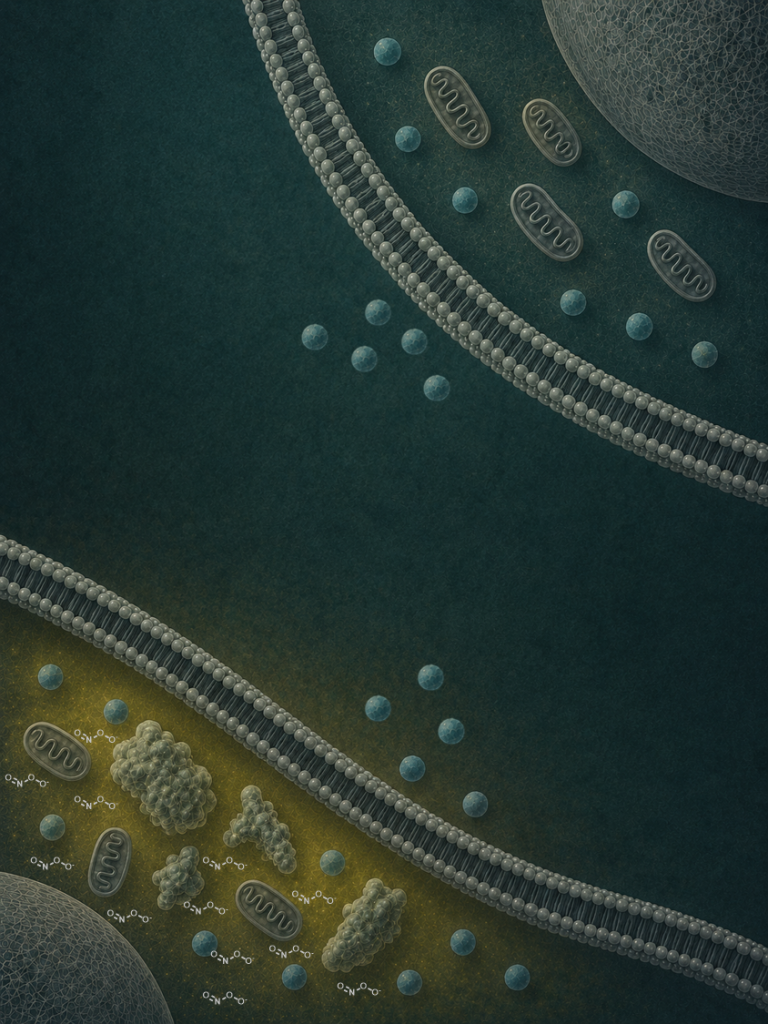
Andrea and her team use structurally-responsive polymers covered in these chemical probes to detect and monitor peroxynitrite. The polymers are chemically modified so that their structure changes when they react with this harmful RONS. For example, like the traditional small-molecule probes, Andrea’s polymers produce an optical signal when they react with peroxynitrite, allowing the team to see where a disease is actively progressing.
But the team’s structurally-responsive polymers have one ability in particular that makes them more effective than small-molecule probes. When they react with peroxynitrite, they change shape and size, growing into larger, more durable molecules. Because these polymer sensors are larger than small-molecule probes, they can survive in the body for much longer, allowing for continuous monitoring rather than just a single snapshot.
“Imagine a material that travels through the bloodstream as a tiny particle so it can easily reach diseased tissue,” says Andrea. “Once it arrives, it reacts with peroxynitrite, changes colour and grows into a much larger structure, like a sponge or gel, allowing it to stay in place longer.” This type of material is known as a self-reporting biomaterial because it reports on its own behaviour. As these smart biomaterials continue to react with peroxynitrite, they continue to change colour, reporting back to the scientists and doctors observing them.
But Andrea’s team are hoping to create devices that can do more than just monitor and report on disease progression. “We want to combine smart biomaterials with wearable and implantable devices so doctors can receive real-time digital information about how a patient’s body is responding to treatment,” says Andrea. “Our long-term goal is to create materials that not only detect disease, but also deliver medicine and communicate directly with healthcare technologies.” These materials would be able to provide smarter solutions to some of the most challenging problems in biomedicine that cannot be solved by passive materials.
A team effort
Designing structurally-responsive polymers is a complex process, and like all science, is not something that can be done alone. Andrea’s team contains many scientists and researchers, all of whom contribute to the group’s goals.
“I joined Andrea’s team because I wanted to research piezoelectric polymers,” says graduate researcher Rachel Zhang. Piezoelectric polymers change shape when they are subjected to an electric field, making them flexible and ideal for creating biomedical devices. These materials can translate the biological and chemical responses of Andrea’s peroxynitrite-responsive polymers into electronic data that can reveal insights about disease progression, even when we can no longer see them. “I had never heard of piezoelectricity before I met Andrea, and I still think it’s a really neat phenomenon,” continues Rachel. “My goal is to make better flexible piezoelectric materials for biomedical uses.”
“The group’s interdisciplinary environment has allowed me to expand my research beyond traditional polymer synthesis and explore applications in wearable sensors, skin-interfacing devices and biomedical materials,” says project scientist Dr Shivshankar Mane. “The opportunity to design advanced polymeric systems with direct societal impact continues to inspire and motivate my work every day.”
“While we do study the fundamental chemistry and behaviours of biomaterials, it is all through the lens of how this can be applied to complex biochemical problems that are related to human health and well-being,” says graduate researcher Emile Morin. “This has led to collaborations with other labs which accelerate our progress on exciting projects.”
Dr Andrea S. Carlini
Assistant Professor, Department of Chemistry and Biochemistry, University of California Santa Barbara, USA
Field of research: Biomaterials
Research project: Creating structurally-responsive polymers that contain arrays of chemical probes to detect, monitor and treat disease
Funders: US National Science Foundation (NSF); Hellman Family Foundation; University of California Santa Barbara; Harold J. Plous Award
About biomaterials
“The field of biomaterials brings together chemistry, biology, engineering and medicine to solve real healthcare problems,” says Andrea. “We can create materials that detect disease, deliver medicines, repair damaged tissues or even communicate with electronic devices.” The next generation of researchers in this field will have the opportunity to develop smart materials that continuously monitor health and provide individualised treatment. “This is a field in which you can invent technologies that directly improve people’s lives,” enthuses Andrea.
Biomaterials needs to be an interdisciplinary field because it aims to solve complex problems within the human body, which is itself a very complex thing. “A material that works perfectly in the laboratory may behave very differently inside the human body,” explains Andrea. “That’s why biomaterials scientists must be creative, patient and willing to learn from unexpected results. Every unexpected result is a clue, and learning to follow those clues is what makes you a better scientist.”
“As a biomaterials scientist, no two days are exactly the same,” continues Andrea. “That’s one of my favourite parts about the job.” While Andrea develops new research ideas and designs experiments, her students carry out the hands-on work, from synthesising molecules and making polymers to testing new materials. “Research is driven by troubleshooting, so active troubleshooting often reshapes our plans and sends us in exciting new directions,” says Andrea. “My high school calculus teacher once told me, ‘Success is 10% smarts and 90% drive.’ That mindset has guided my career. In research, persistence and curiosity are often more important than having all the answers.”
Reference
https://doi.org/10.33424/FUTURUM723
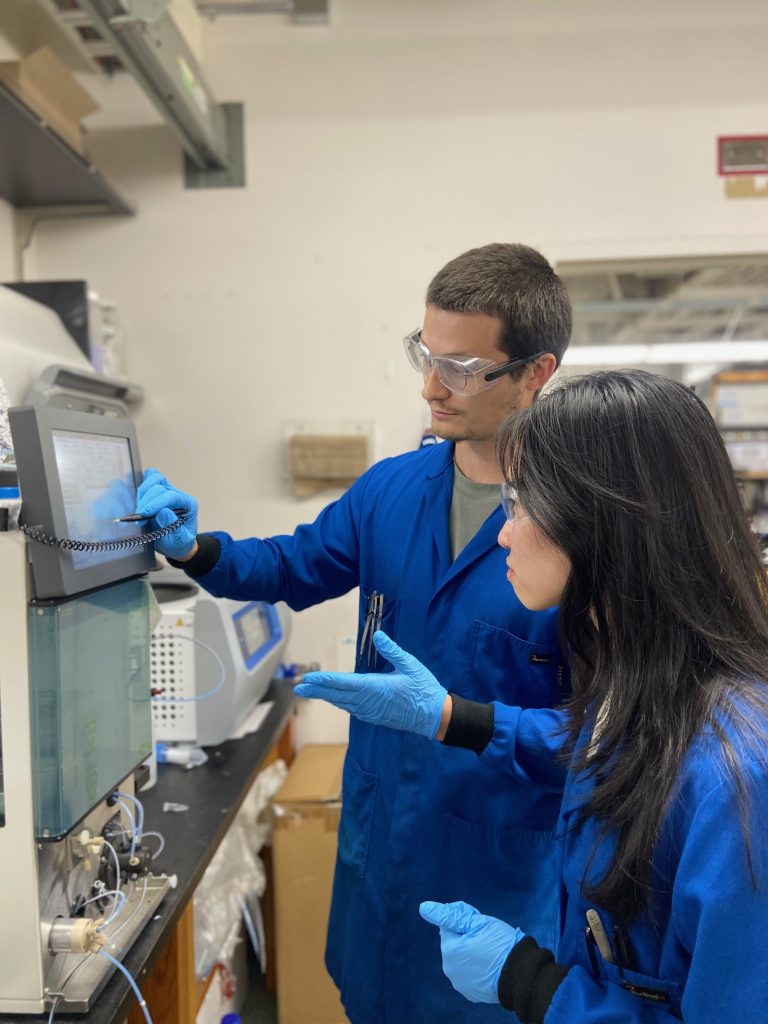
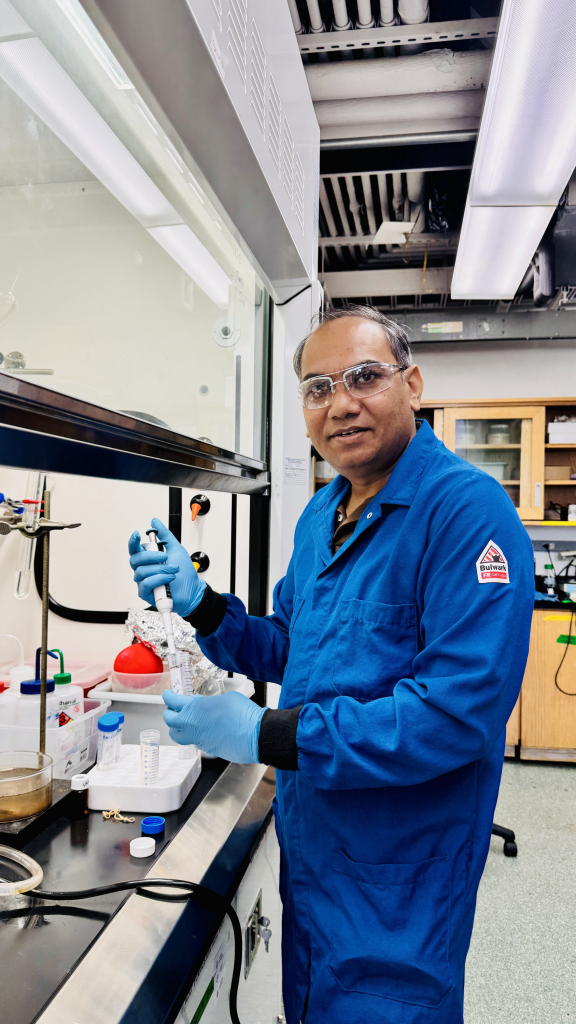
Emile works with fellow lab mate An to purify their probes using flash chromatography.

The Carlini Group celebrating Rachel’s and Emile’s Fellowships with a night of painting in 2024.

In 2025, the annual Carlini Group Camping Trip took place in Yosemite.
All images © Carlini Group









Pathway from school to biomaterials
“Build a strong foundation in chemistry and biology,” says Andrea. “Take polymer chemistry and biomaterials courses whenever they’re available.”
“Don’t wait until graduate school to get involved in research,” says Andrea. She recommends joining a chemistry or materials club, looking for research opportunities at local institutions and applying for internships.
Explore careers in biomaterials
Andrea recommends exploring articles that interest you from the American Chemical Society, the Royal Society of Chemistry and the Materials Research Society.
“Studying biomaterials can open doors to careers in academic research, biotechnology, pharmaceuticals, medical devices and sustainable materials, where scientists and engineers develop new technologies that improve both human health and the environment,” says Andrea.
Meet the team
 Dr Shivshankar Mane
As a teenager, I was deeply influenced by my father, who was a school teacher. Watching his dedication to educating students inspired me to pursue a career where I could both discover new knowledge and share it with others. I developed a strong interest in science because I was always curious about how things worked and enjoyed experiments that connected classroom concepts to everyday life.
Working alongside researchers from diverse scientific backgrounds encourages creative problem-solving and accelerates the translation from fundamental science to practical applications. Andrea’s lab provides an ideal platform to pursue research that addresses real-world challenges in healthcare.
Be curious, build strong scientific fundamentals and gain research experience early. Biomaterials is a rapidly evolving and highly interdisciplinary field, so being open to learning across chemistry, biology and engineering can create many opportunities. Finally, communicate your science effectively and pursue questions that genuinely excite you, because passion and curiosity are powerful drivers of a successful scientific career.
 Emile Morin
Growing up, I spent my summers working on palaeontological sites digging up fossils in Montana or wolf-watching in Yellowstone. Through these experiences, I became fascinated with the natural world and took as many STEM classes as possible in my undergraduate studies.
When I first started working with this group, it was just myself, Professor Carlini, and a group of undergraduate students. The process of starting projects from scratch and building them into successful research ideas gave me a real understanding of how continuous hard work pays off.
Get involved in a lab as soon as possible. Being exposed to the scientific way of thinking, regardless of the exact topic, will help build your understanding. If you approach any research with an attitude of curiosity, you’ll find value in the work. Also, interdisciplinary collaboration has become essential as cutting-edge research requires expertise across several fields of study.
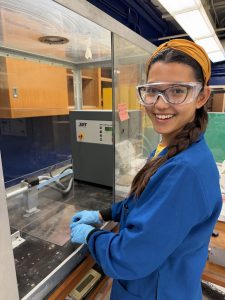 Rachel Zhang
As a teenager, I wanted to be a diplomat. That’s very different from what I’m actually doing now! But one thing that has stayed the same is that I’ve always wanted to be of service to the world and to help people. Through my research, I get to work on solving real-world problems that will help others.
After grad school, I plan to teach as a professor. I want to help more people gain a good understanding of science and chemistry, because I believe that education is empowerment.
Research can be frustrating because the results don’t always match your expectations. It can be difficult to remember that a ‘bad’ result still tells us something we need to know to reach our goal. During these moments, my lab mates’ encouragement and my professors’ support keep me motivated.
Stay curious! Not just about the science, but also about the career possibilities out there. You don’t know what you don’t know, and there’s so much more out there than you might realise.
Do you have a question for Andrea, Shivshankar, Emile or Rachel?
Write it in the comments box below and they will get back to you. (Remember, researchers are very busy people, so you may have to wait a few days.)

Learn about how doctors can monitor health in real time:
futurumcareers.com/how-can-wearable-sensors-help-monitor-health-and-tailor-drug-treatments
The post How can we monitor disease in real time? appeared first on Futurum.
“}]]