
How are vampire stories a metaphor for adolescence?
[[{“value”:”
How are vampire stories a metaphor for adolescence?
Adolescence is a time of transition, as young people grow from childhood into adulthood. The physical and psychological changes that accompany adolescence can lead to identity crises, as young people struggle to find their place in the adult world. At Doshisha University in Japan, Dr Sayaka Oki is studying how vampire narratives express these challenges and how stories can be used to explore questions about identity.
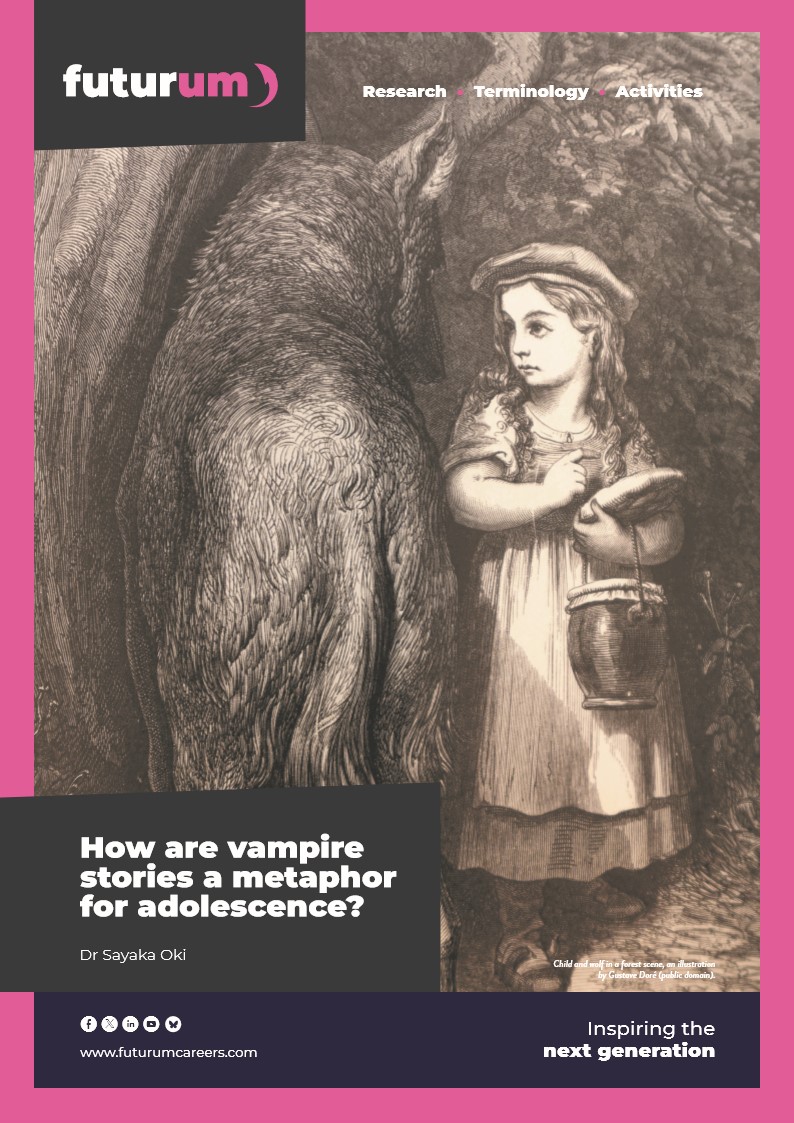
by Gustave Doré (public domain).
 Talk like a … literature researcher
Comparative close reading – a method to compare different literary works by searching for recurring themes
Femme fatale – a mysterious and attractive woman who causes danger (a ‘fatal woman’)
Femme fragile – a vulnerable and emotionally delicate woman (a ‘fragile woman’)
Gothic literature – a genre associated with the supernatural, mystery and horror
Liminal – an ‘in-between’ state at a boundary or transition
Motif – a recurring pattern, symbol or idea that helps to develop a theme
Prohibition – the act of forbidding something
Psychoanalytical – relating to psychoanalysis, the psychological idea of how unconscious thoughts influence conscious behaviour
Subjectivity – being shaped primarily by one’s own beliefs and feelings, even though external influences also play a role

Dr Sayaka Oki
Associate Professor, Faculty of Global and Regional Studies, Doshisha University, Japan (currently a visiting researcher at LMU Munich, Germany)
Field of research: Literature
Research project: Exploring how vampire narratives are a metaphor for adolescence
Research paper: Adolescence in vampire narratives: symbolic motifs from the fairy tale Little Red Riding Hood in E.T.A. Hoffmann’s Vampyrismus (1821) and Moira Buffini’s A Vampire Story (2008). Oki, S. 2026, doi: 10.1080/23311983.2026.2661497
Funder: Doshisha University
DOI: 10.33424/FUTURUM738
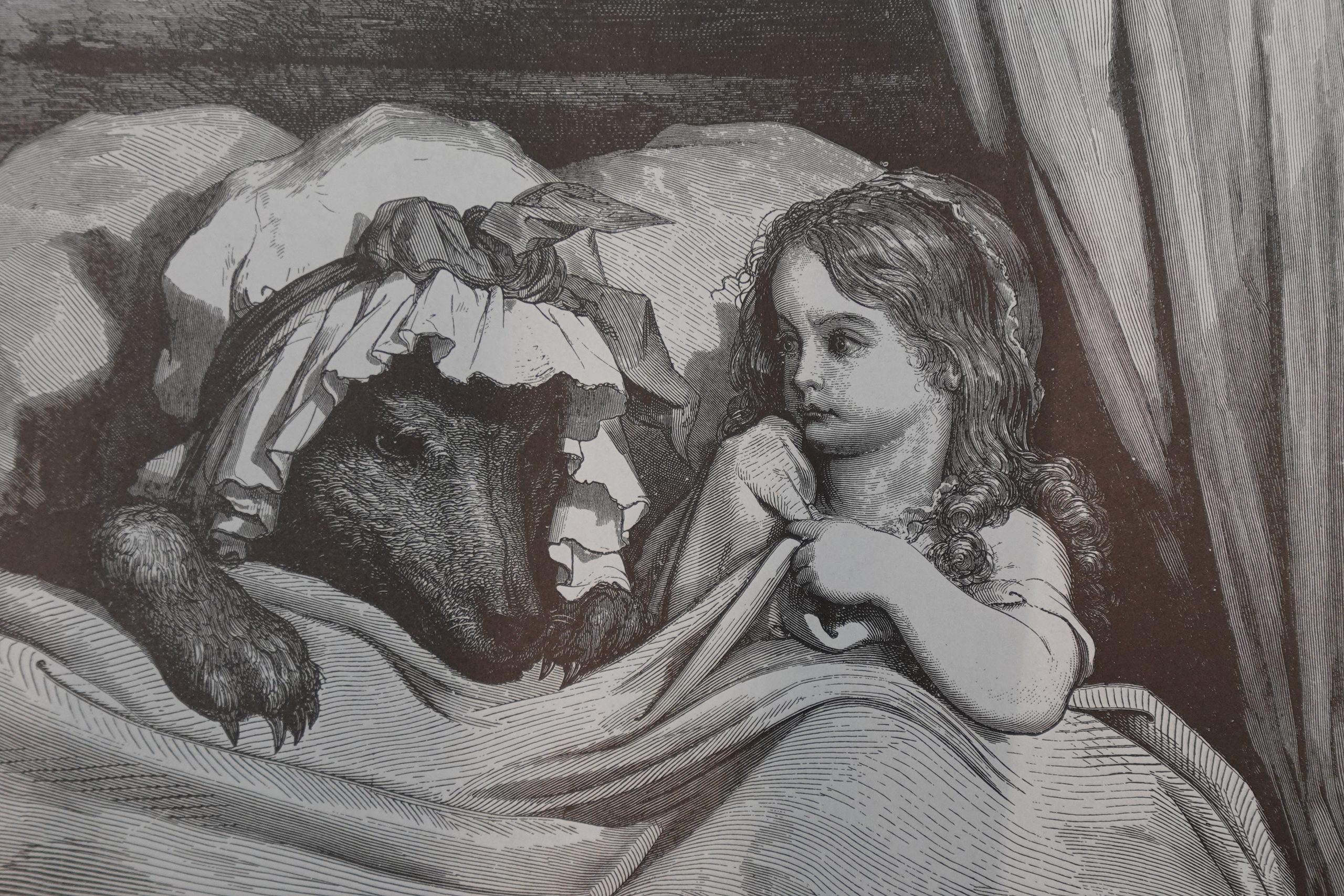
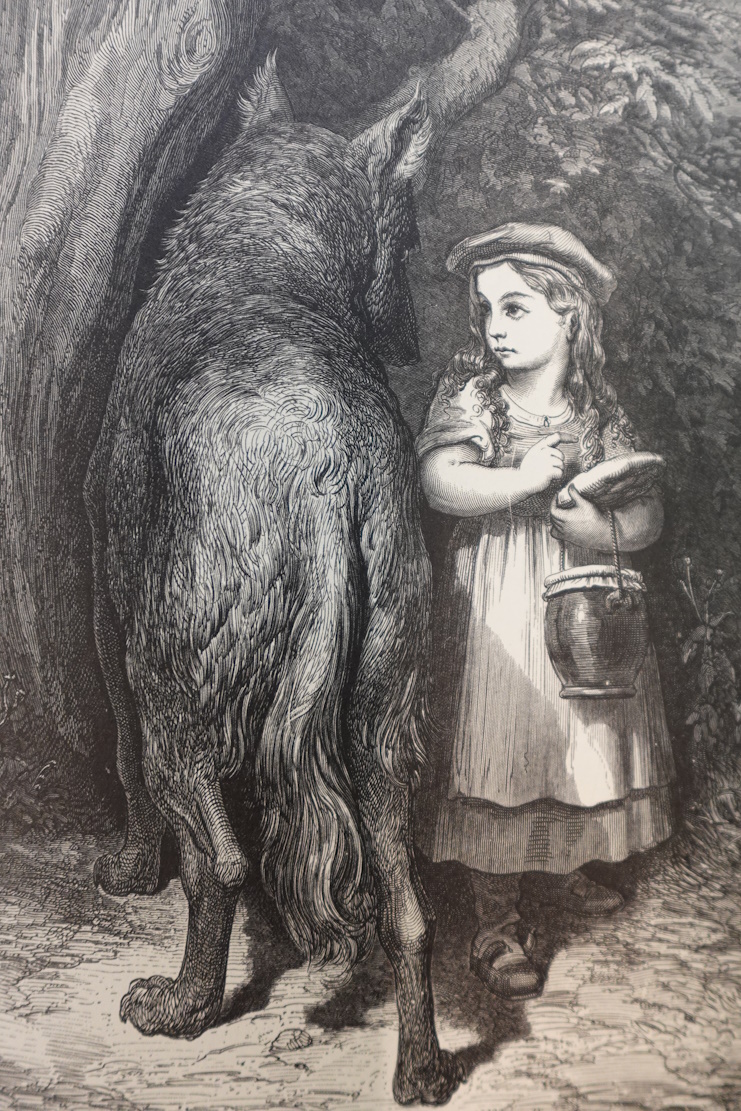
Once upon a time, a young girl in a red hood walked through the woods to bring cake and wine to her grandmother. But on the way, she met a wolf who persuaded her to pick some flowers as a gift for her grandmother, disobeying her mother’s instructions to go straight to her grandmother’s house. By the time the girl arrived, the wolf had eaten her grandmother, disguised himself in her grandmother’s clothes and was waiting to swallow the girl.
You are probably familiar with the classic folktale of Little Red Riding Hood. But have you ever wondered about the deeper meanings behind the story?
“A key motif from Little Red Riding Hood is the conflict between desire and prohibition, which often appears in stories about adolescents,” says Dr Sayaka Oki, a literature researcher at Doshisha University in Japan, who is studying how adolescence is portrayed in vampire stories. While there are no vampires in Little Red Riding Hood, the story shares many features with vampire narratives. “In older versions of the tale, Little Red Riding Hood unknowingly consumes her grandmother’s flesh and blood, a detail which intensifies the connection with vampire stories,” says Sayaka.
How does Sayaka study vampire narratives?
Sayaka is exploring how symbolic motifs from Little Red Riding Hood appear in vampire narratives using a method called comparative close reading. “This involves examining details (such as words, imagery or symbols) in different narratives and comparing how they appear across stories to analyse recurring themes,” she explains. “I use comparative close reading to study fairy tales, modern literature and films, which allows me to notice shared ideas and patterns.”
Vampire stories have a long tradition, from classical tales to modern fiction, meaning that studying them can uncover how ideas have changed through history and across cultures. Through her comparative close reading, Sayaka noticed that psychoanalytical symbols appear in many of the stories she was studying.
What psychoanalytical symbols exist in vampire stories?
“An Oedipal structure (named after the ancient Greek character, Oedipus) describes how young people form identity,” explains Sayaka. “In adolescence, a young person may feel close to the opposite sex parent and compete with the same sex parent.” This psychoanalytical idea appears in Little Red Riding Hood when she disobeys her mother’s instructions and instead follows her curiosity then meets the wolf, who symbolises temptation, danger or a forbidden realm.
“In the Gothic narratives I analyse, vampire transformation symbolises cultural fears about women’s bodies,” explains Sayaka. “Such transformations often reveal what society cannot say openly, turning inner conflict into the fantastic.” For example, in Hoffman’s Vampyrismus (1821), the 16-year-old vampire Aurelie occupies a liminal position as she is neither an adult nor a child, and her supernatural change places her outside social structures. The conflict between desire and prohibition appears in Aurelie’s rebellion against her mother’s pressure to marry. “In this sense, vampirism functions as a metaphor, revealing unstable identities in the transitional phase of adolescence.”
In 19th century Gothic literature, female vampires were portrayed as femmes fatales, but this idea is subverted in Buffini’s A Vampire Story (2008; adapted into the film Byzantium, Jordan 2012). The 16-year-old vampire Eleanor is a femme fragile character who rebels against her femme fatale mother, highlighting her conflict between desire and prohibition and her struggle over her identity. “Buffini challenges traditional views of female vampires by showing Eleanor’s emotional and creative perspective,” explains Sayaka. “Eleanor’s act of writing a story symbolises the search for her own voice, and in Byzantium, her gaze expresses her emerging subjectivity.”
“Across these works, the tension between danger, desire and identity persists,” continues Sayaka. “Each literary work offers a different view of adolescence and individuality, which reflects changing cultural values.”
How does vampirism act as a metaphor for adolescence?
From reading, analysing and comparing different vampire narratives, Sayaka argues that vampirism is used as a metaphor for an identity crisis during adolescence. “An adolescent’s identity crisis not only involves physical changes, but also emotional conflict as the young person attempts to establish who they are,” she explains. “Vampirism works as a metaphor because the supernatural transformation reveals the hidden fears and pressures that exist in society. Vampire narratives depict diverse ways in which adolescents negotiate their individuality.”
How can literature be used to explore ideas about identity?
“Literature allows readers to explore questions about identity and social pressure in a safe and imaginative way,” explains Sayaka. “Stories help young people to reflect on their own experiences during the emotionally sensitive period of adolescence.” By reading and discussing stories, you can observe how characters grow emotionally as a plot progresses, notice the hidden conflicts they face and learn how they overcome these challenges.
Vampire stories in particular are useful for thinking about identity and societal expectations. “They are a rich genre for studying symbolic motifs because they show the border between human and non-human, predator and prey, dominance and submissiveness, and even ideas of justice,” says Sayaka. “I loved Gothic fiction as a teenager, and vampire stories were the ones I found most frightening. Vampires are ‘in-between’ beings that destabilise binary categories, making them well-suited for exploring deeper questions about adolescence.”
Sayaka’s work highlights how the supernatural transformations in vampire stories represent the psychological challenges of adolescence. Little Red Riding Hood, Aurelie and Eleanor all face conflicts and fear the fact that they rebel against their mothers – a tension central to Gothic fiction. In doing so, they form their own individual identities and emerge as young women.
Do you have a question for Sayaka?
Write it in the comments box below and she will get back to you. (Remember, researchers are very busy people, so you may have to wait a few days.)
Related article
Learn how wetlands are being impacted by human activities and climate change:
futurumcareers.com/can-spooky-stories-engage-people-with-history-and-heritage
The post How are vampire stories a metaphor for adolescence? appeared first on Futurum.
“}]]