
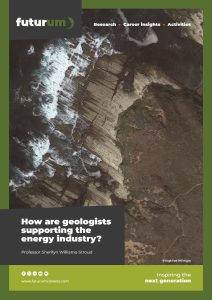
How are geologists supporting the energy industry?
[[{“value”:”
How are geologists supporting the energy industry?
Geologists play a vital role in the energy industry by locating the resources and minerals needed to power society, while also helping to reduce the negative impacts of our reliance on fossil fuels. Professor Sherilyn Williams-Stroud is a structural geologist at Texas A&M University in the US. Her research into how fractures impact the way fluids flow through rocks is supporting the energy industry and mitigating the effects of climate change.
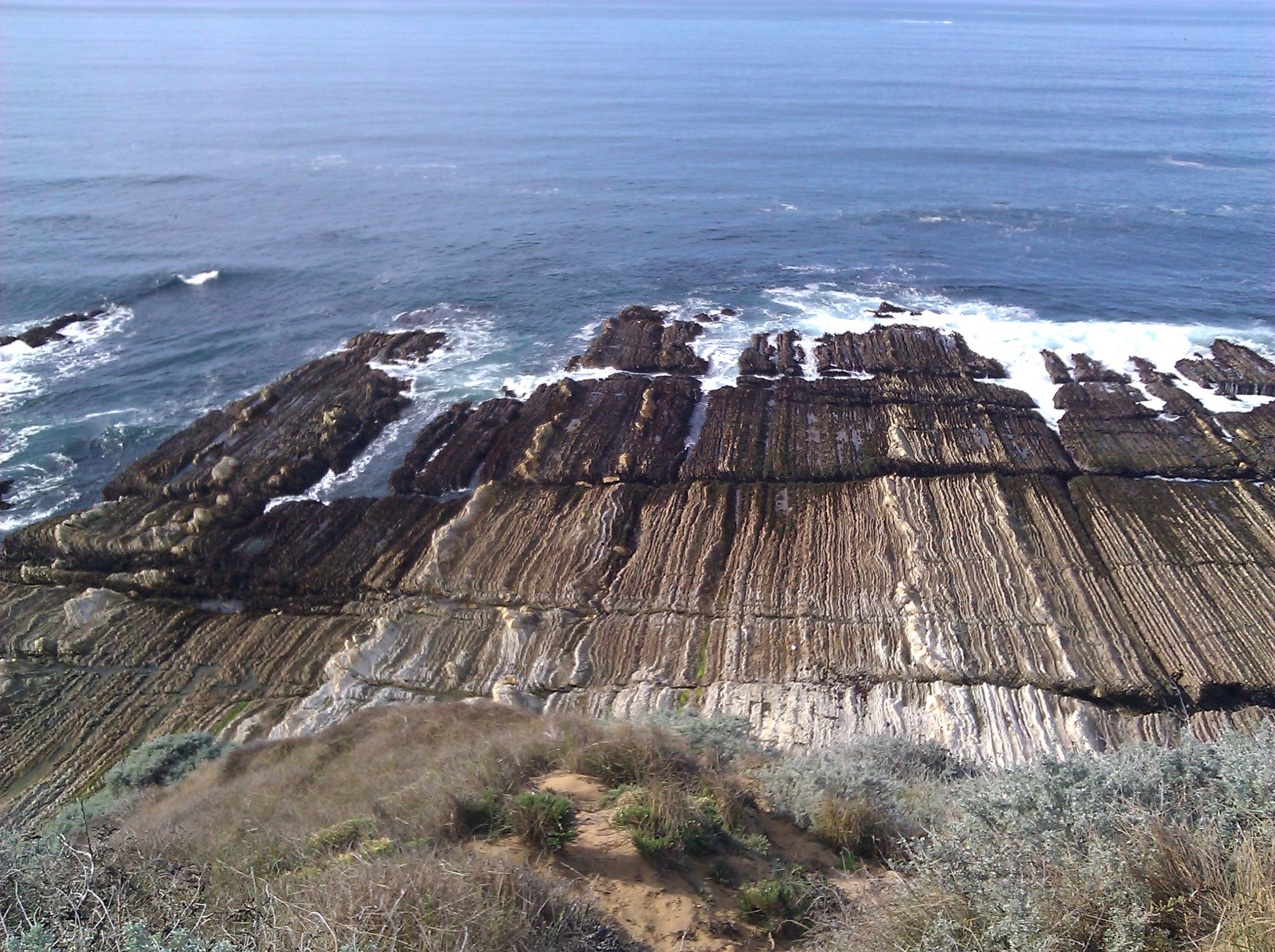
(running top to bottom in the image) in the San Andreas Fault Zone to the
north of Los Angeles, California. © Sherilyn Williams-Stroud
 Talk like a … structural geologist
Brine – water containing dissolved salts
Carbon sequestration – a method to combat climate change by storing captured CO2 in rocks or other materials
Fracture – a crack in a rock
Induced seismicity – earthquakes caused by human activity, such as injecting fluid into rock
Permeability – the ability of a rock to allow fluid to flow through it
Pore – space between grains in a rock
Porosity – a measure of how much pore space is in a rock
Sedimentary rock – a rock composed of deposited grains that have been weathered from older rock

Professor Sherilyn Williams-Stroud
Director, Berg-Hughes Center for Petroleum Geoscience and Sedimentary Studies, Department of Geology and Geophysics, Texas A&M University, USA
Fields of research: Structural geology; energy geology
Research project: Investigating the impacts of fluid storage in rocks, related to energy production and use and how fluids can be safely stored
Funders: US National Science Foundation (NSF); US Department of Energy (DOE); Berg-Hughes Center
DOI: doi.org/10.33424/FUTURUM736
The seemingly solid ground beneath your feet is actually full of fluids. Pores and fractures in rocks contain water, oil, natural gas or brine, which are valuable resources for society in the form of groundwater, fossil fuels and geothermal power.
The nature of the rock will impact how much fluid it contains and how easily it will flow, which in turn influences the region’s potential for producing resources. “I’m interested in how fluids move through rocks, and how this movement is related to fractures,” says Professor Sherilyn Williams-Stroud, a structural geologist at Texas A&M University.
How do rock characteristics impact fluid flow?
Sedimentary rocks composed of small grains, such as sandstones, can have high porosity and permeability, allowing fluids to flow through the pores. In contrast, sedimentary rocks composed of tiny grains, such as shales, generally have low porosity and permeability and the tiny pores cannot hold much fluid.
“There are many theories about how fluids flow along fractures, and how fractures can develop into connected networks,” says Sherilyn. “As we can’t see how fractures are connected in the Earth, it isn’t possible to know which pathways fluids will take through a fracture network. Chemical interactions also play an important role and there is still a lot to be learnt about how rock-fluid interactions work under different conditions.”
How does fluid flow through rocks impact energy projects?
Oil and natural gas are fossils fuels that have supported the current global state of industrialisation. Once these fluids have formed from buried organic material, they buoyantly rise through the rock, flowing through interconnected pores and fractures. When they reach an impermeable layer of rock, such as shale, they become trapped, forming a reservoir of oil and/or gas in the rock below. “When looking for oil and gas reserves, geologists search for formations consisting of an impermeable layer of rock above porous rock (known as ‘traps’),” explains Sherilyn. “They also create fractures in low-permeability rocks containing oil and gas by injecting water, to enable the fluids to flow out.”
However, burning fossil fuels is contributing to climate change due to the carbon dioxide (CO2) that is released into the atmosphere. “Geology offers solutions to help us manage those side effects, such as carbon sequestration,” says Sherilyn. This involves taking CO2 that has been removed from (or captured before it gets into) the atmosphere and injecting it into the Earth to store it within rocks. In rocks, CO2 behaves in a similar way to oil and gas – it will buoyantly rise upwards until it becomes trapped by a layer of impermeable rock. So instead of trying to locate potential oil reserves, many geologists are using the same skills to identify potential locations for injecting and storing CO2.
Geothermal power is produced by using hot fluids in rocks to turn turbines to generate electricity. This requires permeable rocks so fluids can circulate through the hydrothermal system. “In cases where there are impermeable hot rocks, engineers can inject water under high pressure to fracture the rock,” explains Sherilyn. “This creates a permeable fracture network where water can be pushed through the hot rock to be heated up so that it can be used to produce geothermal power.”
How is Sherilyn studying fluid flow through rocks?
“I work on geological problems that help us understand how fluids move through the rock (whether pores or fractures) and how these fluids get trapped,” says Sherilyn. To investigate this, she begins by characterising fracture orientations and sizes. “If most of the fractures in a rock are oriented in the same direction, they should enhance fluid flow in that direction,” she explains.
However, uncovering the structures in the rock below our feet is no easy task, as Sherilyn is trying to study something inaccessible and buried below ground. Rock cores extracted from drilling wells provide detailed samples of rock features, but only in one-dimension and at a single location, while seismic data provide large-scale 3D imaging of subsurface features, but not at a high enough resolution to identify individual fractures.
As neither method can give the full picture of the complex 3D structures of subsurface fractures, Sherilyn combines these techniques with geological modelling of rock deformation and fluid flow. “This allows me to develop realistic models of the subsurface,” she says. “This provides the information needed to make decisions about how to proceed with projects involving extraction or injection of fluids from or into rocks.”
A key aspect of Sherilyn’s work involves communicating with the communities impacted by energy projects, such as those near fluid extraction or injection sites. “It is important to engage directly with communities because they have a right to know how a project may impact them,” she says.
What has Sherilyn discovered?
“Our research has shown that some injection projects have a greater impact on surrounding communities than others,” says Sherilyn, as injecting fluids into rock causes small earthquakes (known as induced seismicity). “Induced seismicity can cause problems if the earthquakes are large enough to cause damage, so it is important to know if earthquakes are natural or caused by human activity,” she continues. For example, Sherilyn supported carbon sequestration projects in Illinois, where seismicity was monitored for a year and a half before CO2 injection began. “No earthquakes were detected during this time,” she says. “Tiny earthquakes were then detected during injection, but they could not be felt by people.”
In this way, Sherilyn is using her skills as a geologist to support the energy industry and help mitigate the impacts of climate change.
About energy geology
Geologists play a vital role in the energy industry. Without them, we wouldn’t have oil and gas, nuclear fuel, geothermal power, hydroelectric dams or batteries. “Structural geologists map the structures of rocks on the Earth’s surface and geophysicists use geophysical imaging to identify subsurface structures,” explains Sherilyn. “This information is combined with analysis of how the rocks have been heated and deformed over time and with drilling to confirm the character of subsurface rocks.” This allows geologists to locate reserves of fossils fuels and minerals essential for energy production, such as lithium for batteries, uranium for nuclear power, and the minerals needed to build solar panels and wind turbines.
“Geologists can use various prospecting techniques to infer high heat flow areas in the subsurface that have the potential for development of geothermal applications,” continues Sherilyn. “They also identify risks to energy infrastructure from tectonic activity, landslides and flooding.” This is important because the consequences of an earthquake damaging a nuclear power plant or hydroelectric dam could be catastrophic.
Geologists in the energy industry must be able to work in interdisciplinary teams, as once they have located energy resources, it is engineers who extract them. “As a structural geologist, I work with geochemists, geophysicists, petroleum engineers, civil engineers and materials scientists,” says Sherilyn. “Geologists and geochemists characterise rock properties to understand rock-fluid interactions, while engineers model fluid flow through rocks and identify drilling techniques to extract resources.”
After geologists have identified energy resources and estimated how much is available, engineers then estimate how much of the resource can actually be extracted from the Earth. This allows the team to determine the economic value of the resource, and extraction will only begin if it is economically profitable.
Pathway from school to energy geology
At high school, study geography, mathematics, physics and chemistry to learn the knowledge and skills underlying geology and energy production.
“A strong math foundation is important for structural geology, including trigonometry and linear algebra,” advises Sherilyn. “Statistical skills are useful for analysing structural data.”
At university, study a degree in geology, Earth science or geophysics, and take courses in structural geology, mineralogy and rock mechanics to learn how rocks and minerals deform. Students who want to work in the oil and gas industry should pursue a geology study programme that emphasises a strong foundation in interpreting the geologic subsurface.
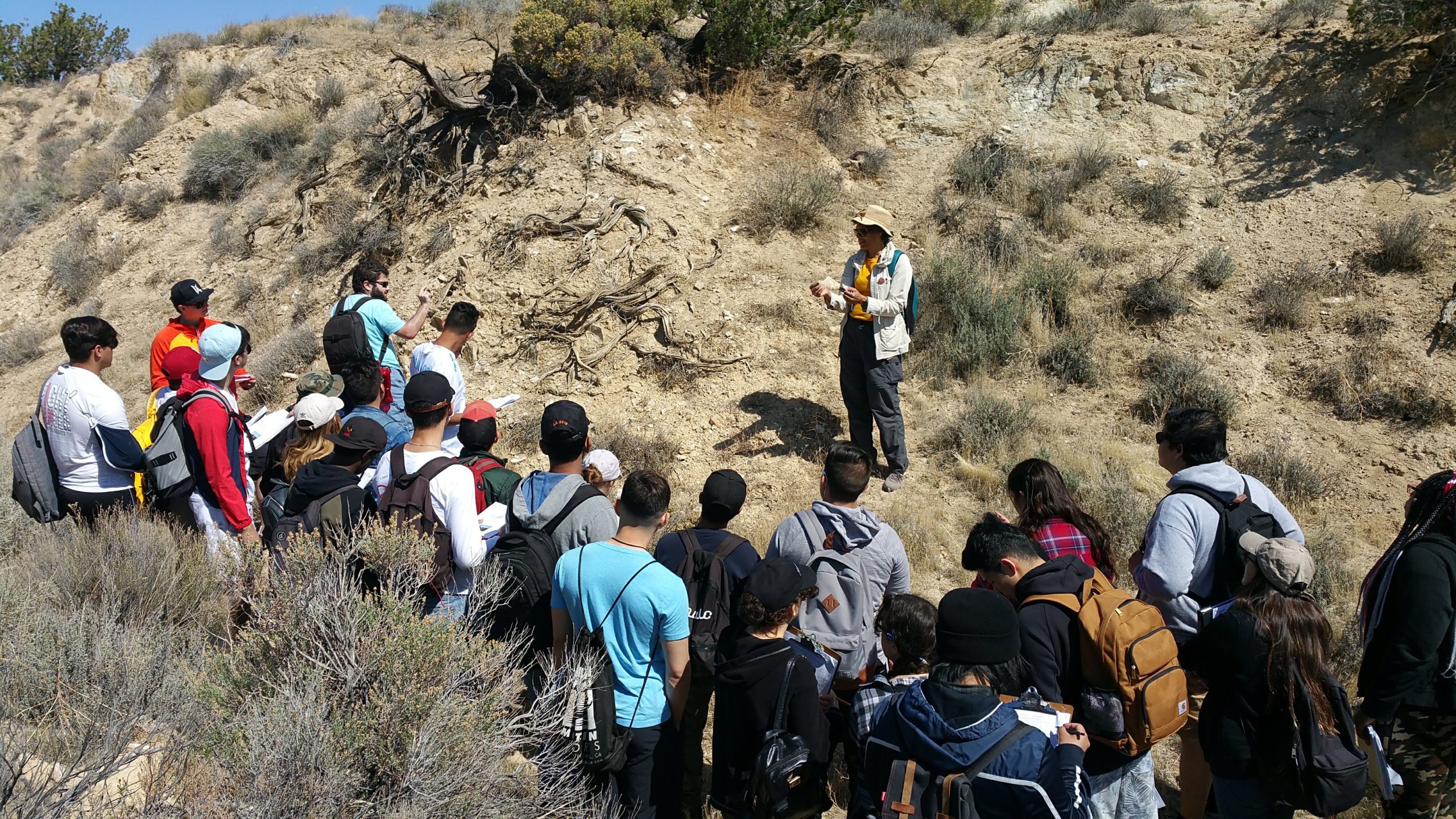
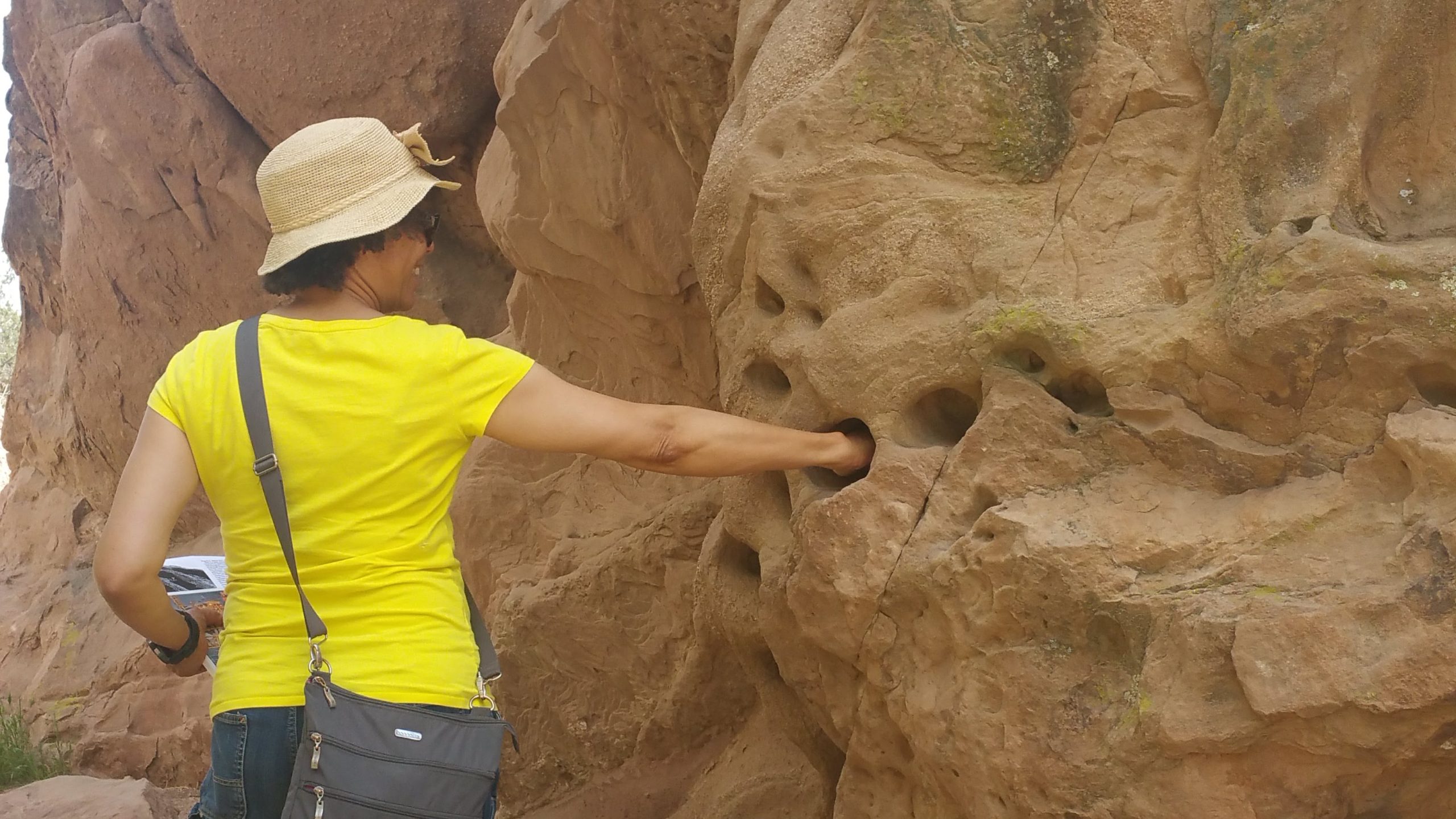
Most geology programmes include practical field courses. “I highly recommended participating in field courses because they will help you understand the spatial relationships that are important for doing geology,” says Sherilyn. “Knowing what the rocks look like in real life is critical to developing realistic interpretations of seismic and well data.”
Explore careers in energy geology
Geologists can find a wide range of careers in the energy industry, from locating new reserves of fossil fuels and minerals to identifying safe sites for building energy infrastructure.
“Geologists involved in oil and gas exploration create models to provide understanding of subsurface structures and how this influences potential oil and gas reserves,” says Sherilyn. “Those involved in oil and gas extraction help engineers by guiding the drill to ensure the well is drilled in the correct rock formation.”
“These days, a lot of structural geology work is computer-based, using exciting software tools with capabilities that are continuously improved and expanded,” continues Sherilyn. “While machine learning can speed up some of the modelling, geologists who fully understand the subsurface science will always be necessary to make sure the results are reasonable and valid.”
The US Geological Survey (usgs.gov/mission-areas/geology-energy-minerals), Geological Society of America (geosociety.org) and American Institute of Professional Geologists (aipg.org) all provide a wealth of information, educational resources and careers advice about geology and the energy industry.
Meet Sherilyn
I had a wide range of hobbies as a teenager, from playing softball and riding my unicycle to tap dancing lessons and performing jazz ballet. I also loved music – I played the French horn in the school band and orchestra, and enjoyed I listening to all types of music, from classical to jazz to rock.
I ‘fell’ into geology from music. I enjoyed structural geology and stratigraphy (the study of layers of sedimentary rocks), and my graduate research combined these interests to investigate the deformation of sedimentary rocks at low temperatures.
My career as a research scientist began at the US Geological Survey working on projects related to oil and gas. I then helped to evaluate a site for nuclear waste disposal, which involved analysing fracture networks in the rock to determine if the site would be suitable. I measured fracture lengths, spacing and orientation, and did statistical analyses to predict how they would influence fluid flow. I really enjoyed the analysis, and that project set my career pathway towards studying rock fractures and fluid flow.
I have spent many years working as a geologist in industry and government. At the oil companies Texaco and Chevron, I created fracture models of subsurface reservoirs for oil exploration and production projects, and I analysed fracture geometries to assess the behaviour of fluids in the reservoirs. At the seismic monitoring company Microseismic Inc., I interpreted induced seismicity data from hydraulic fracturing projects. I carried this expertise to the Illinois State Geological Survey where I monitored induced seismicity from CO2 being injected into deep rocks for carbon sequestration.
I enjoy the controversies that exist in science. Conclusions are always based on incomplete data, and different researchers will interpret the data in different ways. Narrowing the gap between what we know and what we don’t is a fun challenge.
Sherilyn’s top tip
1. Be observant and open-minded.
2. Find people who support you and what you want to do. Sometimes the best supporters are not mentors who are assigned to you, but people you happen to meet. So take advantage of opportunities to meet and talk to experienced people in your field.
3. Don’t be afraid to ask for help when you need it.


Do you have a question for Sherilyn?
Write it in the comments box below and she will get back to you. (Remember, researchers are very busy people, so you may have to wait a few days.)
Related article
Learn how wetlands are being impacted by human activities and climate change:
futurumcareers.com/mineral-exploration-future-proofing-the-availability-of-essential-metals
The post How are geologists supporting the energy industry? appeared first on Futurum.
“}]]