
Caught in the algorithm: exploring smartphone use in young people
[[{“value”:”
Caught in the algorithm: exploring smartphone use in young people
Many of us spend more time on our phones than we would like. The compulsion to check social media, watch a new reel, or keep on scrolling is hard to resist, and there is growing evidence that this is having negative effects on our health. Young people, whose brains are still developing, are potentially especially at risk. At the Université du Québec à Trois-Rivières in Canada, Dr Roseane de Fátima Guimarães is examining the relationships between young people and their phones, and how we can make them healthier.
Talk like a dietitian a health and physical education researcher
Biostatistician – someone who performs statistical analyses on data collected from medical and biological studies
Dopamine – a chemical messenger made in the brain that gives feelings of pleasure and satisfaction, among many other roles
Prefrontal cortex – the front part of the brain that helps manage thinking, emotions and behaviour
Problematic smartphone use (PSU) – the compulsive use of smartphones that disrupts an individual’s daily life, work and relationships
Socio-demographic characteristics – attributes that can be used to segment populations in different ways, such as age, gender, education level and income
Many people spend hours a day on their smartphones – but where is the line drawn between healthy and problematic levels of use? “Problematic smartphone use, or PSU, is broadly defined as a compulsive pattern of smartphone use that interferes with daily functioning, work or academic performance, and social relationships,” says Dr Roseane de Fátima Guimarães of the Université du Québec à Trois-Rivières. “Specifically, this might include difficulty concentrating on other tasks, using a device longer or more frequently than intended, or physical signs of overuse, such as wrist or neck pain.”
PSU appears to be on the rise, and many people are worried about its effect on society, especially the negative impact it is having on young people. Roseane is spearheading a landmark study to investigate PSU in young people, drawing on a wide range of data to understand the factors that might make youngsters vulnerable to PSU, as well as the effects of PSU on their well-being. Her research could lead to strong, evidence-based recommendations for addressing PSU at every level, from individual decisions to public policy.
Teenage troubles
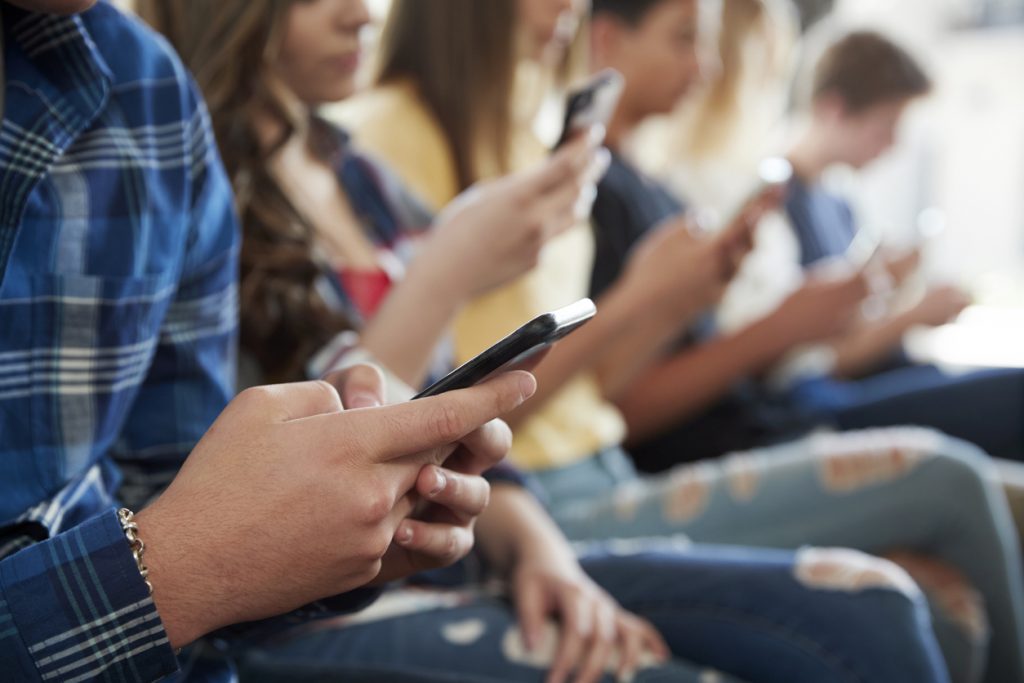
Children and teenagers are potentially particularly vulnerable to the temptations that smartphones offer – and the long-term effects on health and development. “At these ages, the brain is still developing and is highly plastic,” says Roseane. “The adolescent brain has a strong desire for rewards, limited behavioural control and a high sensitivity to experiences.” In particular, the prefrontal cortex, responsible for behavioural control and decision-making, is still maturing.
“The younger brain is particularly sensitive to dopamine,” says Roseane. “As a result, smartphone and social media use may feel especially appealing.” This means that teenagers may find it especially challenging to regulate smartphone use, given it provides a readily accessible dopamine fix. “It’s not surprising that adolescents may use their smartphones excessively, even when they are aware that it may negatively affect their health,” says Roseane.
SMARTKids Québec
To learn more about PSU and how to address it, Roseane has been piloting the SMARTKids Québec study, which explores the factors associated with PSU in young people. “The study includes presenting 250 students from primary and secondary schools in Québec with a wide-ranging questionnaire,” she explains. “Questions cover areas such as socio-demographic characteristics, smartphone habits, physical activity, sleep duration, depression and anxiety, self-esteem and academic performance.”
Once they have collected the data, Roseane and her team analyse them with the help of a biostatistician. “The team organises and prepares the databases and develops a detailed analysis plan for each research question,” explains Roseane. “The biostatistician ensures that the data structure is high-quality and that the statistical methods we use are appropriate.” The study takes advantage of a pivotal policy moment: since the 2025 academic year, Québec has banned smartphones in schools – creating unique ‘before and after’ scenarios that can capture how the ban affects PSU.
The chicken and the egg
Roseane and her team have uncovered many interconnected factors that appear associated with PSU. “Psychological vulnerabilities such as depression or anxiety can lead adolescents to use smartphones as a coping mechanism,” says Roseane. “Sleep problems often reinforce excessive use, while developmental factors make adolescents more vulnerable due to their still-developing self-control.” There are plenty of other factors too: families with poor communication, parental conflict, or family members with heavy smartphone use all increase the risk of PSU, while supportive relationships reduce it. “Lifestyle habits like low physical activity, high recreational screen time and sedentary behaviour all further contribute, as does gender, with screen time higher amongst boys than girls,” says Roseane. “Overall, it’s clear that PSU arises from the interaction of many psychological, social and behavioural factors, rather than a single cause.”
The team is also drawing conclusions about how PSU affects participants’ quality of life. “Impacts affect both physical and mental health, as well as academic performance,” says Roseane. “Impaired concentration, memory and attention are all common.” It also appears that PSU may lead to sleep problems and sedentary behaviour – which raises the ‘chicken-and-egg’ question. “It’s difficult to determine cause and effect,” says Roseane. “PSU may worsen these issues, or it may be that youth already experiencing these issues are more likely to engage in PSU.”
Tackling PSU
Addressing this dilemma is one key focus for the next stage of the team’s work. Québec’s smartphone ban in schools may help tease out these relationships, given that smartphone use is expected to drop overall, and is something that team member and PhD student Robin Chaverot is investigating for his thesis. “We will focus on the factors most closely associated with PSU, such as disrupted sleep, academic performance and mental health symptoms,” explains Robin. “This will help us identify both risk and protective factors to guide evidence-based recommendations.” The team is also well-aware of newer technologies that are changing how teenagers interact with the world. “We anticipate expanding our scope to include AI chatbots,” says Robin. “These are increasingly relevant for public health and likely to soon come under regulation.”
Reference
https://doi.org/10.33424/FUTURUM689





In the meantime, Roseane has some advice for young people who are worried about their smartphone use. “Try setting limits on social media use and prioritising real-world activities like physical exercise, outdoor walks and meeting friends in person,” she says. “Build your self-regulation skills, develop healthy routines and nurture supportive family or peer environments.”
 Dr Roseane de Fátima Guimarães, PhD
Research Chair on Youth Lifestyle Habits and Health, Department of Physical Activity Sciences, Université du Québec à Trois-Rivières, Canada
Field of research: Health and physical education
Research project: Exploring determinants and factors associated with problematic smartphone use among youth
Funders: Social Sciences and Humanities Research Council of Canada (SSHRC); Research Network on Cardiometabolic Health, Diabetes and Obesity; Ministère de l’Éducation du Loisir et du Sport in Québec; Fondation de l’Université du Québec
About health and physical education
Health and physical education is a broad field, focusing on educating different groups of people – from the general public through to policymakers – about how to look after their health and physical fitness.
Interdisciplinarity is critical and is becoming ever-more ingrained in the field. “Combining exercise science, nutrition and psychology, for example, creates opportunities to develop innovative programmes and interventions that can have a real impact on communities,” says Roseane.
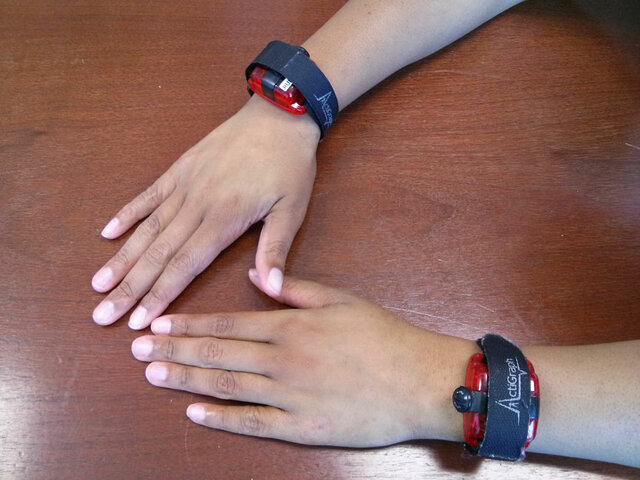
The world is always changing, both in terms of technology and societal priorities. “Wearable devices and AI tools allow us to collect and analyse data in ways and scales that were never before possible,” says Roseane. “There is also growing emphasis on mental health and social determinants of health, which opens up new avenues for research.” New tools and knowledge are creating a rich arena for future research opportunities in the field.
Educating others is what motivates Roseane and her research. “The moment of knowledge transfer, when our findings change into something meaningful for people, is incredibly fulfilling,” she says. “On a more personal level, seeing a student graduate is also deeply rewarding, because it shows the impact of mentorship and education alongside research.”
Pathway from school to health and physical education research
Roseane recommends building a strong foundation in biology, chemistry and physical education at school.
At college, courses such as exercise science, anatomy, physiology, psychology, nutrition and research techniques can all build appropriate knowledge.
Roseane highlights gaining a university degree in physical education, kinesiology or health sciences as a useful pathway. Other subjects such as motor learning, public health and epidemiology can provide valuable expertise in the field too.
Explore careers in health and physical education research
Roseane recommends seeking practical experience via internships, volunteer programmes or community health projects.
Connecting with professional organisations can provide rich resources, networks and opportunities. For instance, PHE Canada provides a huge range of physical and health education learning activities.
ParticipACTION is a Canadian charity that promotes physical activity. Its website provides a wide range of resources to help you understand the underlying science and connect with professionals.
Meet Roseane
As a child, I enjoyed playing piano and bass. I also loved swimming and spending time outdoors. My secondary school biology teacher, who was also passionate about sports, greatly influenced me through nurturing my interest in human physiology and how the body works. That inspired me to pursue a career in physical education.
I worked as a physical education teacher in schools in Brazil. This experience shaped my career; I saw first-hand how many children, especially adolescents, were not active enough. This inspired me to pursue a master’s degree on how physical activity and sedentary behaviour impact children’s and teenagers’ cardiometabolic health.
My master’s research revealed a need for intervention. Adolescents consistently had the poorest profiles across many age groups. This became the foundation of my PhD project: a school-based programme designed to improve health indicators and promote healthier lifestyles among adolescents.
To pursue my postdoctoral training, I moved to Canada. In the final year of my postdoc, I secured a professor position – a proud career moment. I am also proud of building a strong research team and obtaining funding so we can conduct high-quality research.
I aim to provide high-quality training for my students to prepare them for their careers. I want to continue building strong, applicable research and develop recommendations to promote healthy lifestyles in children and youth. I want to help people improve their well-being and overall balance in daily life.
I try to maintain an active lifestyle myself. It keeps me fit and helps me disconnect and recharge. I also value spending time with family, which helps me maintain balance.
Roseane’s top tips
1. Stay curious and step out of your comfort zone.
2. Seek opportunities for exchange experiences – they are incredibly enriching.
3. Networking, collaborating and meeting new people can open new perspectives and help shape your career.
Meet Robin
 Robin Chaverot,
PhD student, Interdisciplinary Doctoral Program in Health and Society,
Université du Québec à Trois-Rivières
During high school, I studied marketing. I discovered strategies to influence the brain, with the objective of encouraging users to consume – known as neuromarketing. These days, I am studying closely related fields.
I entered university in the field of sport sciences. I quickly developed a passion for physical education and health. After a few years working in education and knowledge sharing about good sporting practices and healthy lifestyle habits, I decided to pursue research.
I have always been interested in the mechanisms behind the addictive power of technologies. Research into the effects of television on neurological and psychological indicators of health fascinates me. As digital tools have become ever-more prevalent, my interest in their relationship with our health and how they are regulated has only grown.
It’s important to be passionate about one’s research. Research is a long-term commitment; it requires close collaboration, organisation, leadership and motivation. Key to success is continuing to learn. A doctoral student must master research methodology, statistics, scientific writing and dissemination of knowledge, among many other skills.
Undertaking my PhD allowed me to migrate to Canada. Here, I discovered a new university, a new research laboratory and a very different way of working. This doctoral programme has allowed me to collaborate with people from diverse backgrounds – a hugely formative experience, both professionally and personally. Meeting new people at conferences and various scientific events is highly enriching for an academic career.
After my PhD, I want to become a teacher-researcher in academia. My goal is to continue to conduct research projects while teaching students. Above all, I hope to keep contributing to the expansion of scientific knowledge on screen use, and to help build recommendations for public health authorities.
Robin’s top tips
1. Trust yourself.
2. Do not give up when you encounter obstacles.
Do you have a question for Roseane and Robin?
Write it in the comments box below and they will get back to you. (Remember, researchers are very busy people, so you may have to wait a few days.)
Learn more about research into teenage lifestyles:
futurumcareers.com/staying-on-track-how-do-teenage-athletes-choose-what-to-eat
The post Caught in the algorithm: exploring smartphone use in young people appeared first on Futurum.
“}]]