
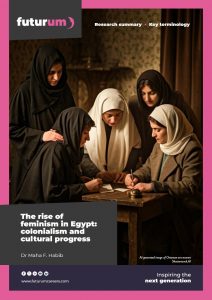
The rise of feminism in Egypt: colonialism and cultural progress
[[{“value”:”
The rise of feminism in Egypt: colonialism and cultural progress
The late 19th to early 20th century was a tumultuous time for the Muslim world. The British Empire had become a colonial force, and the Ottoman Empire was waning. Two Egyptian women, ‘A‘isha Taymur and Malak Hifni Nasif, explored the role of women within their nation and contributed to emerging debates. They assessed how colonialism impacted cultural identity, and how foreign and local patriarchal systems hampered women’s rights granted by Islam. Dr Maha F. Habib explores their work.
Talk like a culture and literature researcher
Colonialism — the practice of exerting political, economic, social and cultural domination over a territory and its people by a foreign power
Feminism — the belief that men and women should have equal rights and opportunities, and the advocacy for societal change to fulfil this
Imperialism — the maintaining and extending of power over foreign nations (but, unlike colonialism, not always through occupation)
Indigenous — describing the original people who lived in a land before the arrival of colonists, and their socio-cultural systems. ‘Indigeneity’ is the cultural systems, identity and ancestral connection to the land, as well as the act of being that is maintained despite colonisation
Islam — a monotheistic religion, Islam holds the belief in one God, Allah. It is based on the Holy book the Qur’an and the teachings of the Prophet and leader Muhammad
‘New Woman’ — a woman of a new age, who pushed for radical societal change and rights
Ottoman Empire — a vast empire founded in the early 13th century. The empire spread across three continents and included parts of modern-day Middle East, southeastern Europe and North Africa until it was dissolved after World War I
Patriarchal — describing a system/society controlled by men
Reference
https://doi.org/10.33424/FUTURUM657
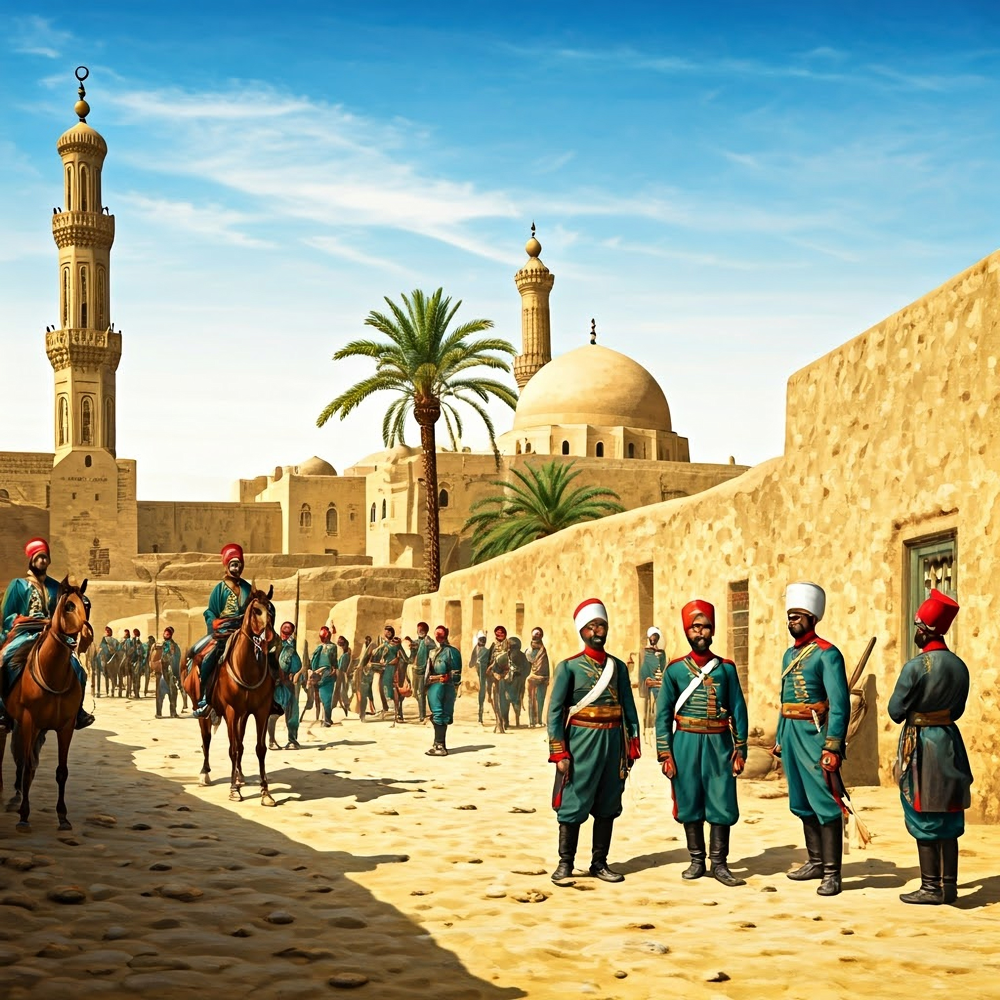
© Shutterstock.AI
There are various types of feminism, each with different approaches to addressing gender-based concerns within different contexts. Colonialism and colonial feminism impacted perceptions of Eastern societies and their treatment of women. However, Western feminist ideals are not always aligned with Eastern feminist ideals. To address this, Dr Maha F. Habib explores indigenous feminist perspectives on the shaping of their own cultures and futures, in their own contexts. She demonstrates how they counteracted the effects of colonial feminist ideals and addressed local gender-based concerns – issues still critical today.
Feminism in Egypt
“‘A‘isha Taymur and Malak Hifni Nasif were critical to the early formation of the feminist movement in Egypt,” says Maha. “They contributed to Egypt’s cultural and literary scene and led debates on the roles and rights of women.” The Ottoman Empire had governed vast regions of the Muslim world, but by the mid-18th century, it was in serious decline. British colonialism attempted to influence cultural transformation and establish what it considered ‘superior’ societal and cultural values. “These values prompted debates within Egypt on the most appropriate means to enact cultural transformation and progress, given the Eastern and Islamic heritage of the region,” explains Maha. The perspective and contribution of women was an important part of these debates.
Taymur and Nasif lived in a changing world and were part of a new generation of women. “They were educated, remained faithful to Islam and traditional ethics, and were active participants in change,” says Maha. “I wanted to study their work to explore the historical realities of the time, the challenges that women faced and emerging feminist perspectives.” Maha gathered, interpreted and analysed the written works of Taymur and Nasif, being careful to set them within their historical context, acknowledging the impact of colonialism and the influence of European attitudes.
European ideas
In the 19th century, European colonialism was at its height and held set ideas about society. “A key idea about the evolution of society was ‘social Darwinism’, which argued that Europeans were the most evolved people, superior to other civilisations,” explains Maha. “Any other model for civilisation was compared to Europe and devalued in relation to it.” This Euro-centric thinking considered Islam as a ‘primitive’ form of human development. “Muslim women, especially, were considered oppressed, subdued and immoral,” says Maha.
British feminism emerged in the mid- 19th century and developed its own set of debates about the role of women in society. By the late 19th century, the concept of the ‘New Woman’ was conceived. “In Britain, the ‘New Woman’ challenged Christian ideals, scientific theories and cultural traditions that devalued women,” says Maha. But the social norms that British feminists were trying to overthrow were not the same as those in Eastern society. Taymur and Nasif provided narratives relevant to their own societal concerns. “Their narratives were set in a context of debates and competing discourses, local and foreign, that raised questions over women’s nature, their participation and visibility in public life, and their right to education. They explored ideas enabling of rights for women and national progress, and contested ideas that imposed different types of control over women,” explains Maha. For Taymur and Nasif, “these questions were critical to addressing the challenges of colonialism and local culture alike.”
Modernising Egypt
The world was changing fast – not only because of colonialism, but also the Industrial Revolution and new technologies that would change daily life forever. The ‘modern age’ was emerging, and Taymur and Nasif knew that this new era presented opportunities for the advancement of women’s rights, and for “the critical shaping of a ‘New Woman’, and new cultures and societies.”
“Taymur and Nasif asked critical questions about cultural authenticity, the foundations of modernity and what true progress meant,” says Maha. “They produced an Eastern feminist perspective that spoke to the needs of their society.” In particular, their perspective on feminism acknowledged the central role of religion and culture for defining cultural identity and cultural progress. They were in favour of a cultural transformation – but one that spoke to their culture’s rich heritage and “presented an alternative that did not submit to colonialist perspectives on Islam, the Westernisation of their culture and local patriarchal demands,” explains Maha.
“Colonial visions for Eastern nations were directed by an interest to control and subdue other societies and cultures, including their women,” says Maha. “Taymur and Nasif rejected this colonial framing and moved beyond the ideas used by local figures, which often reflected political and ideological conflicts. They offered a more critical approach to realising rights and progress.”
Islamic principles for women’s rights
Central to Taymur and Nasif’s vision of Eastern feminism was the role of Islam. “They argued that Islam was critical for countering the negative effects of modernity in Egypt, correcting misunderstandings of women in Islam, and enabling enlightenment and progress,” says Maha. “Drawing on central Islamic texts, they argued that women and men are of equal worth in Islam, and that both Islamic femininity and masculinity are defined by religious obedience, strong ethical principles and social responsibility.” In line with these values, Taymur and Nasif argued for opportunities for women to contribute to Egypt’s culture and development. “This helped set in motion the broadening of feminist consciousness, opening avenues for women’s education, activism and participation in public life.”
To this day, there are challenges that women face and misconceptions about the status and role of women in Islam. Maha is motivated to explore and communicate the work of these two important Egyptian feminists to reveal historically overshadowed Eastern women’s perspectives on cultural meaning and transformation. “Bringing to light anti-colonial, anti-racist, indigenous perspectives is important to assessing historical change and understanding historical roots of modern debates,” says Maha. “Particularly as colonialism and imperialism still persist today and are contributing to agenda-setting and rising Islamophobia.”
 Dr Maha F. Habib
PhD Arab and Islamic Studies, University of Exeter, UK
Fields of research: Arab and Muslim culture, thought and literature; Eastern feminism; decolonisation and indigeneity; East-West dialogues
Research paper: An eastern feminist perspective on the ‘woman question’: the activity, thought and writing of ‘A‘isha Taymur & Malak Hifni Nasif, Maha F. Habib (2024),
Do you have a question for Maha?
Write it in the comments box below and they will get back to you. (Remember, researchers are very busy people, so you may have to wait a few days.)
How did a Renaissance printer shape the books we read today?
futurumcareers.com/how-did-a-renaissance-printer-shape-the-books-we-read-today
The post The rise of feminism in Egypt: colonialism and cultural progress appeared first on Futurum.
“}]]