

Nuclear fusion: is endless energy imminent?
[[{“value”:”
Nuclear fusion: is endless energy imminent?
For a century, researchers have been wrangling with the science of nuclear fusion. If they crack it, we could have access to as much cheap, clean energy as we need – but reaching that point is proving to be a real challenge. Nevertheless, progress continues at pace and scientists such as Dr Kurt F. Schoenberg from Applied Science Enterprises LLC, USA, are optimistic that this transformational technology could become a reality within the next few decades. If it does, the story of humanity will change forever.
Talk like a nuclear physicist
Deuterium (D) — a stable isotope of hydrogen with one proton, one neutron and mass about twice that of ‘normal’ hydrogen with only one proton
Isotope — a form of an element where the nucleus has the same number of protons but a different number of neutrons
Nuclear fission — the splitting of a heavy nucleus into lighter nuclei, releasing a large amount of energy
Nuclear fusion — the combining of two light nuclei to form one heavier nucleus, releasing a large amount of energy. First fusion reactors will fuse deuterium and tritium (DT)
Pinch — in plasma physics, the compression of plasma by magnetic forces
Plasma — a state of matter formed when a gas is heated to the point of ionisation, consisting of charged particles, including ions and electrons
Protonic fusion — when protons in the nucleus of hydrogen atoms are fused together to form helium atoms
Quantum tunnelling — a phenomenon of quantum mechanics where a particle can penetrate a potential energy barrier in a way that is not possible within the laws of classical mechanics, due to the particle’s wave-like behaviour
Tritium (T) — a rare, radioactive isotope of hydrogen with one proton, two neutrons and mass about three times that of ‘normal’ hydrogen. Tritium does not occur naturally and must be ‘bred’ by using fusion produced neutrons interacting with lithium in a blanket surrounding the fusion reactor
Dr Kurt F. Schoenberg
Applied Science Enterprises LLC, USA
Fields of research: Physics, high energy density physics, plasma magnetic and inertial confinement fusion energy
Research focus: Providing independent scientific evaluation and strategic guidance for fusion start-up companies and private capital, translating advanced plasma science into clear, decision-useful assessments
Website: appliedscienceenterprises.com
Chief scientists: Dr Joseph Mack, Dr Ronald Moses, Dr Kurt F. Schoenberg
Humanity’s demand for energy is climbing ever higher, bringing with it a range of severe problems. Our reliance on fossil fuels is adversely impacting our climate and environment. The development of renewable energy sources is an exciting alternative, but they may not be sufficient to meet our growing energy needs. “Nuclear fusion holds great promise as a carbon-free future energy source,” says Dr Kurt F. Schoenberg. “It is the highest energy density source available, and its fuel is effectively inexhaustible.”
Nuclear power is nothing new; we have been generating electrical energy through nuclear fission since the 1950s. Despite generating around 9 to 10% of the world’s electricity today, nuclear fission suffers from a poor public perception, mostly due to power plant accidents such as those at Chernobyl, Fukushima and Three Mile Island. But the two types of nuclear reaction are very different: nuclear fission splits heavy atoms, such as uranium, into lighter ones, while nuclear fusion combines light atoms, such as deuterium, into heavier ones. There are other important differences, too, about their safety – and their feasibility.
If the Sun can do it, why can’t we?
The Sun is a massive nuclear fusion reactor made of plasma, and the heat and light that reach our planet are due to the release of energy from the fusion reactions happening within its core. “Nuclear fusion requires bringing the nuclei of two atoms close enough so that they combine into one heavier atom,” explains Kurt. “In the Sun, this happens all the time; protons, which are the nucleus of hydrogen atoms, are fused together through a series of nuclear reactions to form helium atoms.” But this process, called protonic fusion, is very slow – the average proton in the Sun’s core will wait for over a billion years before it undergoes fusion. “Stellar protonic fusion depends on immense pressures and temperatures, as well as a large reacting core volume,” explains Kurt. “The Sun achieves these conditions due to its size and gravitational confinement. It is not feasible to replicate the necessary conditions for protonic fusion on Earth.”
Protonic fusion is not possible for us, but that does not mean nuclear fusion is completely off the table. Instead, scientists turn to heavier isotopes of hydrogen, in particular, deuterium and tritium. ‘Normal’ hydrogen nuclei consist of just one proton, but deuterium isotopes also have a neutron, approximately doubling the atom’s overall mass.
“Deuterium is stable and is found naturally in the world,” explains Kurt. “0.03% of all water molecules on Earth contain at least one deuterium isotope.” While this sounds like a small percentage, with the vast volume of the ocean, it amounts to a lot, and only a tiny quantity is needed to generate a lot of energy. “One litre of sea water contains the DT fusion energy equivalent of approximately 1,000 litres of gasoline,” says Kurt.
Reference
https://doi.org/10.33424/FUTURUM646
Courtesy of National Igniton Facility, Lawrence Livermore National Laboratory
© US ITER
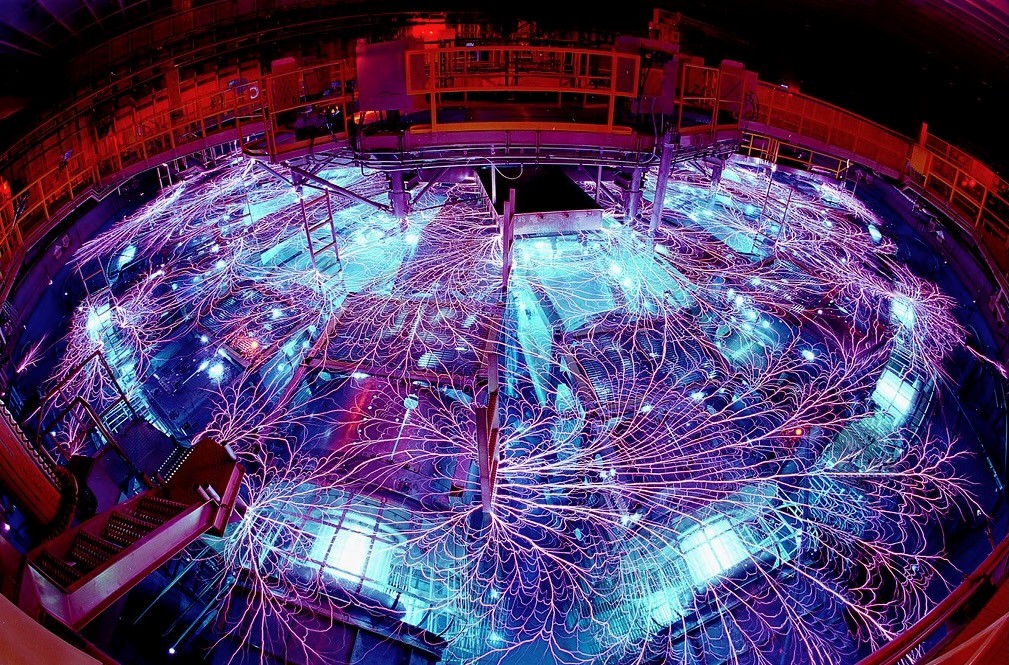
Courtesy of Sandia National Laboratory
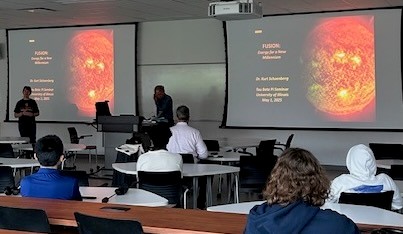

A significant challenge facing the development of fusion energy is fundamental. Atomic nuclei are positively charged, due to the protons within them, which means they repel each other. “To fuse, nuclei must come close enough to overcome this repulsive electromagnetic force,” says Kurt. “At this point, another fundamental force – the strong nuclear force that binds nuclei together – comes into play.” It is this binding force that releases energy.
The history of fusion
Bringing nuclei close enough relies on a mechanic called quantum tunnelling, which was first proposed in the 1920s. This era saw the ‘quantum revolution’ of physics, when scientists discovered quantum mechanics and fundamentally changed our perception of the Universe. Some years later, in the lead-up to World War II, scientists began exploring ‘pinches’ – a way of using magnetic fields to compress plasma until it reaches the temperature and density required for thermonuclear fusion to occur.
The early applications of nuclear reactions had a profound impact on the world. The US Manhattan Project developed the fission bomb (or atomic bomb), which was ultimately used to bring an end to the war with Japan, and killed over 200,000 people. Shortly after World War II, the US, UK, Soviet Union and several European countries initiated controlled thermonuclear research programmes, formally establishing the worldwide pursuit of nuclear fusion as an energy source. Then, in 1958, James Tuck, a British physicist who had been part of the Manhattan Project, led a team of scientists at Los Alamos Scientific Laboratory that successfully utilised pinch technology and deuterium fuel to demonstrate thermonuclear fusion in the laboratory for the first time. This marked a significant milestone where the concept of controlled thermonuclear fusion transformed into reality.
Breakthroughs in this era led many to believe that nuclear fusion as a practical energy source was just around the corner. Unfortunately, this did not come to pass as soon as hoped. The extreme conditions necessary to achieve controlled thermonuclear fusion proved to be much more difficult to achieve than anticipated. It would take over half a century of dedicated research and development before net fusion energy gain was demonstrated by fusing deuterium with tritium. Today, producing more fusion energy than the amount required to initiate the fusion reactions remains a significant challenge for scientists and engineers, although substantial progress has been made towards closing this gap.
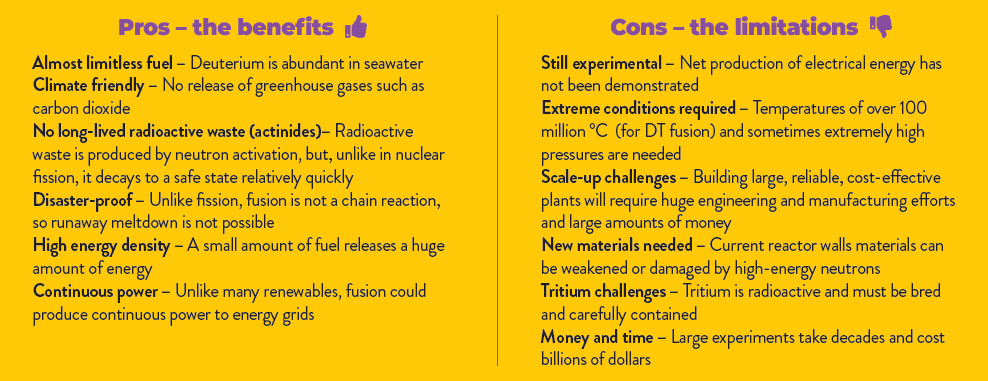
At a glance: nuclear fusion’s pros and cons
Tackling challenges
From an outsider’s perspective, it may seem that the excitement around nuclear fusion has failed to deliver significant results. Yet, behind the scenes, substantial advances continue to be made. Scientists worldwide are addressing the challenges of fusion energy head-on.
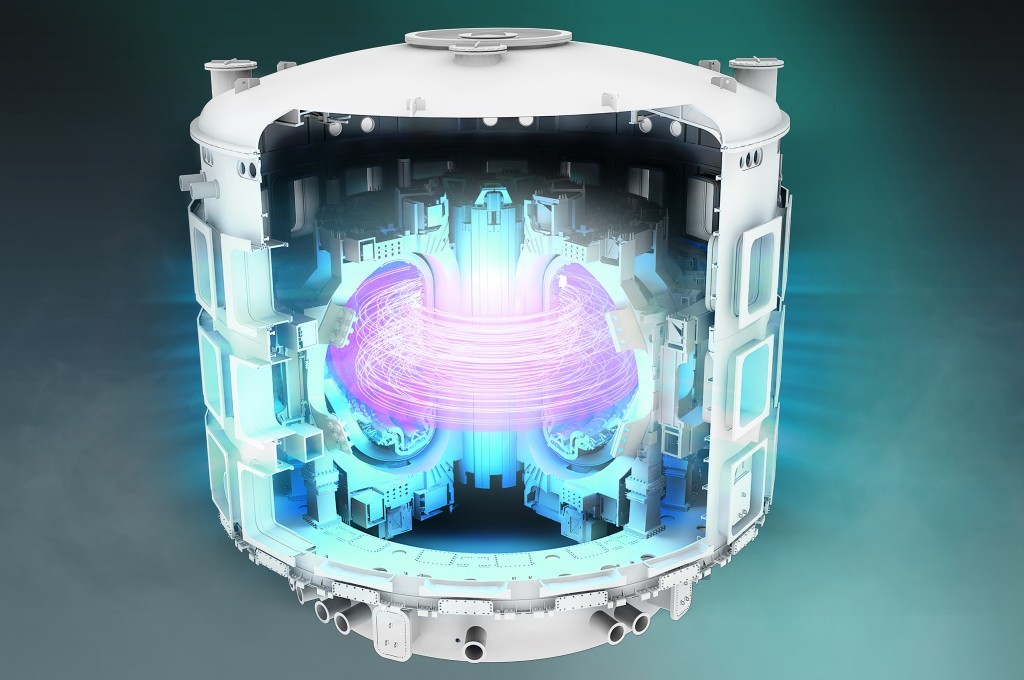
A significant challenge to overcome is creating the extreme conditions required for fusion energy to occur, and two main approaches have emerged. “Magnetic confinement fusion uses microwaves, neutral particle beams, and powerful magnetic fields to heat and confine a hot plasma, so it doesn’t come into contact with the walls of its container,” explains Kurt. “The plasma is so hot that it would vaporise any material it touches, leading to rapid plasma cooling.” The most advanced confinement structures are typically doughnut-shaped and are known as tokamaks or stellarators.
The other leading approach is called inertial confinement fusion. This method does not rely on magnetic fields for confinement. Instead,
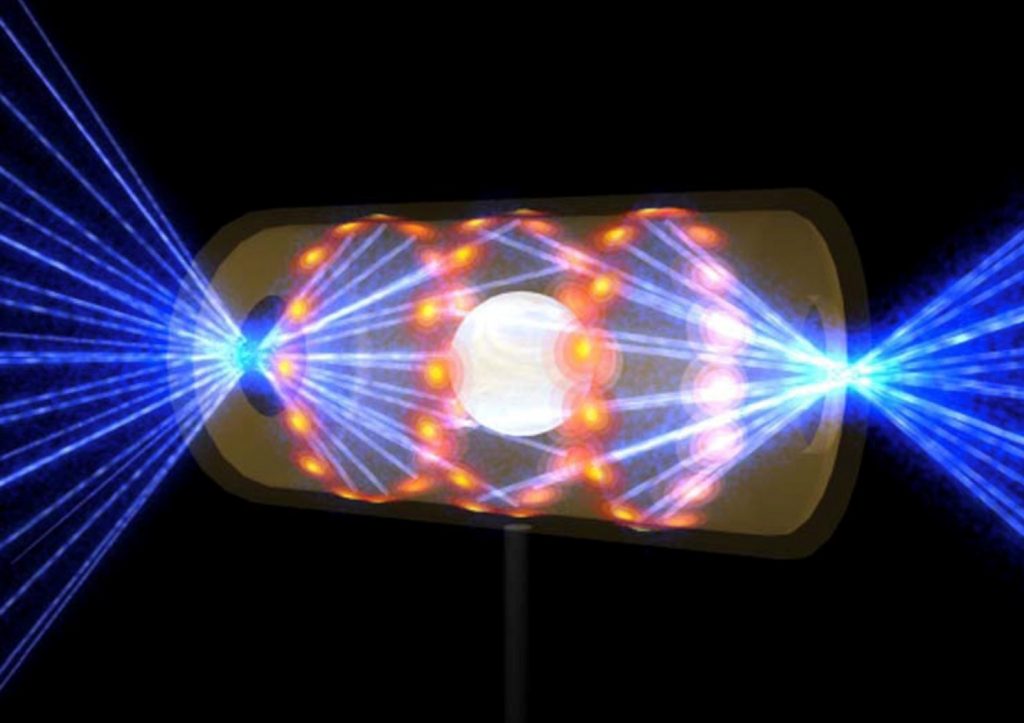
uses intense energy sources such as lasers to compress and heat tiny fuel pellets. “The compression and shock heating drives the pellet’s core to densities and temperatures similar to those found in our Sun, which are required for reaching fusion conditions – but only for just a few billionths of a second,” says Kurt.
Very recently, inertial confinement fusion yielded some fantastic results. “In 2022, scientists at the National Ignition Facility in the US achieved a milestone called ignition, which involves heating a mixture of deuterium and tritium fuel to the point where the reaction becomes self-sustaining,” explains Kurt. “For the first time, they successfully ignited and burnt a mixture of deuterium-tritium fuel using intense lasers.” The following year, scientists at the Joint European Torus in the UK, which uses magnetic confinement fusion, set a world record for fusion energy production, generating 69 megajoules in five seconds. “These results validate some of the underlying physics of nuclear fusion. However, significant challenges remain in making fusion energy economically competitive,” says Kurt.
A promising future
Although significant obstacles still remain, there have been many remarkable advances in nuclear fusion research. “Today, we are on the brink of solving many of fusion’s challenges,” says Kurt. “Groundbreaking solutions are emerging at the forefront of various scientific and engineering disciplines.” A remaining hurdle is proving that fusion energy production can be achieved in a system that is reliable, maintainable and economical. This goes beyond achieving fusion in the laboratory. It also involves considering all aspects of construction, operation, infrastructure and inefficiencies associated with harnessing fusion and converting it to electrical energy. “Even if the physics works, we must build affordable plants capable of operating for decades while competing economically with other energy sources,” explains Kurt. “Designing and producing the materials required for power plant construction, as well as breeding tritium fuel and licensing a first-of-its-kind plant, are not trivial tasks.”
Despite these challenges, the outlook is becoming increasingly positive. “Most credible but optimistic projections suggest that pilot plants will be operational in the 2030s and 2040s, with commercial reactors following in the 2050s and 2060s,” says Kurt. “This timeline could be accelerated, if private innovation and government support come together, or delayed, if the physics and engineering challenges prove tougher than expected.” Achieving these goals will require a significant number of highly skilled professionals, paving the way for future careers in plasma physics, nuclear and material science, and engineering. “A resurgence is underway within nuclear fusion research and development,” says Kurt. “Never has there been a more promising time for engineers and scientists to join this effort.”
Pathway from school to fusion energy development
Kurt recommends getting a strong grounding in mathematics, physics and computer science.
At university, Kurt suggests initially pursuing one of the fields below, depending on your particular interests:
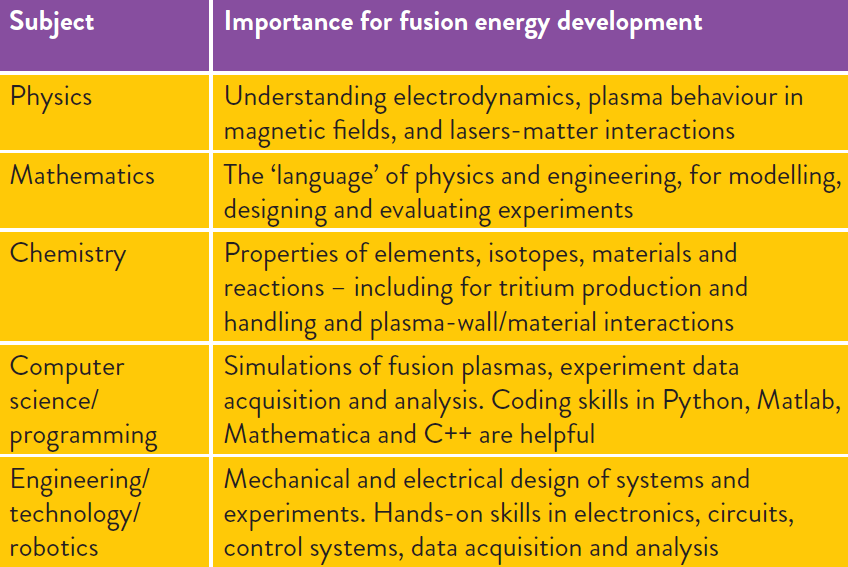
Following a bachelor’s or master’s degree in one of the above fields, you can specialise further. For instance, in plasma physics, nuclear engineering, material science or high-performance computing.
Kurt also recommends actively developing your skills and interests beyond classroom learning. He suggests focusing on improving your skills in problem-solving and critical thinking, laboratory skills, data analysis and coding, teamwork and communication, and project management. All are critical components for an impactful career within fusion energy.
Meet Kurt
I have had an innate curiosity about the world from a young age. As a teenager, I became interested in the US space programme, which eventually led to my passion for physics and fusion energy. I have since been inspired by numerous excellent teachers and mentors throughout my journey.
I was fortunate to study at several leading institutions for science and engineering. After earning my PhD, I joined the Los Alamos National Laboratory in the US. I have had the privilege of working alongside dedicated and inspiring colleagues.
I enjoy the opportunity to engage in a diverse range of scientific disciplines and programmes. Throughout my career, I have conducted both experimental and theoretical investigations of magnetically and inertially confined plasmas for controlled thermonuclear fusion. I have also worked with intense particle accelerators, plasma-based space propulsion systems, ballistic missile defence and high-energy-density physics.
I look forward to advancing the frontiers of high-energy-density physics and fusion energy research. Currently, I work as a consultant with the Facility for Antiproton and Heavy Ion Research in Germany, as well as with emerging fusion energy companies. Additionally, I have an interest in exploring the intersection of physics and artificial intelligence. As a guest professor at a university in Germany, I strive to inspire students to pursue careers in physics and fusion energy.
Kurt’s top tips
1. Be curious. Always ask ‘why’ and ‘how’. Pursue discovery with enthusiasm.
2. Build and explore things. Take apart gadgets, write code and engage with the scientific method: start with a hypothesis and follow it through exploration and discovery.
3. Strengthen your STEM fundamentals. A trained scientist does more than memorise information; they strive to understand the underlying principles.
4. Learn to communicate effectively. This includes engaging both technical and non-technical audiences. One of the most enjoyable and challenging courses I ever taught was Physics for Art Majors.
5. Follow your heart and pursue your passion. Choose a field that genuinely excites you. I still look forward to work every day because I always learn something new and interesting.
Do you have a question for Kurt?
Write it in the comments box below and they will get back to you. (Remember, researchers are very busy people, so you may have to wait a few days.)
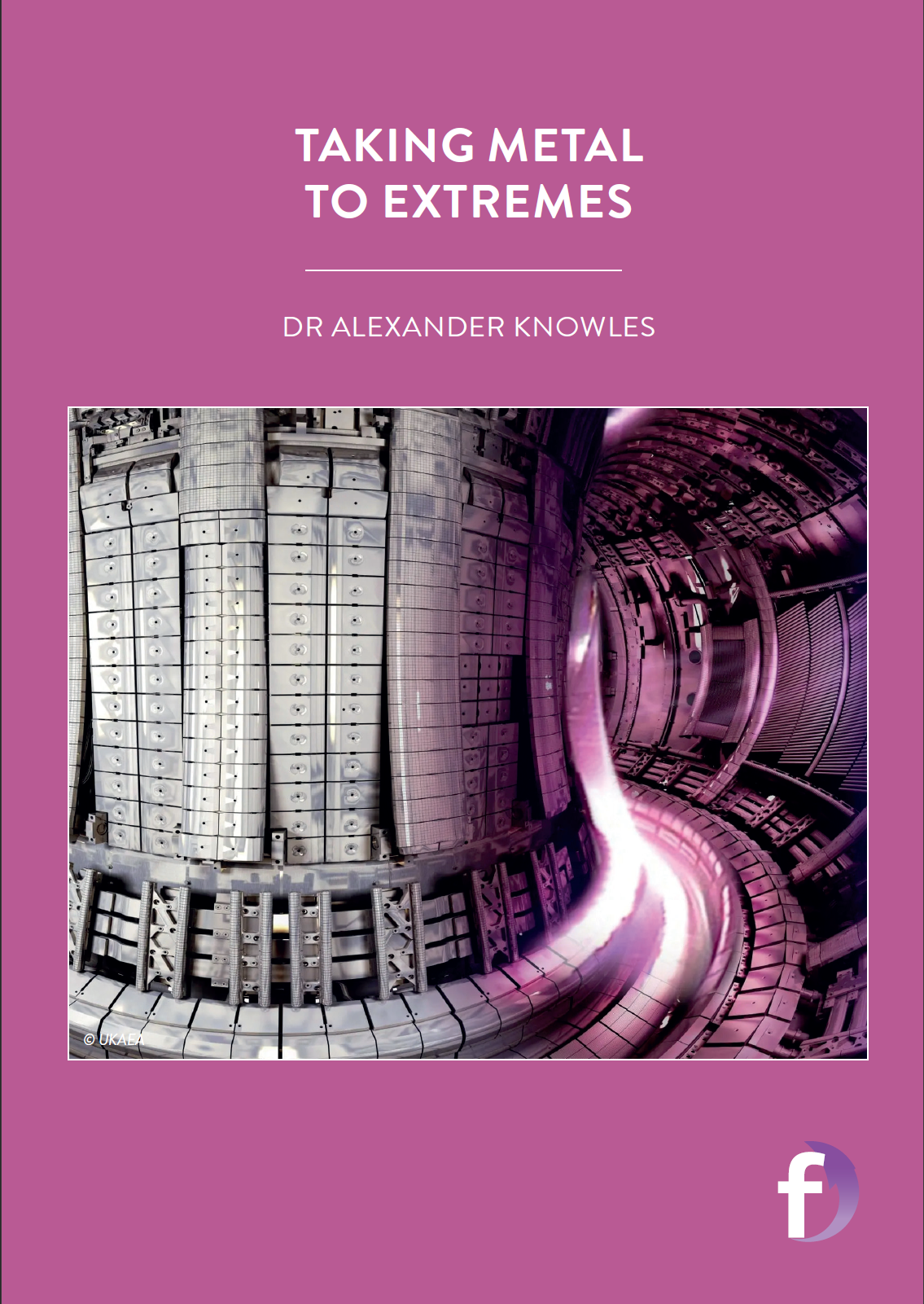
Read about research into metals that can withstand the extreme temperatures inside nuclear fusion reactors:
The post Nuclear fusion: is endless energy imminent? appeared first on Futurum.
“}]]