
Hungry Stories: using the arts to share research findings about food insecurity
[[{“value”:”
Hungry Stories: using the arts to share research findings about food insecurity
After decades of researching the negative impacts of food insecurity and how they can be reduced, Professor Elaine Power from Queen’s University in Canada realised that sharing evidence with policymakers and politicians was not enough to create change. So, she shifted her focus to reaching the public, sharing knowledge and understanding with them, and encouraging them to speak up and hold governments accountable. Along with other activist-scholars, Elaine founded Hungry Stories to share not just the facts about food insecurity, but the real human experiences and emotions behind them too.
Talk like an arts-based knowledge mobilisation practitioner
Arts-based knowledge mobilisation (ABKM) — the use of creative tools like art, theatre, stories or zines to share research in ways that are engaging and easy to understand
Basic income guarantee — a regular payment from the government that gives people enough money to meet basic needs, no matter their job status
Food drive — an organised campaign to collect food donations for people suffering from food insecurity
Food insecurity — not having reliable access to enough affordable, nutritious food
Living wage — a wage high enough for someone working full-time to afford basic needs like food, housing and transportation
Minimum wage — the lowest hourly pay an employer is legally allowed to give workers
Public health issue — a problem that affects the health and well-being of many people and requires community or government action to address
Can an art exhibition help change public policy? Can a graphic novel explain research better than an academic report and inspire change? Professor Elaine Power from Queen’s University believes the answer is yes, so she is turning to the arts to share the important findings of her research on food insecurity.
“Food insecurity is a public health emergency in Canada,” says Elaine. “Rates of food insecurity have increased dramatically since the end of the COVID-19 pandemic and have never been higher. At least 25% of the population live in food insecure households, including 2.5 million children. Alarm bells should be ringing; however, there are no serious steps being taken to address this crisis.”
Food insecurity is linked to material deprivation, with food insecure households often struggling to pay other bills. Not having enough good quality food can lead to physical and mental illness, increased healthcare costs and even premature death. For children and babies in the womb of food insecure mothers, these health impacts can last a lifetime.
The problem with food banks
In the early 1980s, Canadians began setting up food banks to protect their fellow citizens from going hungry, intending them to be a short-term response to rising financial hardship. However, almost 50 years later, food banks are more common than ever. “Giving a food bank donation is something practical that people can do, and can be very satisfying for donors,” says Elaine. “However, we should donate food and demand that governments live up to their human rights commitments to their citizens.” International agreements like the Universal Declaration of Human Rights state that everyone has the right to an adequate standard of living; however, food banks can reduce pressure on governments to tackle the root causes of food insecurity.
Despite growing need, 80% of food insecure people do not use food banks, often due to embarrassment. Running food banks can be difficult due to reliance on volunteers and donations, and they cannot solve the underlying issues, meaning that users remain food insecure. “Many food banks say they are at breaking point,” says Elaine.
Raising incomes to beat food insecurity
“We need public policies that reliably increase household incomes so that people can afford to meet the basic costs of living,” continues Elaine. Key policy changes could include moving from a minimum wage to a living wage, and improving financial support and child benefits to lift households out of poverty.
“A basic income guarantee has a number of advantages, including lack of stigma, unconditionality and simplicity of administration,” says Elaine. “Canada already has a basic income guarantee for seniors’ pensions, and we know that for the poorest Canadians, their high rates of food insecurity fall dramatically when they turn 65 and become eligible. Some people want to extend that basic income guarantee to all working age adults, from ages 18-65.”
Arts-based knowledge mobilisation
Elaine has been disappointed to find that 30 years of research showing the health harms of food insecurity has not been enough to convince policymakers. “Like many academics, I thought that once we had a strong body of evidence, policy would change,” says Elaine. “But this belief neglects politics, which is about power and who has it. Whoever pushes the hardest and has the most influence gets movement.”
Knowledge mobilisation is about sharing research evidence so that it can create change, and involves methods targeted at policymakers. However, when it was clear that this approach wasn’t working, Elaine switched tactics. She now hopes to convince the general public that food banks cannot address high levels of food insecurity, and to empower them to demand adequate living standards for all.
Elaine is doing this through arts-based knowledge mobilisation (ABKM). “ABKM uses the arts to translate academic research into forms that deliver more emotional impact and are more accessible to the general public or specialised audiences like healthcare providers,” says Elaine. “This might include drama, animation, poetry, dance, fictional writing, painting, photography, video, zines, circus arts and more. For example, the powerful stories of people’s experiences in healthcare can become even more poignant, memorable and moving when dramatised in a theatre production. While traditional forms of knowledge mobilisation rely on making evidence available and accessible, ABKM uses emotion to speak to the heart as well as the head.”
Hungry Stories
In 2018, Elaine and two other academics became concerned about the approach towards food drives at their children’s schools. “The cheerful, celebratory character of food drives puts the focus on the donors and makes the food bank recipients and their food insecurity invisible,” says Elaine. “The Hungry Stories project was created in response to this concern and is a collaboration among a small group of activist-scholars who research, create, write, teach, present and advocate on the topic of food insecurity.”
Reference
https://doi.org/10.33424/FUTURUM679


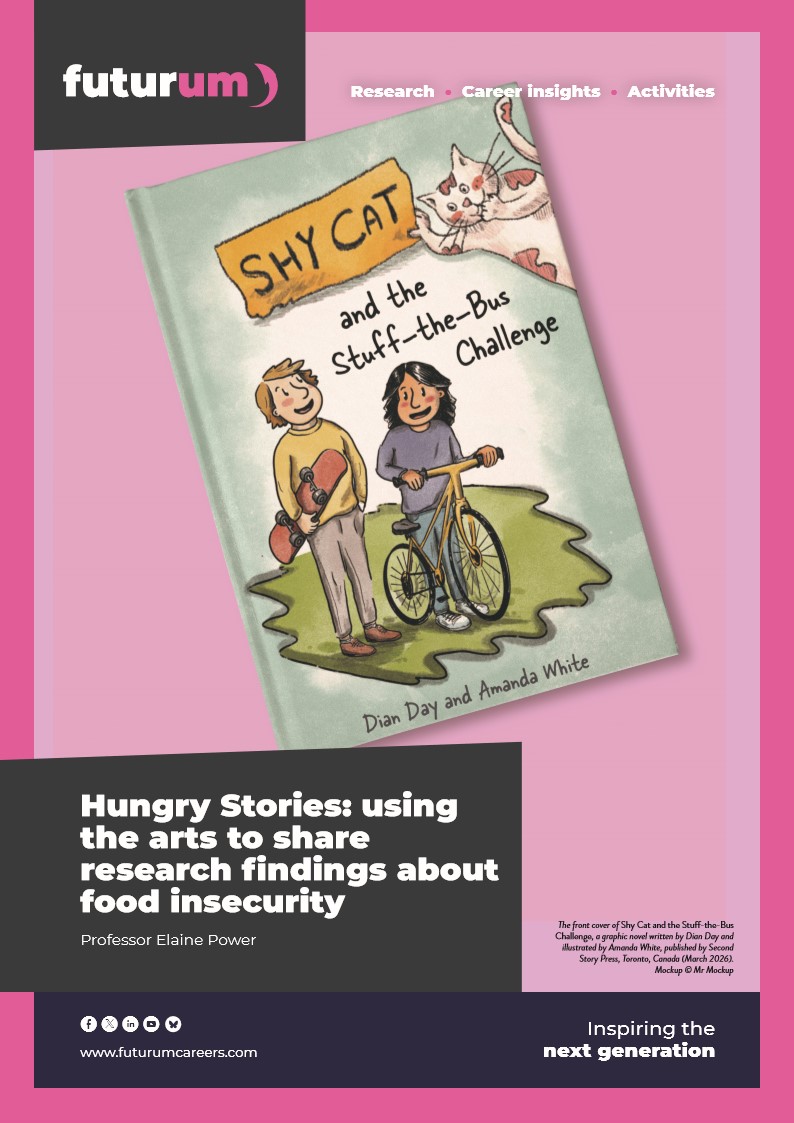
Elaine and her colleagues recruited author Dian Day and artist Amanda White to produce a graphic novel called Shy Cat and the Stuff-the-Bus Challenge, published in March 2026. “This graphic novel features the endearing friendship of Mila and Kit, gently exploring Kit’s experiences of food insecurity and the limitations of the available responses,” says Elaine.
The Hungry Stories team is also producing a picture book, a young adult novel and an art exhibition, all exploring food insecurity. As well as this, Chloe Halpenny, a doctoral student at Queen’s University, is developing a zine exploring how people in Ontario changed their eating habits in response to receiving a basic income guarantee, and plans to measure the impacts of various Hungry Stories ABKM materials.
“We will be doing some evaluation research about what children, teachers and care givers learn from Shy Cat,” says Elaine. “We hope people participating in food drives will begin to question their effectiveness and demand better responses from politicians.”
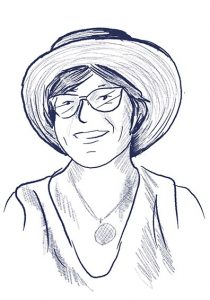 Professor Elaine Power
School of Kinesiology and Health Studies, Queen’s University, Canada
Fields of research: Food insecurity; arts-based knowledge mobilisation; public health
Research project: Using arts-based knowledge mobilisation to share research findings about food insecurity
Funder: Social Sciences and Humanities Research Council of Canada (SSHRC)
About arts-based knowledge mobilisation
“In a world that is flooded with information and disinformation, it is hard to catch people’s attention,” says Elaine. Researchers are turning to the arts to find new ways of engaging people with their research findings when conventional approaches fail.
“Arts-based knowledge mobilisation (ABKM) speaks to people’s hearts and minds and engages feelings in ways that academic texts cannot,” says Elaine. “By speaking to our hearts, art can help us change our minds about things. Art helps open up the possibilities to imagine how the world could be otherwise.”
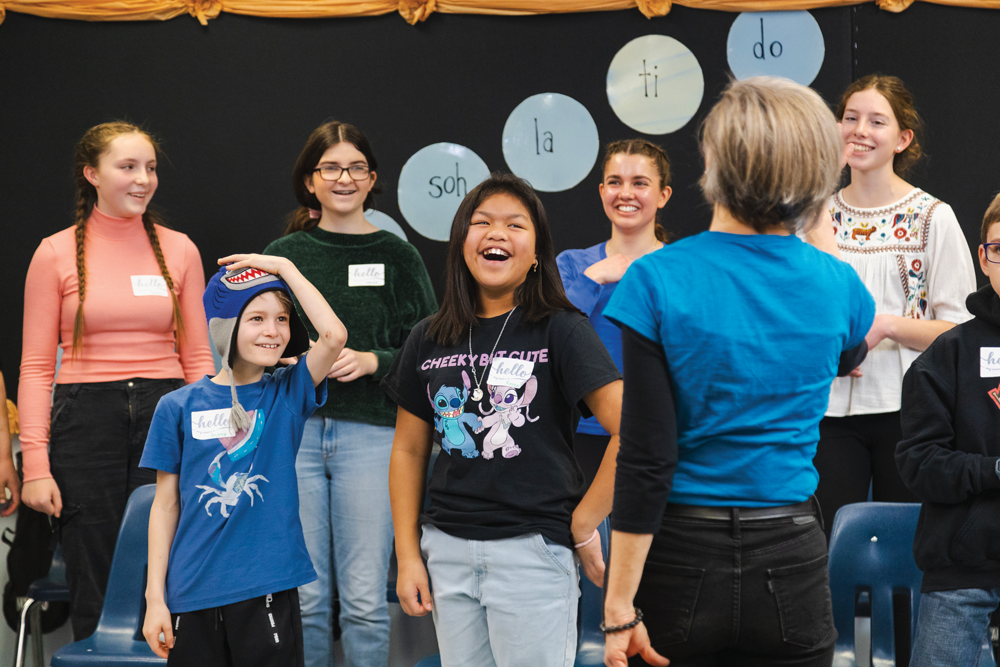
In ABKM, researchers collaborate with artists to bring their research and ideas to life. “Sometimes academic researchers have an artistic talent and skills, but that is unusual,” says Elaine. “Some skills are easier to learn than others, but that might not be the best use of a researcher’s valuable time.” However, when collaborating with artists, it is important to pay people fairly for their work, so funding can sometimes be an issue. As a result, it can take time to build the right team, and it is important to have great team-working skills. “Our team has been working together for many years, and we can only do this because we like and respect each other,” says Elaine.
Despite the challenges of ABKM, the results make it all worthwhile. “I’ve seen powerful theatre productions about healthcare that communicate patients’ experiences of breast and prostate cancer treatment, dementia care, and discrimination in emergency room services,” says Elaine. “Similarly, a doctoral student working with me, who interviewed dietitians about the barriers to social justice in their practices, is making startlingly profound and powerful poetry using the interviewees’ words from the transcripts. I think this type of knowledge translation is about to become very popular.”
Pathway from school to arts-based knowledge mobilisation
At school, make sure you develop a good foundation in science — both natural sciences and social sciences.
Build your communication skills, practice working and collaborating with others, and spend time developing your artistic and creative skills.
In your spare time, immerse yourself in the arts. Go to the theatre and to dance performances, visit art exhibitions, read novels, and explore anything that sparks your curiosity and imagination.
Explore careers in arts-based knowledge mobilisation
You can learn more about the work of Elaine, Chloe and their colleagues in the School of Kinesiology and Health Studies at Queen’s University in Canada on their website.
Queen’s University offers a number of different summer camps for high-school students.
“Anyone pursuing a research career in which they want their research to change policy, practice or public opinion should keep ABKM in their toolkit as an effective way to translate knowledge,” says Elaine. “I think we will be seeing much more use of it!”
Meet the Hungry Stories team
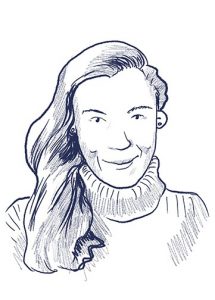 Jennifer Brady
Dr Jennifer Brady is an Associate Professor in Nutrition and Dietetics at Acadia University, Nova Scotia.
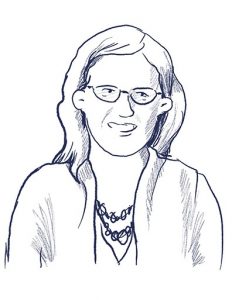 Jennifer Black
Dr Jennifer Black is an Associate Professor of Food, Nutrition and Health in the Faculty of Land and Food Systems at the University of British Columbia.
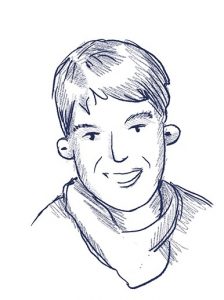 Dian Day
Dr Dian Day is an award-winning novelist and the author of the graphic novel, Shy Cat and the Stuff-the-Bus Challenge, based in Antigonish, Nova Scotia.
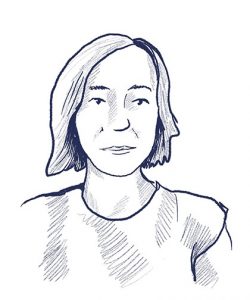 Amanda White
Dr Amanda White is a Canada Research Chair in Sustainability, Ecological Justice, and Climate Action in Creative Practices (Tier II) and an Assistant Professor of Critical Studies at Emily Carr University, on unceded Musqueam, Squamish and Tsleil-Waututh territories.
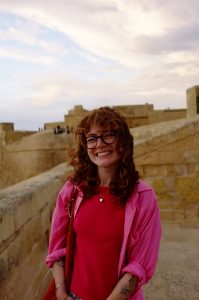 Chloe Halpenny
PhD candidate, School of Kinesiology and Health Studies, Queen’s University, Canada
Fields of research: Social policy; poverty and income security; feminist/disability studies
As a teenager, I was interested in everything. I loved musical theatre and competitive dance, but I was also fascinated by history, law and the environment. I had a strong sense that I wanted my work to align with my values and do some kind of social good. Having varied interests helped me make decisions later on.
I moved to Ottawa for an interdisciplinary undergraduate programme in public policy and public affairs, where I studied everything from communications and journalism to political science, law and research methods. I worked as a House of Commons Page in my first year of university, which gave me a first-hand glimpse into policy-making and the political process.
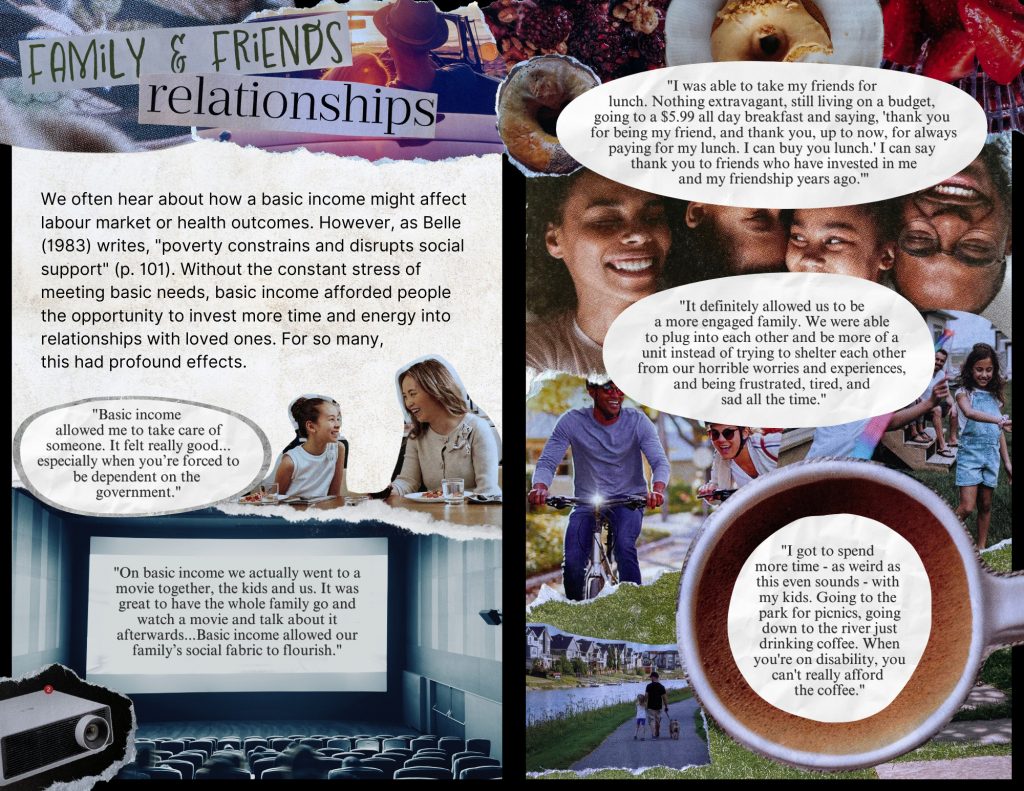
The moment that really changed everything came in 2018. Ontario’s provincial government was providing a basic income guarantee to test whether it could effectively address poverty. A newly-elected government cancelled the trial after one year, deleting the data before it could be evaluated. I was furious. I pivoted my graduate research to focus on the trial, interviewing 26 participants — primarily women — about what receiving a basic income had meant for them. Every person described how it fundamentally improved their lives. Hearing those stories gave me a deep sense of responsibility to make those realities visible and to show that alternatives are possible.
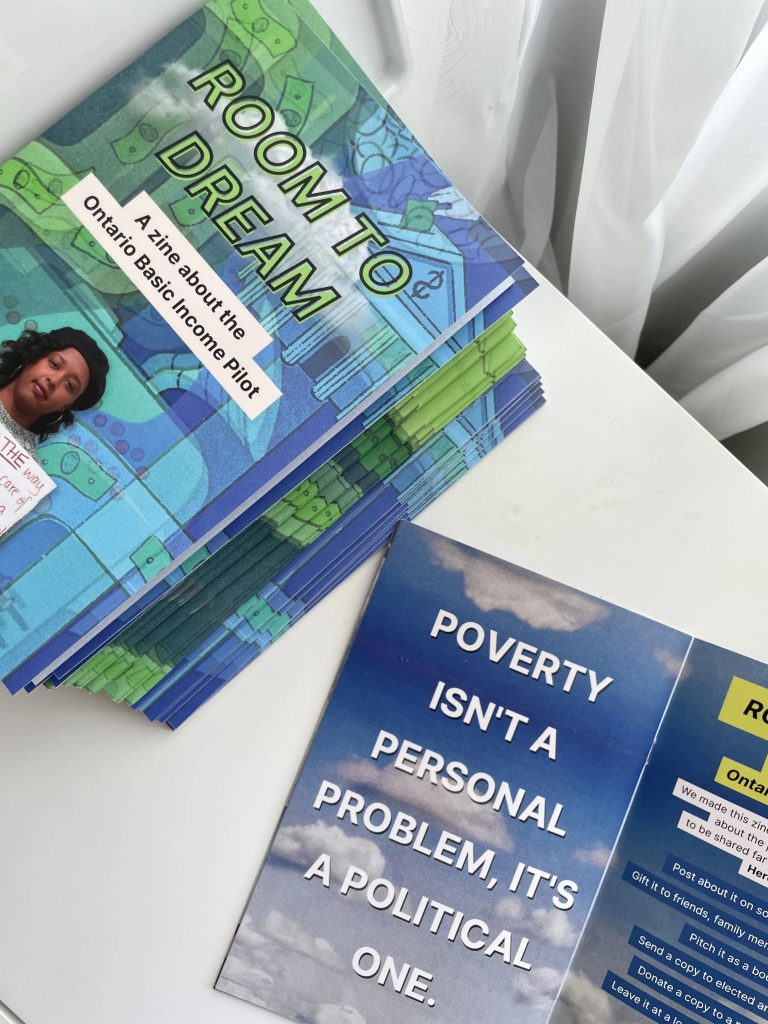
In 2020, I helped establish the Basic Income Youth Collective, a group of young people advocating for a basic income guarantee. Through this group, I share research about basic income and economic justice in creative, accessible forms. Findings from my interviews and the research of fellow BIYC members have been brought to life through initiatives like Basic Income Bought Me, a social media campaign about how people spent their basic income, and Room to Dream, a zine about the Ontario Basic Income Pilot, pairing research findings with handmade collages. These projects influence how I approach knowledge mobilisation in my PhD, which looks at medical eligibility for disability benefits.
Chloe’s top tip
Figure out what you care about (and accept that this may change over time), find other people who care about the same thing, and get involved. Whether they’re already doing something about it or want to start — form communities with people with shared interests.
Do you have a question for Elaine, Chloe or the Hungry Stories team?
Write it in the comments box below and they will get back to you. (Remember, researchers are very busy people, so you may have to wait a few days.)

Learn more about food insecurity:
futurumcareers.com/public-health-research-with-dr-deepak-palakshappa
The post Hungry Stories: using the arts to share research findings about food insecurity appeared first on Futurum.
“}]]