
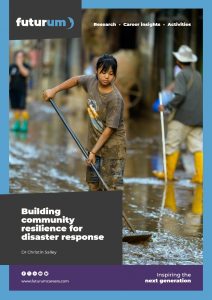
Building community resilience for disaster response
[[{“value”:”
Building community resilience for disaster response
Natural and man-made disasters can destroy infrastructure and take lives – but the way that communities and organisations respond is what defines the magnitude of their impact. Digital infrastructure, such as social media and artificial intelligence, present opportunities for improving responses, but also present challenges around equity and accessibility. Dr Christin Salley at Virginia Tech in the US is researching how community resilience efforts can be optimised through the careful and effective integration of technologies into disaster preparation and response.
Talk like an infrastructure systems engineer
Disaster literacy — the ability to access, understand and apply information about disaster risks and responses to make informed decisions
Infrastructure — the physical and organisational structures needed for a society to operate
Resilience — the ability to withstand and/or recover quickly from challenges or damage
Two-way communication — an interactive form of communication where both parties involved share and receive information, enabling mutual engagement
Disasters, whether natural or man-made, can be catastrophic for communities. We’ve all seen news reports about devastating earthquakes, floods or terrorist attacks and felt shocked and powerless to help. When these emergencies occur, it is often the stories of teamwork and community resilience that give us hope. However, some communities are more prepared for these situations than others, depending on the quality of their infrastructure and their ability to communicate effectively. Dr Christin Salley at Virginia Tech is investigating how digital infrastructure, such as social media and artificial intelligence (AI), can help communities prepare for and respond to emergencies.
Community resilience
Community resilience is the ability of a community to withstand and recover from the negative impacts of a disaster. “Many factors affect community resilience including access to resources, effective infrastructure systems, clear and trustworthy communications, strong social connections, and the ability to work together,” says Christin. Much of her work focuses on how technology can improve community resilience, particularly when it is used for communication.
When disaster strikes, effective communication is vital. “Without effective communication, important information can be delayed or confused, and organisations may struggle to make coordinated decisions,” says Christin. “When this happens, the safety of communities can be put at risk.” Technical limitations and a lack of capacity can make it difficult for organisations to gather and combine data from various sources to develop a clear picture of the emergency situation, and to share accurate, timely, actionable information with communities in need.
In today’s world, for better or worse, people often communicate through technology such as phones, computers and social media platforms. While this digital communication may have drawbacks, it also facilitates the rapid sharing of information between large groups of people and organisations. To build community resilience, these communication efforts must begin long before disaster strikes, so that people know what to do in an emergency situation. “Disaster literacy is powerful,” says Christin. “Knowing what to do, where to find resources and who to contact for help makes a huge difference to the outcome of an emergency.”
Two-way communication
Rather than simply disseminating information, organisations involved in disaster response should engage in two-way communication with affected communities by listening and responding to their needs. “Effective two-way communication can help to ensure that people get the help and resources that they need,” says Christin. “It also helps disaster response organisations build trust with community members.”
In disaster situations, trust is especially important. For communication efforts to work during an emergency, communities need to be able to trust the information that they are receiving, and the organisations providing that information. “This trust is important because it supports community resilience,” says Christin. “When there is trust between groups, there is better cooperation and participation in the response to a disaster.” However, it is difficult to build this trust in the midst of a disaster; instead, the relationship-building must begin before an emergency takes place. “For example, intentionally including community voices in disaster preparation and planning means that communities feel heard and that their needs are acknowledged,” explains Christin.
Reference
https://doi.org/10.33424/FUTURUM677
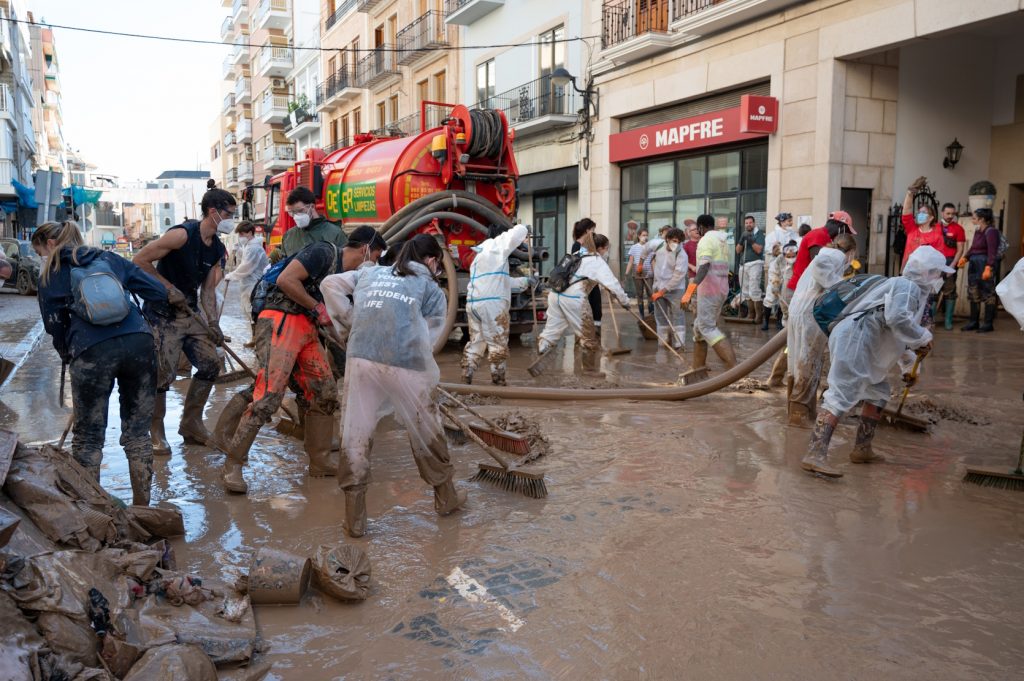
When there is trust between groups, there is better cooperation and participation in the response to a disaster.
© martenaba/Shutterstock.com
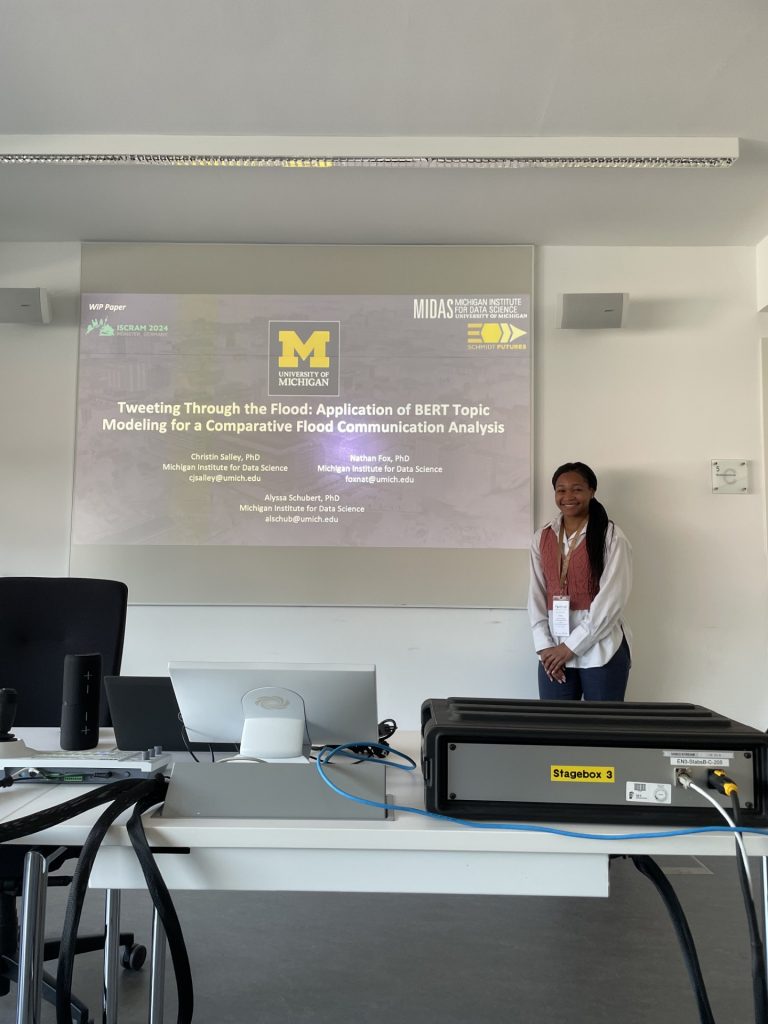
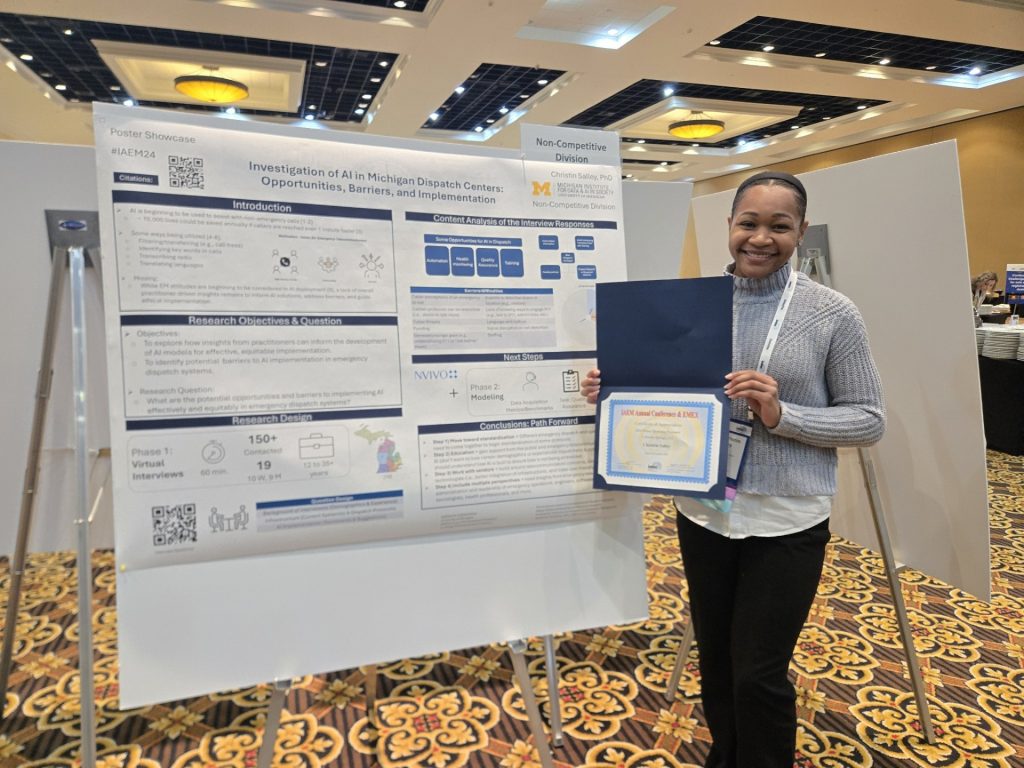
Social media can help facilitate two-way communication, though Christin cautions against over-reliance on it. “Not everyone is active online, and the people who engage with social media only represent a portion of the community,” she says. “Social media should be used as an additional tool to support risk communication, but not the only tool.” Planning efforts should therefore aim to make use of social media’s strengths. For example, social media allows organisations to quickly share on-the-ground information, such as damage to infrastructure, and gives people a platform to communicate their needs and express their feelings during and after a disaster. However, it should not be assumed that information shared on social media will reach all of the people who need it.
AI for disaster response
AI is also proving to be an increasingly useful tool for emergency response. “It can be an assistive tool and help with certain time-consuming tasks, freeing up capacity for meaningful community outreach, communication and discussion,” says Christin. “However, there are concerns around bias and access.” AI tools are ‘trained’ on huge amounts of data, allowing them to make human-like decisions. However, if this training data is biased, the AI tool can reinforce social inequities. “For example, if an AI is trained on data mostly from one demographic group, it may work better for that group but not as well for other people,” says Christin.
Other AI-related challenges are more practical. “It is expensive to buy, operate and maintain AI tools,” says Christin. “There are also generational differences in people’s comfort with using new technologies.” It is important to address all of these concerns to ensure that AI is used effectively in disaster response – in ways that are equitable, cost-effective and accessible to all. “I am starting new projects to develop benchmarks and reduce bias in AI, specifically for emergency call systems,” says Christin. “I want my research to lead to real social good.”
Christin has lots of projects in the pipeline, not just focusing on AI. “I will also research community engagement, risk communication and modelling, and how to combine multiple datasets to better understand emergency situations,” she says. “Along the way, I also hope to mentor others and strengthen disaster communications efforts across the world.”
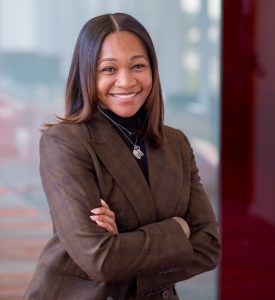 Dr Christin Salley
Research Assistant Professor, Department of Civil and Environmental Engineering, Virginia Tech, USA
Fields of research: Infrastructure systems; applications of AI; community resilience; disaster studies; human-centred design
Research project: Investigating how digital infrastructure can improve community resilience in emergency situations
Funders: Schmidt Sciences; Virginia Tech Institute for Society, Culture, and Environment
About infrastructure systems engineering
Infrastructure is all around us. Roads, electricity, water, public services and health networks are all systems that keep society running. “Infrastructure touches so many parts of life, which means there are many different pathways to work in this field,” says Christin. “You can find a career in infrastructure systems not just through engineering, but also through public health, medicine, urban planning and other fields.”
A big challenge for working with digital infrastructure systems is ensuring that the data being used is high-quality and representative. “It’s important to include many different perspectives when making decisions about infrastructure,” says Christin. “Sometimes this means creating new data, which takes time and active participation from community members.” Christin uses and supplements existing datasets, creating new data through surveys, interviews and workshops with the people affected by the project in question. “You may not be able to solve everyone’s problems at once, but by focusing on one problem at a time, you can make meaningful progress,” she says.
And because infrastructure is all around us, it is no surprise that careers can be found in many different sectors. “This is a highly interdisciplinary field,” Christin says. “Academic institutions, governments, national laboratories, private industry and consultancies, non-profits and community organisations, public policy and advocacy organisations, and environmental and sustainability organisations are all looking for specialists in infrastructure systems.”
Pathway from school to infrastructure systems engineering
At school, build a foundation in mathematics, physics, computer science and other sciences. The humanities can also provide a useful lens to build a more holistic understanding of the world.
Although Christin mentions that many fields can lead to a career in infrastructure systems, her own path involved studying engineering. She recommends taking core engineering modules at university, but supplementing these through classes in the humanities, public health, urban planning or computing.
Explore careers in infrastructure systems engineering
Christin recommends exploring the different types of infrastructure systems and thinking about which of them you are most interested in. The US Cybersecurity and Infrastructure Security Agency provides a list of sixteen critical infrastructure sectors to get you started.
Virginia Tech has several programmes to help young people get involved in engineering, such as those hosted by the Center for Engineering Excellence and Discovery.
Virginia Tech also runs summer programmes for high school students throughout the greater Washington DC area.
Meet Christin
I was interested in both sports and the arts as a teenager. Sports taught me perseverance and resilience in the face of adversity, while the arts nurtured my creativity and curiosity. On top of that, my family and friends played a formative role in shaping who I am today.
My desire to help others led me to pursue engineering. I wanted a career where I could make a meaningful difference in everyday life. Engineering was once described to me as ‘helping behind the scenes’ – solving complex problems in ways that quietly but profoundly improve society.
I love many aspects of my job. It gives me the chance to creatively solve problems, work alongside communities and collaborators, and meaningfully contribute to society. As a professor, I also love mentoring the next generation of scholars and leaders, encouraging them to pursue careers centred on social responsibility.
Infrastructure is everywhere and affects everyone. The roads we travel on, the water we drink, the electricity we rely on – all are infrastructure. Disasters can create chain reactions affecting many elements of infrastructure, and therefore lives, so it’s important to keep improving how these systems are designed, maintained and managed to better protect people, communities and the environment.
The support of mentors and loved ones has been integral to building my career. Throughout every stage of my life, I’ve always had at least one person who believed in me. That really matters. Even when you are determined and resilient, the path is not always straightforward. Having someone who can listen, offer advice or help you think through your next steps can make all the difference.
After work, I love binge-watching my favourite TV shows, travelling, or catching up with friends and family. When I was younger, I enjoyed baking, and lately I’ve been rekindling that love!
Christin’s top tips
1. Develop your communication skills! Dietitians work with patients, students and other health professionals every day, so being able to clearly explain complex ideas is key.
2. Stay curious and open-minded. Nutrition science is always changing. Be ready to learn and adapt.
Do you have a question for Christin?
Write it in the comments box below and they will get back to you. (Remember, researchers are very busy people, so you may have to wait a few days.)
Learn about how robots can work together to help people after a disaster:
futurumcareers.com/can-robot-teams-work-together-and-adapt-to-solve-problems-and-save-lives
The post Building community resilience for disaster response appeared first on Futurum.
“}]]