
How can sustainable agriculture improve the hospitality industry?
[[{“value”:”
How can sustainable agriculture improve the hospitality industry?
The hospitality industry provides a vital service to society and the economy, but it also often relies on environmentally damaging resources and is responsible for significant food waste. At New Mexico State University in the US, Professor Jean Hertzman is ensuring the next generation of hospitality and culinary professionals have the knowledge and skills to reduce the environmental impact of the industry. To achieve this, she is developing lesson plans that connect hospitality and culinary arts with sustainable agricultural practices.
Talk like a hospitality manager
Agricultural literacy – an understanding of how agricultural systems connect with society
Agriculture – the industry that grows crops and raises livestock to produce food, fibre and other resources
Agritourism – agricultural-related tourism activities, such as farm tours, dinners and stays
Culinary professional – someone whose job is to prepare, cook and present food
Food service – the sector of the hospitality industry that provides food outside of private homes
Hospitality industry – the sector of the service industry that provides food, accommodation and entertainment to guests
Supply chain – the network that an item passes through from its initial raw components to its final consumption by an end-user
Sustainable agriculture – agricultural practices that promote environmental health while supporting farmers’ livelihoods
“The hospitality industry would not exist without agriculture,” says Professor Jean Hertzman, Director of the School of Hotel, Restaurant and Tourism Management at New Mexico State University. “All of our foods and most of our supplies start with agriculture.”
Jean is on a mission to educate the next generation of hospitality managers and culinary professionals about the connections between agricultural systems and the hospitality industry. Most importantly, she wants the industry to become more environmentally friendly by supporting sustainable agricultural practices.
What environmental problems exist in hospitality supply chains?
Agricultural resources produced by traditional farming methods often have a negative environmental impact. For example, livestock such as cows (raised for meat and milk) release methane into the atmosphere, while fertilisers and pesticides (spread on fields to improve crop growth) wash into rivers and lakes which harms aquatic ecosystems and reduces water quality.
Agricultural goods must then be transported to restaurants, hotels and other hospitality venues which, if done by truck or plane, releases carbon dioxide into the atmosphere. And at the end of the supply chain, food waste is a huge environmental problem, with 29% of all US food being thrown away. While a third of this wasted food is from households, 24% is wasted on farms and 18% is wasted by the food service industry – a key component of the hospitality industry. “Reducing food waste is a concern that hospitality operations can directly address,” says Jean.
How can sustainable agriculture reduce these problems?
“Sustainable agricultural practices provide products for the hospitality industry that have been produced and transported responsibly,” says Jean. Sustainable agriculture is defined as an integrated system of plant and animal production practices that satisfy human food and fibre needs while also enhancing environmental quality, sustaining the economic viability of farm operations, and improving the quality of life for farmers and society. “While most people think about sustainability in relation to the environment, sustainable agriculture also emphasises sustaining people, society and the economy,” explains Jean.
When hospitality operations (such as hotels and restaurants) source their products from sustainable agricultural systems, they are contributing to a fairer and more environmentally friendly society. For example, organic products must be grown without the use of fertilisers and pesticides which improves water quality and biodiversity, and locally sourced products are not transported long distances which reduces greenhouse gas emissions.
Why is it important to learn about agriculture?
“Many people don’t connect the fact that the food they get from a food service operation starts in a field, forest, river or ocean,” says Jean. “The same goes for items in hospitality operations, such as the cotton to make sheets and towels in hotels.” Other examples include trees grown to make paper and bamboo grown to produce disposable bowls and cutlery. “Students need to understand where these products come from and the challenges that producers face in ensuring their continued availability, as these students will be the next generation of hospitality and culinary managers,” continues Jean. Future hospitality workers will improve the industry by using resources responsibly and supporting sustainable farming, fishing and other agricultural operations.
“Everyone, but especially hospitality and culinary professionals, will benefit from having agricultural literacy – a basic understanding of where their food and fibre come from,” says Jean. Hospitality and culinary professionals need to understand the supply chain of how products go from an agricultural operation, through manufacturing and packaging processes and distributors, to food service and hospitality operations, before finally reaching the consumer (such as a restaurant or hotel guest).
How is Jean supporting the next generation of hospitality and culinary professionals?
Jean hopes to address the current disconnect between the agricultural systems that produce food and resources and the hospitality and food service operations that use them by equipping the next generation of hospitality and culinary professionals with knowledge of sustainable agricultural systems. To achieve this, she is educating and training high school hospitality and culinary arts teachers, so they can share this knowledge with their students.
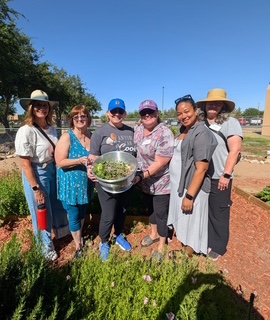
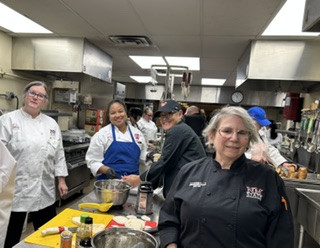
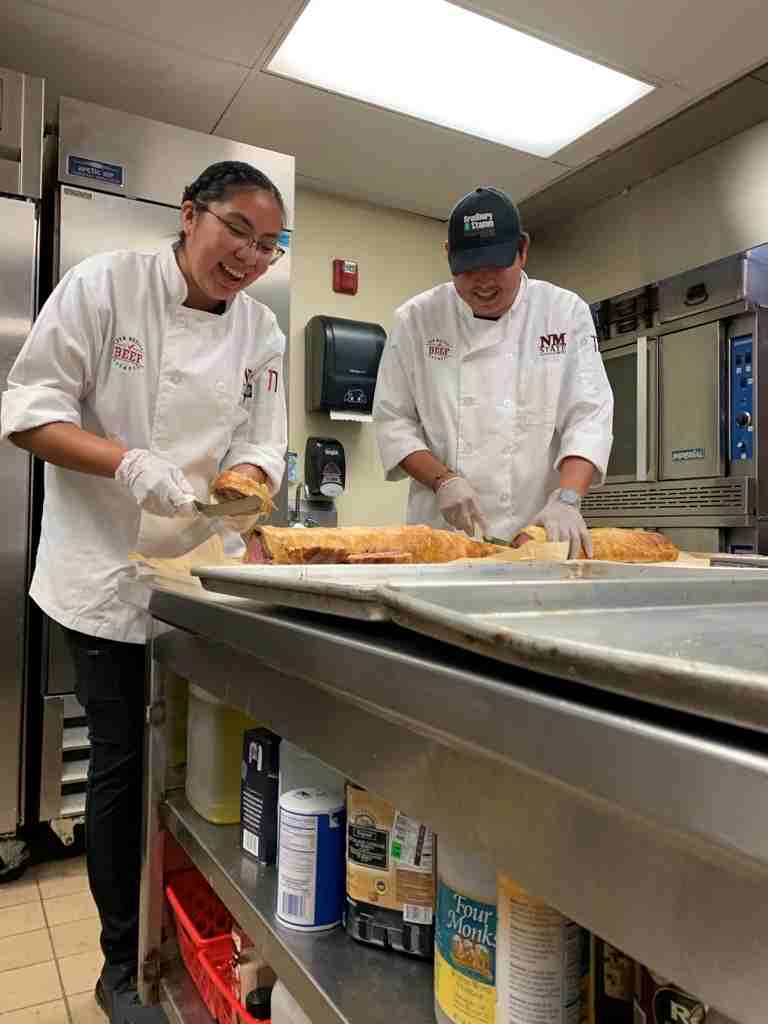
Together with her graduate assistants, Sierra Chopito and Hunter Lindsey, Jean is working with hospitality and culinary arts teachers to develop a series of lesson plans that can be used to introduce sustainable agriculture into the curriculum. These cover topics such as the connections between agriculture and culinary arts, purchasing and supply chain management, reducing waste in restaurants and hotels, and agritourism. Students are encouraged to visit local farms and food distribution warehouses, plan and cook meals using local and seasonal ingredients, develop recipes that use ‘scrap’ products, and perform carbon footprint audits of how foods get from a farm to a restaurant.
Reference
https://doi.org/10.33424/FUTURUM737

“The ultimate goal of my project is to train the next generation of culinary professionals and hospitality managers with the skills needed to ensure the effective and socially responsible use of resources from the producer to the end-user,” says Jean. “By gaining agricultural literacy and becoming advocates for sustainable practices in the workplace, you can contribute to reducing the effects of climate change, reducing food waste and providing demand for products created through better agricultural processes.” In this way, Jean and her team are ensuring that the hospitality industry will play a key role in making the planet healthier for all of us.
 Professor Jean Hertzman
School of Hotel, Restaurant and Tourism Management, New Mexico State University, USA
Fields of research: Hospitality and culinary arts; sustainable agriculture; food safety
Research project: Training hospitality and culinary arts teachers so they can educate their students about the importance of sustainable agriculture
Funder: This work is supported by the US Department of Agriculture (USDA) National Institute of Food and Agriculture (NIFA) Agriculture and Food Research Initiative (AFRI) Agricultural Workforce Training Priority Area, award #2023-67037-39940
About hospitality
Hospitality is a dynamic industry with a huge range of exciting career opportunities. “The careers in hospitality and culinary arts are endless because there are so many types of operations,” explains Jean. Food service operations range from food trucks, fast-food chains and independent cafés to hotel restaurants, entertainment venues and independent fine-dining establishments, along with catering for schools and hospitals. “Food service jobs include chefs, servers, bartenders and managers, while hotel careers include front-of-house operations, catering, housekeeping and sales,” says Jean.
This range of opportunities means that whatever your interests, you are sure to find a role in hospitality that allows you to fulfil your goals. “With the variety of jobs available, there is room for everyone,” says Jean. “Hospitality management and culinary arts are careers that will always be in demand. Everyone eats, and even if the percentage of people eating out fluctuates, the industry will always adapt.”
Jean’s first job was at an ice cream and sandwich shop. “It was a long time ago, so my pay was $2.85 per hour plus all the ice cream I could eat!” She then worked as an executive chef at an independent restaurant and as a restaurant manager at a hotel. As executive chef, she was responsible for overseeing all food preparation, developing menus, cooking, and ordering food and kitchen supplies. “As I worked at an independent restaurant, I enjoyed the creativity I had to adapt the menu and I loved watching people enjoy the meals we cooked,” she says. As restaurant manager, she was responsible for the ‘front of house’ operations, supervising servers and bartenders, checking reservations, greeting guests and dealing with any problems. “I enjoyed sharing my passion for hospitality with both the guests and employees,” she says. “No two days are ever the same in a restaurant, so I never got bored with the job!”
Pathway from school to hospitality
At school, take any hospitality and culinary classes that are offered. “You will learn key skills which will help you secure entry-level jobs and get ahead in your career,” says Jean.
“Math is also important,” advises Jean. “It is essential to know how to convert recipes to make different amounts and to know how to determine the cost of a dish and price it accordingly.”
You can earn hospitality and culinary certificates and qualifications from community college, trade school or university. Most courses will include practical internships to give you hands-on experience, and Jean also recommends finding part-time work in the industry, even if it is just washing dishes to begin with. “There is no substitute for practising your skills on a daily basis and progressing through different job levels to gain the experience needed to succeed,” she says. “You could also plan a party for your family, school or community centre, or help serve food at a food bank or community kitchen.”
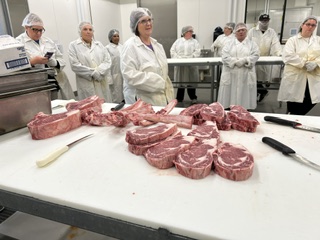
“To work with food, it is essential to study food safety and gain basic food preparation and cooking skills,” says Jean. “If a class in meats and butchery is offered, take it! These skills are in demand and pay high wages.”
Explore careers in hospitality
In addition to the huge variety of roles in food service and hospitality venues mentioned above, there are also opportunities to teach culinary arts and hospitality in high schools, trade schools, colleges and universities. “I wanted to teach because I recognised the tremendous need for training in the industry,” says Jean.
The National Restaurant Association (chooserestaurants.org/restaurantswork/career-pathways) and The Hotel Industry (thehotelindustry.com/career-pathways) provide information about career pathways in restaurants and hotels, along with the skills, experience and qualifications you need to follow different paths.
Meet Sierra
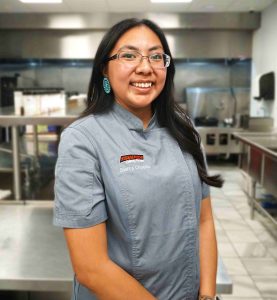 Sierra Chopito is the culinary business and product development manager at Stampede Culinary Partners
I have been cooking since a very young age, and I’ve always enjoyed exploring flavour combinations. I took culinary classes throughout high school and went to university to study culinary arts. One day, I witnessed chefs from different food chain companies come together and cook. The sight of their collaboration inspired me to become one of those chefs.
I took an introductory class in food science and was intrigued – I love working with food and it was exciting to understand the science behind food and how this relates to cooking in a kitchen. I also completed an internship in a five-star restaurant at a luxury ski hotel, where I learned discipline in the kitchen and built my strong mentality, which shaped my style as a chef today.
As product development manager at Stampede Culinary Partners, I manage our test kitchen where we develop new food products. Developing new food products involves working in the kitchen to create prototypes to ensure a successful transition from the kitchen to commercialisation. My inspiration for creating new products can come from current trends in restaurants and health, my friends, a vacation, a movie… anywhere!
I enjoy being able to create new things and try everything I make. I also love being able to collaborate with chefs and learn from their experiences and knowledge, because I believe you can learn new things from anybody. It is exciting to see food products that I made in the test kitchen on the shelf at a grocery store or on the menu in a restaurant and to know that millions of people are eating my food!
Meet Hunter
 Hunter Lindsey is studying for a master’s in agricultural extension and education
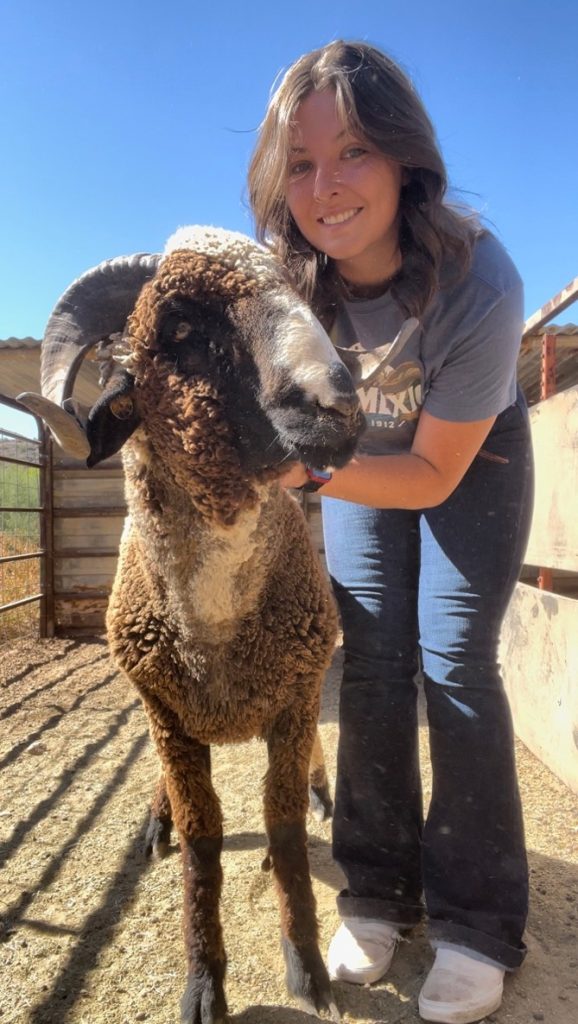
Throughout my childhood, I raised my own flock of sheep at home in Arizona and showed them at livestock shows. But throughout high school, I didn’t have a clue where my future would take me. I knew I wanted to work with animals and considered everything from marine biology to wildlife rehabilitation. In the end, I studied animal science with minors in agricultural business, ranch management and horse management, along with an internship in a reproductive physiology research barn. Studying so many different areas helped me realise just how broad agriculture is.
I’m now studying agricultural extension, which focuses on how we communicate agricultural information to farmers and the public. Animal science helped me understand the ‘why’ behind agriculture, and now my favourite part is learning how to share this knowledge with others.
I’m helping to develop agricultural lessons for culinary and hospitality educators. This involves connecting agriculture to topics students are learning about, such as where food comes from. For example, I’ve created resources covering the beef supply chain and sustainable beef production.
It’s important to know that you don’t have to come from a ‘traditional’ agricultural background to find a place in the industry. There are so many careers in agriculture – it’s not just farming and ranching. There are also opportunities in animal science, education, business and food production.
My advice to students is to stay open-minded, take advantage of opportunities that come your way and try to gain as much hands-on experience as possible. My journey has been shaped by being willing to explore different opportunities, even when I wasn’t sure where they would lead.
Do you have a question for Jean, Sierra or Hunter?
Write it in the comments box below and they will get back to you. (Remember, researchers are very busy people, so you may have to wait a few days.)

Discover how agriculture educators are helping people appreciate the links between agriculture and the environment:
futurumcareers.com/fostering-love-and-knowledge-of-agriculture-and-the-environment
The post How can sustainable agriculture improve the hospitality industry? appeared first on Futurum.
“}]]