

What role does folate play in pregnancy and autism spectrum disorder?
[[{“value”:”
What role does folate play in pregnancy and autism spectrum disorder?
Within the first few weeks of pregnancy, mothers begin passing an essential nutrient called folate to their developing baby. However, in some pregnancies, the baby doesn’t receive enough folate, which can lead to developmental disorders. At Santa Barbara City College in the US, neuroscientist Dr George Ayoub is investigating how a lack of folate during pregnancy can lead to neurodevelopmental conditions such as spina bifida and possibly autism spectrum disorder (ASD).
Talk like a neuroscientist
Folate — an essential vitamin that is important for cell growth
Folate receptor alpha — a protein that transports folate across the placenta into the developing baby’s brain
Folate receptor alpha autoantibodies — a malfunctioning immune cell that prevents folate receptor alpha from doing its job
Folic acid — a synthetic version of folate
Neural tube — a narrow channel that develops into the brain and spinal cord
Placenta — a temporary organ that connects the baby to the mother during pregnancy and provides nutrients
Reduced folate carrier — a protein that transports specific forms of folate across the placenta
Folate, also known as vitamin B9, is an essential nutrient that helps us create new DNA, supports cell growth and division, and plays an important role in a baby’s development during pregnancy. In our day-to-day lives, we consume folate by eating foods such as leafy vegetables, eggs, citrus fruits and legumes. Since folate is so important for a baby’s development, pregnant women and those trying to conceive are also advised to take folic acid, a synthetic form of the same vitamin.
“Folate is especially critical for closing the neural tube (which becomes the brain and spinal cord) in the first weeks of pregnancy,” explains Dr George Ayoub, a neuroscientist at Santa Barbara City College. “Too little folate raises the risk of neural tube defects and can affect broader brain development, potentially leading to autism spectrum disorder (ASD).” Although ASD develops from a complex mix of many different factors, folate seems to play a key role in many cases.
How does folate reach the baby?
During most pregnancies, a protein called folate receptor alpha transports folate across the placenta, from the mother’s blood into the baby’s blood to reach its developing brain. While this is often a smooth process, some mothers’ immune systems make folate receptor alpha autoantibodies (FRAAs) that attack the folate transport proteins. In one study, 17% of women planning for pregnancy tested positive for FRAAs.
“When FRAAs block or bind to folate receptor alpha, they stop the transport of folate across the placenta,” explains George. “This means that insufficient folate reaches the baby’s brain, even if the mother is taking folic acid supplements and has plenty of folate in her blood.” The lack of folate reaching the baby increases the risk of developmental disorders.
What is the link between folate and ASD?
George is investigating how insufficient folate caused by FRAAs is linked to ASD – a neurodevelopmental condition that affects how people communicate and interact with the world. The latest figures from the US Centers for Disease Control and Prevention show that 3.2% of all pregnancies in the US produce an ASD child. “However, in a recent study, 60% of FRAA positive pregnancies produced an ASD child, despite the mothers taking folic acid during pregnancy,” says George.
For expectant mothers with FRAAs, taking folic acid supplements may be insufficient. “Research shows that unmetabolised folic acid builds up in the blood, and this could worsen inflammation or immune activity,” says George. “Telling every pregnant woman to take the same dose of folic acid ignores the fact that a significant subgroup of these women cannot transport it across the placenta, putting both them and their developing child at risk.” George is investigating how a different form of folate called leucovorin might be a better option for mothers with FRAAs.
What is leucovorin?
Reference
https://doi.org/10.33424/FUTURUM727
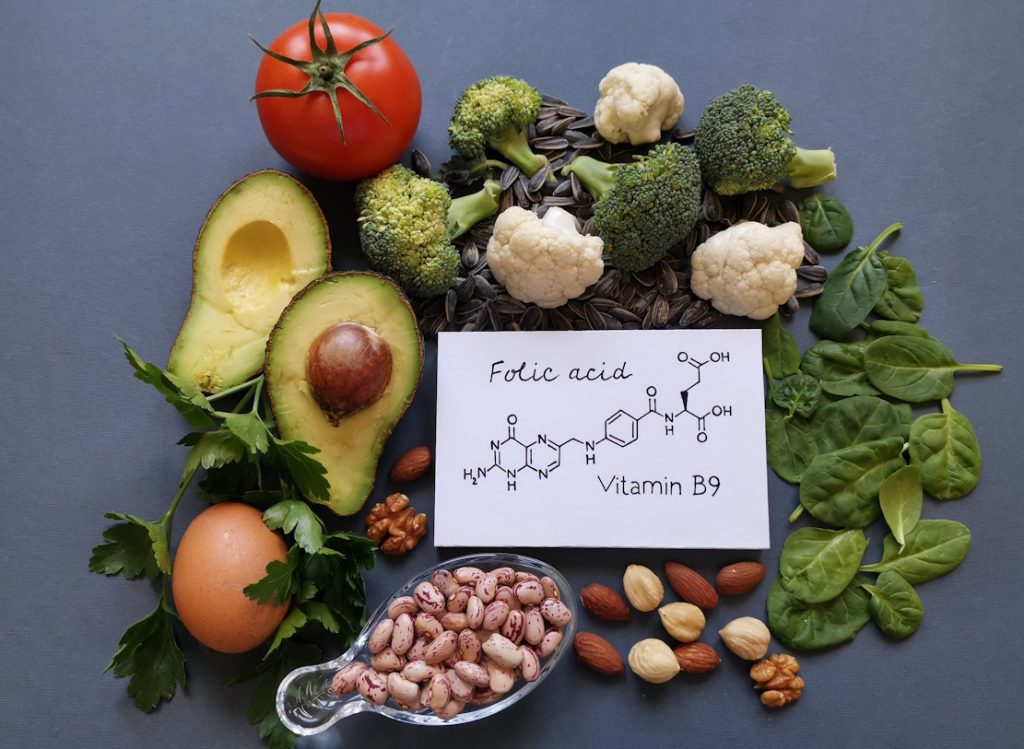
Folate, also known as vitamin B9, can be found in many vegetables, citrus fruits and eggs. ©Danijela Maksimovic/Shutterstock.com

A lack of folate during pregnancy can affect the baby’s brain development and potentially lead to ASD. © Ricardo Espinoza L/ Shutterstock.com

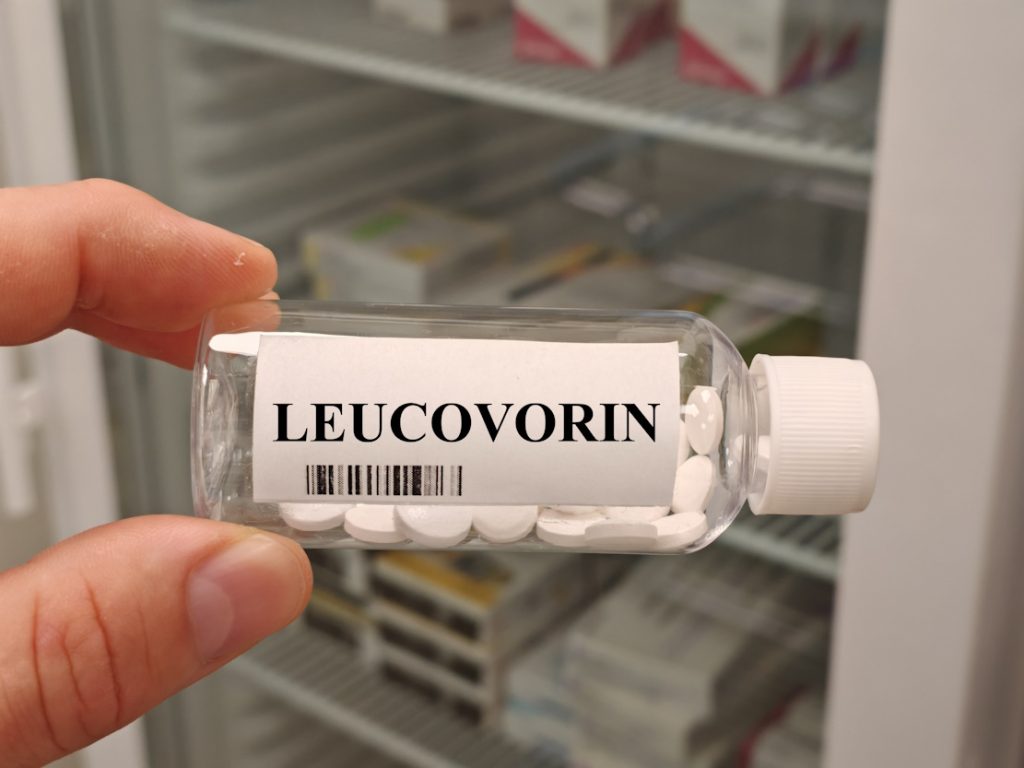

“Leucovorin is a natural folate, similar to what you get from food,” explains George. “That means it is in the form your body can use, unlike folic acid which must be metabolised first.” Importantly, this means that leucovorin can enter the developing brain not just through folate receptor alpha but also through a different transport protein called the reduced folate carrier. This allows it to cross the placenta even if the mother has FRAAs.
Imagine that the developing brain is a construction site and folate molecules are the construction workers. The folate workers normally travel from the mother to the baby through folate receptor alpha, a wide highway built to give them an easy route on to the site. However, some mothers have FRAAs which act like road blocks, preventing folate from travelling down the main road. Reduced folate carrier is like a country road that bypasses the FRAA roadblocks, and leucovorin is able to travel down this route to reach the construction site.
When folate travels through folate receptor alpha, it concentrates in the placenta at three times the level found in the mother’s blood. However, reduced folate carrier can only transport enough folate into the placenta to match the mother’s folate level. This means that when leucovorin is used as a folate supplement, it needs to be taken at higher doses than folic acid.
How can leucovorin help?
Although less folate can pass through reduced folate carrier than folate receptor alpha, recent evidence suggests that leucovorin can have a positive impact on early brain development. In a randomised control trial, FRAA-positive pregnant women were given either leucovorin or folic acid supplements. “The results showed that leucovorin supplementation was linked to markedly lower autism incidence and reduced ASD symptom severity in children,” says George. “60% of the folic acid pregnancies resulted in ASD children, compared to just 10% of the leucovorin pregnancies.”
Leucovorin can also improve symptoms for ASD children with FRAA. “In this group, leucovorin treatment has been shown to meaningfully improve symptoms related to social communication,” says George. “However, while leucovorin can help some ASD children with folate-pathway issues, it is not a ‘cure’, and it isn’t universally effective, helping about half the ASD children in the trials.”
What are the next steps in George’s research?
Although recent studies have had encouraging results, more research into the effects of leucovorin is needed. “We still don’t know who might respond to leucovorin, and there is a need for larger randomised controlled trials, both to identify if leucovorin is optimal for all FRAA-positive pregnancies, and also for FRAA-positive autism cases,” explains George.
It is an exciting time to be in this field of work, with leucovorin being approved by the US Food and Drug Administration in early 2026 to treat a genetic form of folate deficiency. “There is also research on developing non-invasive tests that can screen for FRAA-related risks in pregnancy and infancy,” says George. “These tests are important because we know that early provision of the needed folate can reduce developmental risks before symptoms even emerge.
 Dr George Ayoub
Department of Psychology, Santa Barbara City College, USA
Field of research: Neuroscience; neurodevelopment
Research project: Investigating the links between folate and autism spectrum disorder
Funder: Self-funded
About neuroscience
Neuroscience is an interdisciplinary field that combines physics, biology, psychology and philosophy to investigate the brain and the nervous system. “I like neuroscience for a number of reasons; the foremost being that the questions we study are fascinating because they are about who we are as people,” says George. Neuroscientists might study neurodevelopmental conditions to understand how they start, explore and come up with treatments for neurodegenerative diseases such as dementia, look into the underlying principles of our nervous systems, or investigate the processes behind our thoughts, feelings and actions.
“Neuroscience allows me to explore topics from philosophy using tools from the physical sciences,” explains George. “For example, I use cellular or molecular tools and clinical studies to help me think about why things are the way they are, and what that tells us.” Neuroscience is an exciting and ever-changing field. “The ways we can do experiments are always changing, which often creates new questions, new ways of seeing things and new answers, too,” says George.
A day in the life of a neuroscientist can be quite varied. “How I spend my time changes over the course of the year,” says George. “My typical day during the semester includes teaching classes, interacting with students, communicating with scientific colleagues, writing research papers and reading.”
Pathway from school to neuroscience
During high school, take classes in biology, chemistry and physics. If you’re able to, take a psychology or philosophy course as well.
“During college, I majored in physics and minored in philosophy,” says George. “When I took a neuroscience course, I loved seeing how these two areas combined, and it showed me that my knowledge of physics could be used to improve people’s health.”
At university, consider a bachelor’s degree in neuroscience, psychology or biology. “If you are interested in the sciences, take a range of science courses,” says George. “Each will have value for you and help you learn how to think from different perspectives.”
After your bachelor’s degree, you will need to complete a PhD if you want to work in research.
Explore careers in neuroscience
“Try to read some research papers and summaries of current research,” suggests George. “Use PubMed Central to find papers that interest you – these may introduce you to new ideas.”
“When reading about science research, try to avoid click-bait articles and instead choose articles that explain things well,” says George. “You will quickly learn to spot the difference and you’ll be able to learn so much more!”
This Stanford Report article contains interviews from neuroscience students, PhD candidates and the chair of the department on what they enjoy about their research.
The Franklin Institute has produced a suite of resources as part of their Neuroscience and Society Curriculum.
Meet George
As a teenager, I spent my time reading, playing hockey and soccer, and figuring out how things worked. I would fix things by taking them apart and puzzling through what wasn’t working to find a solution. I also enjoyed sciences, especially physics.
I love the challenge of explaining complex information in a way that my students understand – especially when they then find it exciting. I like to think of answers to ‘why’ question, and that applies to my teaching and to my research. I’ve learned that to be a good teacher I need to know something well, to be able to see it from many vantage points and continually ask ‘why’.
I enjoy working in neuroscience because it is central to who we are, so understanding how and why each aspect works is exciting. Secondly, I always focus on nutrition and health in my research, not only because I am curious, but also because I may be able to help others with health issues.
Always being curious has helped me lead a successful career. I never rush to conclusions, I remain sceptical about new theories until there is overwhelming evidence to support them, and I’m open to different ways of looking at things – recognising that how I see something is only one view. When we can hear from a wide variety of views, we can be more successful in coming up with ideas that may prove useful.
Outside of my work, I make time to exercise – which is when I usually have time to think through things that I’m reading or writing. It is a sort of prayer/meditation time for me. Preparing meals also keeps me grounded, and I love to explore nature and volunteer with charities. Although the charities change over time, it is always rewarding to see my efforts help others.
George’s top tips
1. Stay curious. There is always a push to conform to how ‘everyone else’ is viewing things, but if you stay curious you are much more likely to find a new perspective.
2. Keep reading. I read science articles from a wide variety of fields in my down time. This helps me find new ways of looking at things.
3. Choose the right teacher. When you like someone’s teaching style, take their classes or work with their research. We always gain more when we resonate with the person. And the opposite is true as well. If a teacher is difficult for you, even if they may be famous, that’s not a good fit. Try to work with people you feel connected to.
Do you have a question for George?
Write it in the comments box below and he will get back to you. (Remember, researchers are very busy people, so you may have to wait a few days.)
Learn about how vitamin deficiencies can affect development:
The post What role does folate play in pregnancy and autism spectrum disorder? appeared first on Futurum.
“}]]