
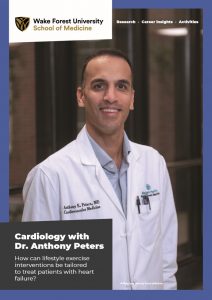
How can lifestyle exercise interventions be tailored to treat patients with heart failure?
[[{“value”:”
How can lifestyle exercise interventions be tailored to treat patients with heart failure?
Heart failure is a debilitating condition that can seriously reduce a person’s ability to carry out everyday activities. At Wake Forest University School of Medicine in the US, cardiologist Dr Anthony Peters has designed a clinical trial to investigate how to improve exercise therapy for patients with heart failure. He is exploring whether combining exercise, behavioural coaching and peer support can help patients become more active and improve their quality of life.
Talk like a cardiologist
Cardiometabolic dysfunction – a group of conditions affecting the heart and metabolism, including obesity, diabetes, and high blood pressure
Cardiovascular fitness – how efficiently the heart and blood vessels supply oxygen to the body during physical activity
Cardiovascular disease – a general term for conditions that affect the heart and blood vessels
Ejection fraction – the percentage of blood the heart pumps out with each beat
Frailty – a medical condition often seen in older adults that involves reduced strength, endurance, and physical resilience
Heart failure with preserved ejection fraction (HFpEF) – a type of heart failure where the heart pumps normally but is too stiff to fill properly between beats, along with changes in other organs throughout the body
Supervised exercise training – a structured exercise programme led by health professionals, often involving aerobic and strength exercises
Heart failure affects more than six million people in the US and is one of the leading causes of hospitalisation and death among older adults. “My goal is to develop and test innovative exercise interventions for patients living with heart failure, a common and debilitating disorder,” says Dr Anthony Peters, a cardiologist at Wake Forest University School of Medicine.
It was Anthony’s work treating people with heart failure as a clinical cardiologist that inspired him to conduct research into how to improve outcomes for his patients. Around half of all patients with heart failure have a condition called heart failure with preserved ejection fraction, or HFpEF, and the number of people diagnosed with HFpEF is increasing as populations age and conditions such as obesity and diabetes become more common.
What is HFpEF?
Heart failure is a form of cardiovascular disease. Unlike some other forms of heart failure, the heart of a person with HFpEF can still pump out a normal proportion of the blood it contains (its ejection fraction is preserved). The problem is increasingly understood to be a systemic problem (i.e., throughout the body), including that the heart muscle becomes stiff, making it harder for the heart to fill with blood between beats, along with changes in other organs throughout the body. As a result, the body receives less oxygen-rich blood, leaving patients breathless and fatigued.
“HFpEF is a complex, multi-organ disorder with contributions from ageing, physical inactivity, and cardiometabolic dysfunction,” says Anthony. “People living with HFpEF often experience swollen legs, difficulty breathing, and extreme tiredness that can make everyday activities increasingly difficult.”
Why is HFpEF difficult to treat?
Although medications are available for HFpEF, relatively few of them substantially improve a patient’s ability to exercise, which is often one of the symptoms that most limits their independence and quality of life. In the absence of effective drugs, doctors often prescribe supervised exercise training for their patients with HFpEF.
“Supervised exercise training definitively improves exercise capacity in patients with HFpEF and is recommended in clinical guidelines for heart failure management,” says Anthony. Traditional supervised exercise programmes usually involve about 45 minutes of moderate-intensity aerobic exercise (e.g., walking, cycling) three times a week, sometimes combined with strength training (e.g., lifting weights, squats).
However, while supervised exercise programmes can be highly effective, they can also be difficult for patients to maintain over the long term. Attending regular exercise sessions may become challenging because of transport difficulties, competing responsibilities, or a lack of ongoing support after the programme ends.
How is Anthony increasing the effectiveness of supervised exercise training?
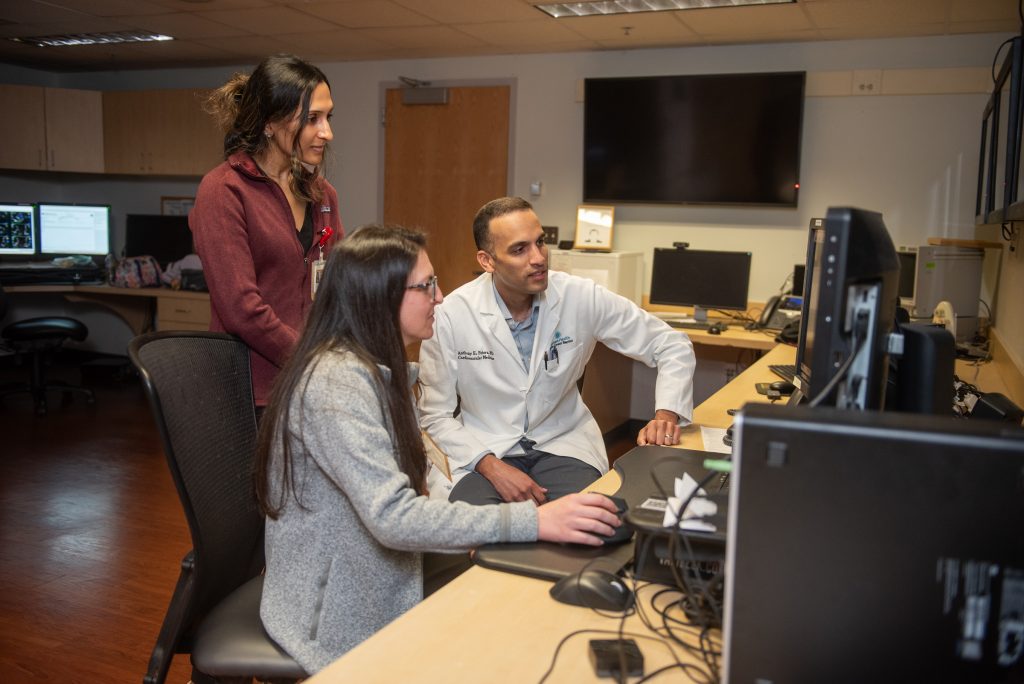
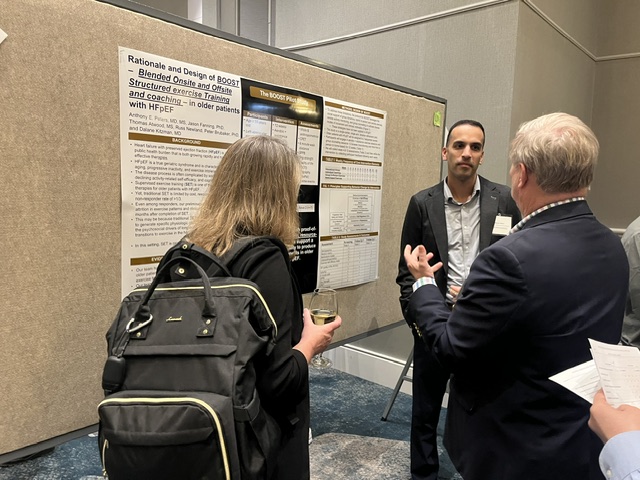
Anthony’s research aims to overcome the challenges many patients with heart failure face during and after supervised exercise training. To do this, he is conducting a clinical study called Blended Onsite and Offsite Structured exercise Training and coaching, or BOOST. Rather than simply asking whether exercise helps patients with HFpEF, Anthony’s study investigates how exercise programmes can be designed so that patients continue being active after the supervised sessions end.
“We are currently in the design and feasibility stages of BOOST,” says Anthony. “The pilot results will establish the safety and feasibility of group-mediated exercise interventions, supported by remote monitoring technology and behavioural change theory.” These initial findings will provide important preliminary data that Anthony will use to help him design and conduct a larger-scale clinical trial to fully investigate the impacts of exercise therapies for older patients with HFpEF. “We will test the hypothesis that novel, targeted exercise intervention approaches can produce improved clinical outcomes and more durable responses to exercise,” he says.
How does the BOOST programme work?
“The 12-week BOOST programme aims to increase aerobic activity to achieve cardiorespiratory benefit while maximising the likelihood of sustaining these behaviours long term,” explains Anthony. To achieve this, BOOST combines group educational sessions, one-to-one coaching, supervised group exercise, and self-guided exercise at home. The programme encourages participants to find forms of exercise they enjoy while building supportive social connections and increasing their confidence in exercising independently. It also aims to remove the barriers that many people face when trying to engage with exercise (e.g., lack of transportation to exercise classes) and hopes to initiate behaviour changes that result in patients embedding physical activity in their life. As the programme progresses, participants gradually transition from regular in-person sessions to exercising more independently, with continued coaching to help them sustain both their physical activity and the social connections they have built.
Reference
https://doi.org/10.33424/FUTURUM716


This educational material has been produced by Wake Forest University School of Medicine in partnership with Futurum and with grant support from The Duke Endowment. The Duke Endowment is a private foundation that strengthens communities in North Carolina and South Carolina by nurturing children, promoting health, educating minds and enriching spirits.

Let us know what you think of this educational and career resource. To provide input, simply scan the QR code or click here.
How is Anthony measuring the benefits of BOOST?
To understand the full impact of BOOST, Anthony and his team are examining a broad range of physical, cognitive, and social outcomes to determine how the programme affects cardiovascular health and overall well-being. Participants complete tests of walking ability, cardiovascular fitness, grip strength, and physical performance, alongside assessments of frailty, cognitive function, social connectedness, and heart failure-related quality of life. These measurements are collected before the programme begins and again at the end of the 12-week intervention by assessors who do not know which intervention participants received, helping to ensure unbiased results.
“We hope to address key knowledge gaps in the treatment of the severe exercise intolerance experienced by the large and growing population of older patients with HFpEF,” says Anthony. Thanks to the work of cardiologists like Anthony, people with heart failure can be hopeful for a brighter future in which they can live a higher quality of life.
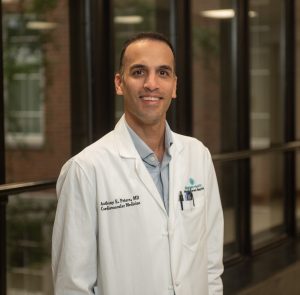 Dr Anthony Peters
Assistant Professor, Department of Cardiovascular Medicine, Wake Forest University School of Medicine, USA
Field of research: Cardiology
Research project: Investigating how to create exercise interventions for patients with heart failure
Funders: Clin-STAR; Wake Forest Pepper Center; Clinical and Translational Science Institute; Cardiovascular Sciences Center; American Heart Association
About cardiology
Cardiology is the branch of medicine that focuses on diagnosing, treating, and preventing diseases of the heart and blood vessels. Cardiologists care for people with a wide range of conditions, from high blood pressure and heart rhythm disorders to heart failure and heart attacks. Many also carry out research to develop better ways of preventing and treating cardiovascular disease.
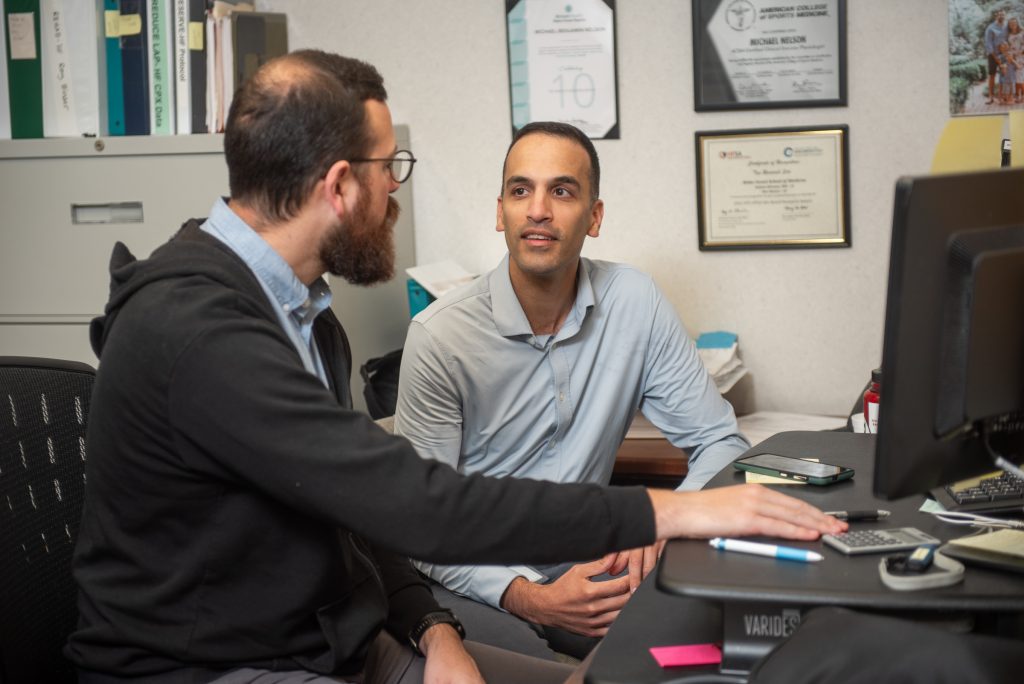
Anthony combines patient care with scientific research. “I love my work!” he enthuses. His role varies from treating patients in hospital and running outpatient clinics, to analysing data and publishing new results. Clinical practice and research often go hand in hand, as caring for patients helps cardiologists identify important unanswered questions, while new research findings help doctors provide the most up-to-date treatments. “The best research questions arise from my clinical work – from seeing patients every day and working with clinicians dealing with particular challenges,” says Anthony. “On the flip side, our research and knowledge of recent findings keep us on the cutting-edge of clinical care.”
As cardiovascular diseases continue to evolve and populations continue to age, cardiologists are facing new challenges. Anthony believes dealing with the growing burden of obesity and cardiometabolic disease, alongside harnessing the potential of artificial intelligence in healthcare, will be key priorities for the next generation of cardiologists.
Pathway from school to cardiology
“Establish a foundation in the sciences and, beyond that, pursue what brings you joy and excites you!” says Anthony. “This will lay the true foundation for a career in medicine.”
At school, biology, chemistry, and physics are key subjects for anyone interested in studying medicine and understanding how the human body works. Anthony also recommends studying subjects such as business, health administration, or economics, which will help you develop an understanding of how healthcare systems operate.
To become a clinical cardiologist, you will need to study medicine at college or university, followed by specialist training in cardiology.
To become a research cardiologist, you could study medicine, biomedical science, or biology at college or university, followed by postgraduate research.
Explore careers in cardiology
Careers in cardiology include clinical roles diagnosing and treating patients with cardiovascular disease, and research roles studying and developing new treatments for these conditions. You could also choose to combine both roles, like Anthony.
Learn more about the cardiology research being conducted at Wake Forest University School of Medicine: school.wakehealth.edu/departments/cardiovascular-medicine
The American College of Cardiology provides information about cardiovascular research, training pathways, and career opportunities: acc.org
Meet Anthony
As a teenager, I was interested in sports and science. These may have aligned through spatial reasoning and physics, and that translates to what I do today – heart failure physiology!
I was inspired to be a clinician-researcher in cardiology because I wanted to help individual patients at the bedside while also improving the care of patients with heart failure around the world through my research. I was inspired to work diligently to help others by my parents and family, who set an example for me each day and made sacrifices to enable me to pursue my dreams.
I was motivated to work with older patients with HFpEF because, as a clinician, I regularly encountered older patients with multiple co-morbidities (other health conditions in addition to their primary diagnosis), often led by heart failure. These people often suffered from severe exercise intolerance and frequent hospitalisations.
I became focused on improving the care of these patients through my clinical and research work, and I was particularly drawn to studying heart failure in older people by the challenges of working with these patients with multiple co-morbidities complicated by age-related changes.
When I’m not working, I enjoy spending time outdoors with my wife and three children, coaching soccer, or trying new restaurants.
Anthony’s top tips
Keep an open mind and trust your experiences and instincts to guide you to a career that will be the best fit for you. And ask lots of questions along the way!
Do you have a question for Anthony?
Write it in the comments box below and he will get back to you. (Remember, researchers are very busy people, so you may have to wait a few days.)

Anthony’s colleague is exploring how exercise can protect our brain health:
The post How can lifestyle exercise interventions be tailored to treat patients with heart failure? appeared first on Futurum.
“}]]