

How does metacognition affect learning?
[[{“value”:”
How does metacognition affect learning?
Metacognition is a skill that develops throughout childhood and adolescence. As people grow, their ability to accurately judge their knowledge and to act on these judgments tends to improve. However, some students find this metacognitive monitoring and control difficult, and this can impact their ability to learn. In Switzerland, a research team led by Professor Mariëtte van Loon at the University of Zurich and the University of Basel is investigating the links between students’ metacognitive skills and their ability to learn.
Why are some students better at learning than others? Traditional thinking points to differences in cognitive abilities, such as intelligence, memory or processing capacity. But one research group, led by Professor Mariëtte van Loon, is looking at this question from a different angle by studying how metacognition affects students’ ability to learn.
What is metacognition?
“Metacognition is an umbrella term for the ability to reflect on and regulate your own thinking and learning processes,” explains Mariëtte. “Specifically, my team focuses on how children and adolescents monitor and control their learning.” Monitoring refers to a student’s ability to evaluate what they do and do not know, while control refers to their ability to take actions to improve their learning.
“It’s a bit like how a thermostat keeps the temperature in a room constant,” says Mariëtte. “The thermostat needs to constantly assess the temperature and then, based on that monitoring, take an action, such as heating the room up or cooling it down.” This is a process that, once developed, happens automatically. For example, as you read this article, you might come across a passage that you don’t immediately understand and decide to read it again. That is monitoring and control in action.
How does metacognition develop?
“Metacognitive abilities develop substantially throughout childhood and adolescence,” explains Mariëtte. “As people grow, their ability to accurately judge their knowledge and to act on these judgments typically becomes more refined.”
But children do not grow and develop at the same rate, and the same holds true for their metacognitive abilities. “Some students are better at monitoring where they are doing well and where they have gaps in their knowledge,” says Mariëtte. During a reading task, for example, these students are able to assess how well they are understanding the content and go back to re-read sections they didn’t understand. “But other students might just go through the information without monitoring how well they’re understanding it,” continues Mariëtte. “They go through a task, but they don’t question themselves and they don’t recognise their errors.”
These metacognitive abilities can have a huge impact on a student’s ability to learn. “Some years ago, one meta-analysis indicated that metacognitive processes are at least as important as intelligence when it comes to academic achievement,” says Mariëtte. “Our research findings with adolescents suggest a similar pattern. Although intelligence is an important predictor of learning, metacognitive monitoring and control skills also influence how well students learn and perform academically. These skills make a unique contribution above and beyond intelligence.”
How does the team study metacognition?
“The main question that we want to answer is: Why are some students better than others at monitoring and control?” says Mariëtte. “But we also want to dig deeper than this. We want to understand more about these metacognitive skills and answer different research questions.”
For example, Mariëtte’s team wants to figure out if monitoring and control are skills that can be applied in the same way across different tasks – be it reading, maths or learning a language – or if these skills are task-specific. They also want to investigate the relationship between these two skills: Are monitoring and control really separate skills, or are they two parts of one overarching skill?
With these questions in mind, Mariëtte and her team collaborate with schools to conduct their research. “Our research is based on cognitive psychology, but instead of working in a lab, we do our research in school contexts,” explains Mariëtte. “We get students to complete a learning task and ask them to judge how certain they are that their answers are correct and how likely they are to retain the information.”
The team also records which parts of the task the students are focusing on and which items they return to in order to improve their learning. “We also have competitions in which students receive points for correct answers and lose points for incorrect answers,” says Mariëtte. “When assessing metacognition in this way, it encourages students to carefully reflect on the accuracy of their answers.”
In many cognitive psychology experiments, participants must complete tasks under time constraints and without the chance to re-visit their answers. But Mariëtte and her team do things a little differently. “We combine controlled experiments with research on self-regulated learning, where students can take their learning into their own hands,” explains Mariëtte. “In our tasks, students can decide for themselves how long they spend on each item, reflect on their learning and spend time re-studying to improve their responses. In this sense, it is much closer to an actual school environment, where learning is not something that happens only once, but is ongoing and can be adapted.”
What has the team discovered?
“In a recent study, we found that most children have age-appropriate skills that develop over time,” says Mariëtte. “However, there was a small group of students who lagged behind in metacognitive development and struggled to assess their own learning and take subsequent actions to improve it.” What’s more, as other students’ metacognition developed over time, this group struggled to improve.
Reference
https://doi.org/10.33424/FUTURUM715
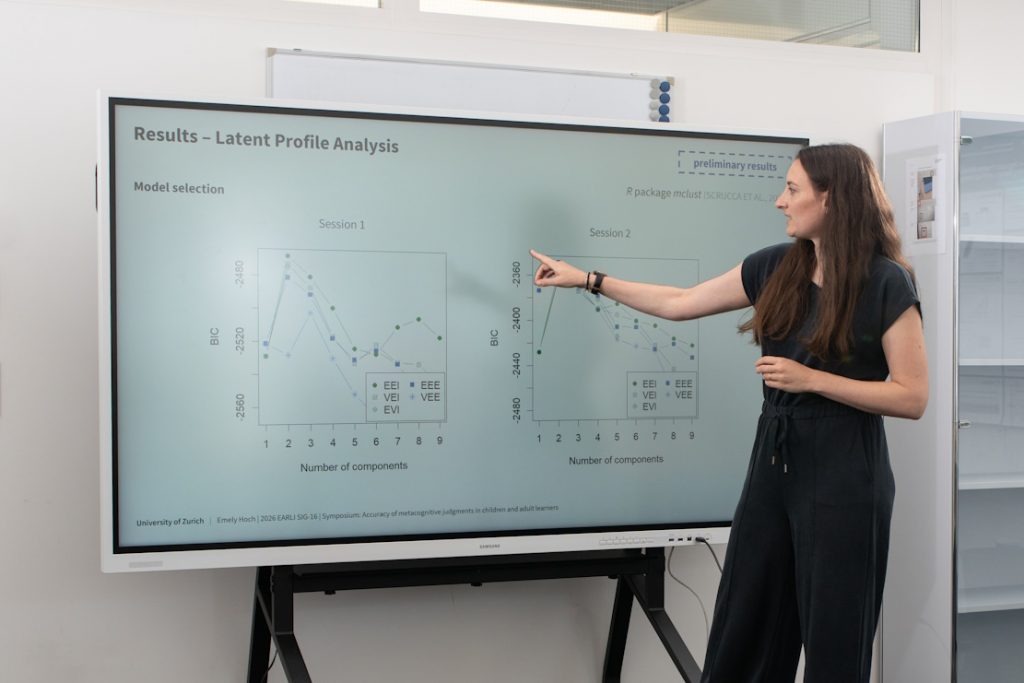
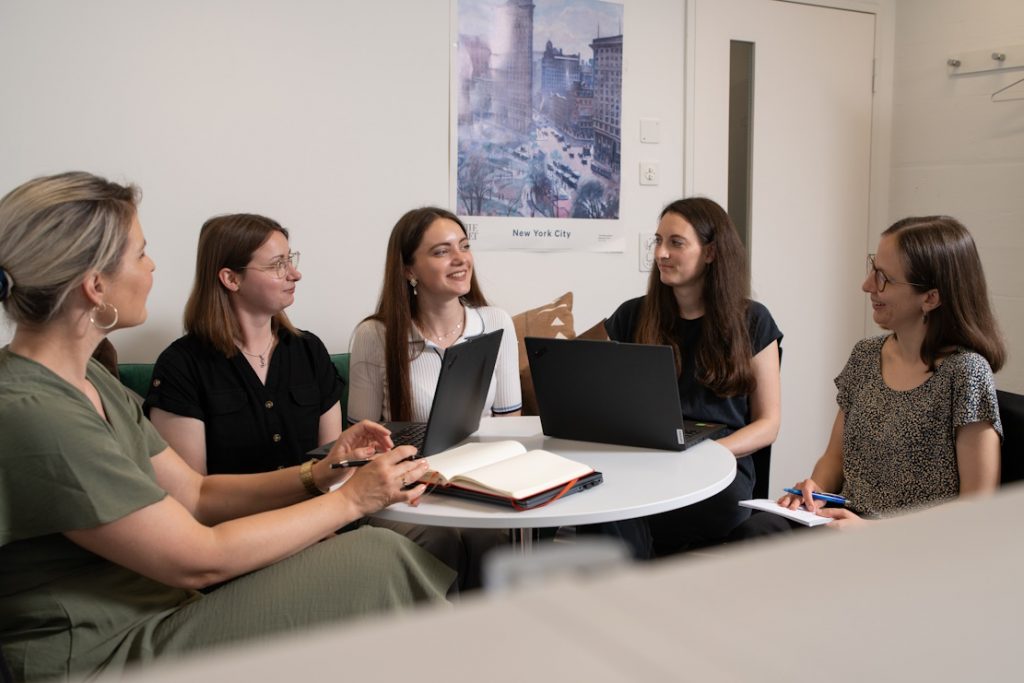
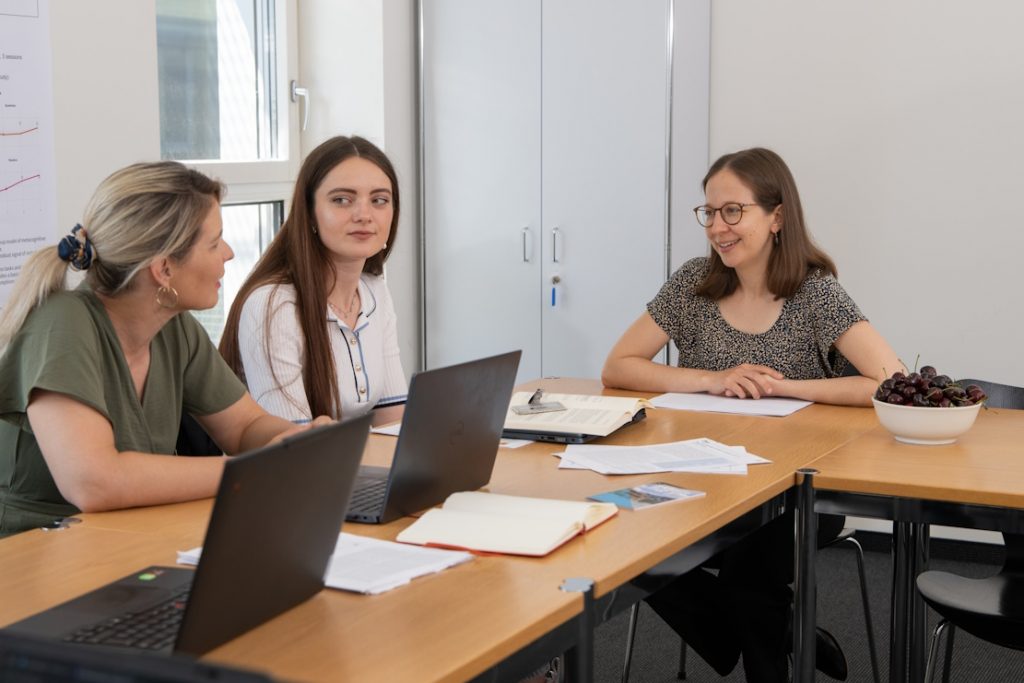




These findings have led to many more questions that Mariëtte and her team want to answer. “Do some children show persistent difficulties in metacognitive development? Is it something that we can reliably identify and diagnose? How can we accurately spot the children who need support?” asks Mariëtte. “We are finding answers in our research, but when we find them, we always have more questions!”
One question in particular immediately suggests itself: What can teachers do to support students who struggle with metacognition?
Metacognitive Development Research Group
Project description: Investigating the impact of metacognitive monitoring and control on learning in children and adolescents
Institutions: Department of Psychology, University of Zurich; Faculty of Psychology, University of Basel
Field of research: Developmental cognitive psychology
Funder: Swiss National Science Foundation
 Project leader: Professor Mariëtte van Loon
Faculty of Psychology, Department of Human Development, University of Basel
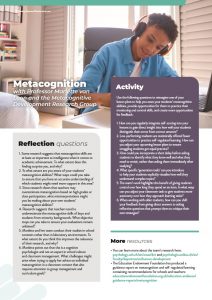
Advice for teachers
“Our research focuses on individual metacognitive monitoring and control processes,” says Mariëtte. “But of course, students’ learning is shaped by many factors, including school culture and classroom management.” These suggestions draw on metacognition research and may help you think about how you can support students whose metacognitive abilities are still developing.
Identify struggling students
Current evidence suggests that teachers do not always accurately estimate their students’ monitoring and control skills. “While teachers are able to identify students with good metacognitive skills, they often find it more difficult to spot those who are struggling,” says Mariëtte. “Studies have found that this is often because teachers judge their students’ abilities based on information that is not directly indicative of their metacognitive skills.”
For example, some teachers base these judgements on how active the student appears in class, how engaged they are with learning tasks or how good their grades are. “Gender and ethnic background also seem to play a role,” says Mariëtte. “Teachers tend to underestimate boys a little more than girls, as well as students from minority backgrounds.”
Mariëtte suggests that the best way to assess your students’ metacognitive abilities is to observe how well they assess their own work. “Simply asking students to score their own answers can give you lots of information about how good they are at distinguishing between errors and correct responses,” says Mariëtte. “It is important for students to be able to identify their mistakes, but it is equally important for them to recognise where they gave the right response, as they might lose confidence and motivation if they think that they are always getting things wrong.”
Provide opportunities for practice
“It is important to create opportunities for your students to practise their monitoring and control skills,” says Mariëtte. “Some research has found that teachers tend to offer low-performing students fewer opportunities to practise self-regulated learning, which can prevent them from improving their monitoring and control skills.” It is important to support the metacognitive development of all students.
Some specific interventions have been shown to improve students’ monitoring. Although this evidence comes mostly from experiments in controlled settings rather than classroom environments, these interventions offer a theoretically-grounded place to start.
For example, in learning aimed at retrieval, the use of delayed judgement and self-scoring can be effective. Ask your students to evaluate how well they remember each item after a short delay, rather than immediately after studying. This will allow them to more accurately identify which information they have and have not learnt.
“When learning is aimed at comprehension, generation tasks may be more effective,” says Mariëtte. “Ask your students to generate summaries, concept maps or diagrams shortly after studying information. These tasks can help students gain insights into how well they understand concepts and their relations to each other.”
Create opportunities for feedback
One of the most effective influences on both monitoring and control is feedback. “While younger students benefit most from immediate, clear and specific feedback, older students can benefit from feedback framed as reflective questions,” says Mariëtte. “Prompting children to think about how they approached a task, which strategies they used and how they reached their conclusions supports their ability to monitor their learning.”
Explicitly training students to use control strategies also appears to be effective. “Teaching students to study strategically – such as spending more time on difficult items and ignoring irrelevant information – can help them make better control decisions and achieve better learning outcomes,” says Mariëtte. “Although more classroom-based research into control processes is needed, our research team is actively investigating this topic and answering new questions!”
Meet the team
 Dr Emely Hoch
Postdoctoral Researcher, Department of Psychology, University of Zurich
I study learning and cognitive processes in an applied context. Understanding how metacognition develops can help bridge the gap between basic research and practical applications in education.
In the future, I would like to better understand how we can support the development of metacognitive abilities in children. I hope this research contributes to effective educational interventions that may prevent learning difficulties and support academic success.
While metacognitive processes are important, they should be considered alongside other aspects of self-regulated learning, including motivation, goal setting and emotional regulation. To achieve a full understanding of learning, we must consider these interconnected processes.
 Dr Leila Schächinger
Postdoctoral Researcher, Faculty of Psychology, University of Basel
I study how late elementary school children monitor and control their own learning. My research examines these processes across different activities, such as memory, reading and problem-solving tasks.
I am fascinated by why some students learn more effectively than others. By studying how monitoring and control skills differ between individuals, we may be able to develop interventions that are better tailored to students’ needs. My motivation is to contribute to educational practices that help all students reach their full potential.
I am particularly interested in how students can learn successfully when they are still learning the language of instruction used at school. Many students around the world learn in a language that is not their strongest, which can make learning more challenging. I hope to discover how metacognitive skills can support these students and identify strategies that help them learn effectively despite language barriers.
 Eileen Rüegg
PhD Student, Department of Psychology, University of Zurich
I am studying how metacognition is related to other factors that matter for learning, such as memory, intelligence and learning goals. I am interested in which of these factors make a unique contribution to learning, where they overlap and how they influence each other.
I have always been interested in cognitive development because it helps us understand processes that are central to being human: how we think, learn and make sense of our surroundings. Once they get over the abstract term, people often think back to their own experiences in school: how they studied, what worked for them and where they struggled. The connection between a rich and complex research topic and these familiar everyday experiences is fascinating.
I am interested in how metacognitive skills can be assessed reliably in educational contexts. There is a need for practical diagnostic tools that could help practitioners better identify which students may benefit from additional support.
 Katharina Zimmerman
PhD Student, Department of Psychology, University of Zurich
I investigate how different psychological processes – such as emotional, motivational and cognitive states – interact with metacognition. A further goal of my work is to formalise verbal theories of metacognition to better understand the underlying mechanisms that drive these processes.
I love being able to contribute to a large collaborative project. I am particularly interested in understanding developmental trajectories and how they relate to learning. Being part of a collaborative research team allows us to examine these questions from different perspectives.
In the future, I hope to better understand why metacognitive abilities differ across individuals and contexts. This will help us identify factors that support effective learning.
Do you have a question for Mariëtte, Emely, Leila, Eileen or Katharina?
Write it in the comments box below and they will get back to you. (Remember, researchers are very busy people, so you may have to wait a few days.)

Learn about new research in the field of education:
futurumcareers.com/beyond-grades-rethinking-how-we-measure-student-success
The post How does metacognition affect learning? appeared first on Futurum.
“}]]