
How can biomass improve global sustainability and help the textile industry?
[[{“value”:”
How can biomass improve global sustainability and help the textile industry?
Every day, the textile industry contaminates thousands of litres of water with harmful dyes that can impact the environment, aquatic life and human health if not properly treated before being released into waterways. At the University of the Basque Country in Spain, chemical engineer Dr María González Alriols and applied chemist Dr Mirari Antxustegi Bengoetxea are studying how biorefinery processes can create biochar and hydrochar. But how could these charcoal-like solids help clean wastewater, and why are the researchers excited about the possibilities?
Talk like a chemical engineer
Adsorption – a phenomenon in which atoms, ions or molecules accumulate on a material’s internal or external surface. Unlike absorption, where a substance penetrates and disperses throughout the bulk of a material, adsorption is confined exclusively to the surface
Biochar – a carbon-rich, porous solid similar to charcoal which is created by heating biomass without oxygen at very high temperatures
Biomass – plant, animal or microorganism-based material which can be used as a source of energy, materials and chemicals
Biorefinery – a facility that converts biomass into valuable products such as fuel and materials
Hydrochar – a carbon-rich solid created from biomass under aqueous conditions and moderate temperatures
Surface functionality – the available chemical groups on the surface of a material that directly influence its interaction with other substances, such as its capacity to selectively attract and adsorb specific compounds
As global consumption and energy demand increase, so does the need to find sustainable resources that do not harm the environment. At the University of the Basque Country, chemical engineer Dr María González Alriols and applied chemist Dr Mirari Antxustegi Bengoetxea are studying how biorefinery technologies can transform agricultural waste and by-products into valuable resources that can benefit industries and the planet.
What is a biorefinery?
Similar to an oil refinery that converts crude oil into fuel and other products, a biorefinery aims to reach the same outcome by using biomass instead. “There are different types of biorefineries depending on the raw material they use, but they all rely on biomass – which is renewable and organic – rather than fossil fuel resources that are non-renewable (though also organic),” explains María.
Some common types of biomass that are used in biorefineries include wood and woodchips, crops grown for energy production (such as switchgrass), agricultural waste (such as the leftovers of food crops), household waste, food and garden waste, treated sewage, and animal waste. “Some biorefineries are based on sugar-rich feedstocks (e.g., sugarcane or corn), others on oil-rich materials (such as vegetable oils or microalgae), others on woody biomass (including wood and straw) and others on the organic portion of waste streams (such as municipal solid waste, sludge or industrial residues),” explains Mirari.
Reference
https://doi.org/10.33424/FUTURUM709
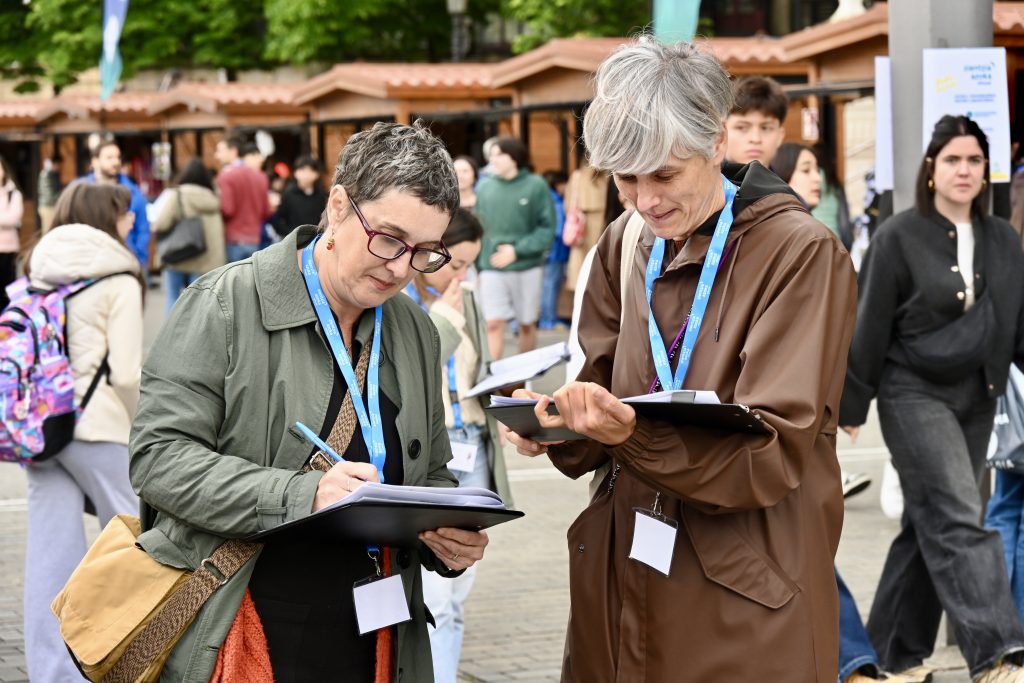
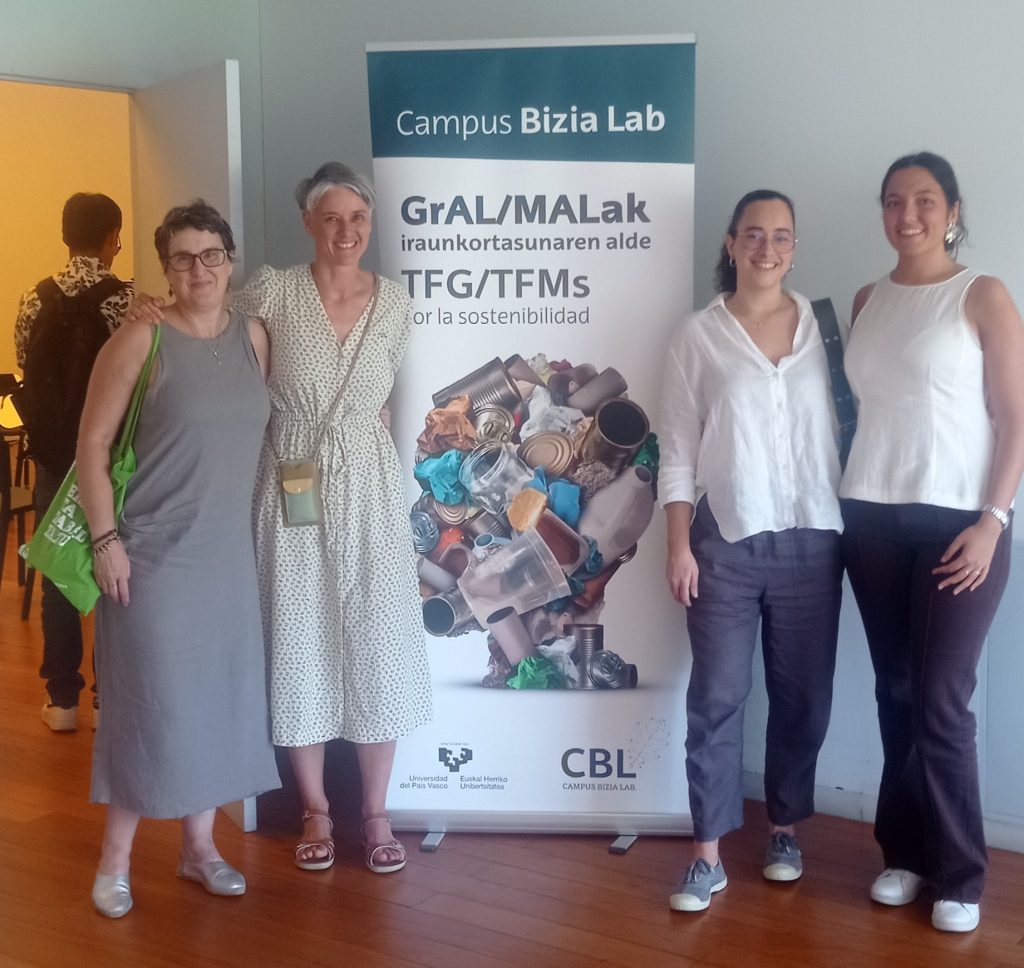
María and Mirari at a conference.

Similar to classic oil refineries, biorefineries produce biofuels such as bioethanol, biodiesel and biogas (which can be used to make transportation more sustainable). Biorefineries also produce a huge range of other chemicals and materials from which many products present in our everyday life can be produced, such as bio-plastics, bio-textiles and bio-adhesives.
Why can biorefineries be environmentally positive?
Since they rely on using biomass as their source, biorefineries offer a much more sustainable option than oil refineries. “One of the most promising aspects of biorefineries is that they can make by-products and waste materials (such as agricultural and forestry residues or urban waste) more valuable,” says María. “These materials are already generated and would otherwise require treatment, so transforming them in biorefineries improves overall sustainability and resource efficiency.”
Biomass is also widely available across the world, which means it is a fuel system that many people can make the most of. “Fossil fuel resources are concentrated in specific regions of the world, making their supply highly dependent on geopolitical and market instability,” explains Mirari. “On the other hand, biomass is widely distributed and locally available, which helps reduce these risks and supports a more stable, resilient and decentralised resource system.”
What are biochar and hydrochar?
Within their research team, María, Mirari and their students María Molina Corbacho and Lucía Martín Pérez are investigating how biorefineries can turn biomass into two products: biochar and hydrochar.
Biochar is obtained through a thermochemical process that uses high temperatures (500-900 °C) in an oxygen free atmosphere, while hydrochar is produced when biomass is treated with an aqueous solution under milder temperatures (400-500 °C). “This process avoids the need for drying the biomass and efficiently converts it into a solid carbon material, making wet organic waste (such as sludge or food waste) valuable,” says María.
Thanks to their specific properties, biochar and hydrochar can be used in various processes, such as improving soil and capturing carbon from the atmosphere. They can also be used as adsorbents to remove pollutants from contaminated water, which is what the research team has been investigating.
“Biochar is increasingly valued as an adsorbent material for removing toxic compounds from water and gas streams thanks to its high porosity and surface area, while hydrochar provides a high density of surface functional groups that enhance interactions with dye molecules,” explains Mirari.
How can biochar and hydrochar help the textile industry?
According to the United Nations, the textile industry uses 93 billion cubic metres of water each year, with the creation of a single pair of jeans using 7,500 litres. This accounts for nearly 20% of global industrial water pollution and leaves large amounts of water filled with harmful dyes that seriously affect aquatic life and water quality.
The biochar and hydrochar that María and Mirari are creating in biorefineries can remove some of these pollutants and has shown particularly high adsorption capacities for methylene blue – a common dye used in the textile industry that is environmentally harmful, toxic, carcinogenic and can even be fatal to humans in high doses.
This aspect of María and Mirari’s work is particularly interesting as the biochar and hydrochar comes from the by-products of apple orchards. Each year, orchard trees across the world are pruned and cut regularly, leading to a considerable amount of biowaste being produced in the form of leaves and branches. By turning this biomass into biochar and hydrochar, the research team can decontaminate wastewater in a biorefinery process fuelled by orchard wood scraps – a process that not only benefits the textile industry but reduces wastage within the agricultural industry as well.
“I am passionate about biorefinery processes because they enable the transformation of waste into valuable resources, promoting a more circular and efficient use of materials,” says María. Mirari continues, “Biorefinery processes also reduce our dependence on fossil fuel resources and improve resource autonomy.” By using advanced engineering and re-envisioning waste as something useful, María and Mirari’s work is helping to create a world where fuel, chemicals and materials can be produced in a more sustainable way for everyone.
 Dr María González Alriols
Dr Mirari Antxustegi Bengoetxea
Department of Chemical and Environmental Engineering, University of the Basque Country, Spain
Field of research: Chemical engineering; environmental engineering; renewable energy engineering
Research paper: Apple Pruning-Derived Activated Biochar and Hydrochar for Efficient Dye Adsorption: Response Surface Methodology-Guided Optimization, Kinetic Analysis, and Mechanistic Modelling. Antxustegi and Gonzalez Alriols et al. (2026) doi: 10.3390/recycling11030050
Funders: “Campus Bizia Lab” Program; Vice-rectorate for Coordination and Social Commitment; Directorate of Sustainable Development and Social Commitment; University of the Basque Country (Euskal Herriko Unibertsitatea, EHU)
Do you have a question for María or Mirari?
Write it in the comments box below and they will get back to you. (Remember, researchers are very busy people, so you may have to wait a few days.)
Discover how chemists are using other adsorbent materials to help society:
The post How can biomass improve global sustainability and help the textile industry? appeared first on Futurum.
“}]]