
Stop Treating Maths Like a Machine Problem
[[{“value”:”
Somewhere along the way, maths stopped feeling human.
For millions of students, it became a subject filled with pressure, speed, silent classrooms, and the sinking feeling that everyone else somehow understood something they didn’t. You can still see the aftereffects years later in adults who nervously laugh before doing simple calculations or immediately say:
“I was never good at maths.”
What’s strange is that most of these people are perfectly capable thinkers.
They solve problems every day. They recognize patterns. They make decisions, compare options, estimate outcomes, manage time, read maps, organize money, and navigate complexity constantly.
In other words, they already use mathematical thinking.
The disconnect usually isn’t intelligence.
It’s experience.
Because traditional maths education often teaches numbers without teaching meaning.
And that changes everything.
The Problem Isn’t Maths — It’s the Way We Talk About It
Most classrooms still approach maths as if the goal is rapid-fire accuracy.
Get the answer.
Show the steps.
Move on.
But human beings don’t naturally learn that way.
People learn through curiosity. Through conversation. Through experimentation. Through making mistakes and slowly connecting ideas together until something clicks.
That’s how language is learned.
It’s how music is learned.
It’s how movement is learned.
Oddly enough, it’s also how maths works best.
Yet many students are introduced to mathematics as though it’s a strict code to memorize instead of a system to explore.
The emotional impact of that approach is enormous.
Children begin attaching identity to performance:
- “I’m smart.”
- “I’m behind.”
- “I’m bad at this.”
And once that identity forms, learning becomes heavier.
Not because the maths got harder — but because fear entered the room.
Memorization Can Only Take Students So Far
There’s nothing wrong with remembering formulas. Memory matters.
But memorization without understanding is fragile.
Students often learn procedures long enough to survive a test, only to forget them weeks later because the concepts never became meaningful in the first place.
Think about the difference between someone memorizing song lyrics in another language versus actually understanding the language itself.
One is temporary recall.
The other becomes part of how you think.
Mathematics works the same way.
When students genuinely understand relationships and patterns, the formulas stop feeling random.
For example:
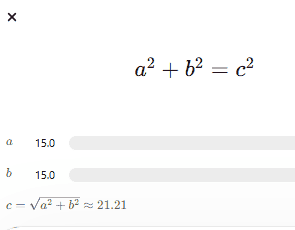
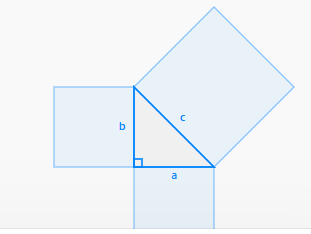
can feel intimidating when introduced as a rule to memorize.
But when learners physically explore triangles, distances, and spatial relationships first, the equation suddenly feels logical instead of abstract.
That emotional shift matters more than most people realize.
Because understanding creates confidence.
And confidence changes how the brain approaches difficulty.
Curiosity Changes the Entire Learning Experience
The best maths classrooms rarely feel robotic.
They feel alive.
Students ask questions.
They debate ideas.
They test possibilities.
They notice patterns.
Curiosity creates momentum.
The brain is naturally wired to pay attention to things it wants to figure out. When learners become curious, engagement rises almost automatically.
That’s why the language teachers use matters so much.
Compare these two approaches:
- “Here’s the formula. Copy it.”
- “What do you notice happening here?”
One shuts the brain down into compliance.
The other opens the brain into exploration.
That single difference can completely change how students emotionally experience mathematics.
Maths Starts Making Sense When Students Talk Through It
One of the strangest habits in education is how silent maths classrooms often are.
Students quietly fill out worksheets while trying not to get answers wrong.
But mathematical understanding grows through explanation.
When students talk through their thinking, something powerful happens:
they begin organizing ideas in real time.
A student saying:
“I divided first because I saw equal groups…”
is building cognitive structure far beyond memorizing steps.
Explaining reasoning helps students:
- strengthen understanding
- uncover mistakes naturally
- improve memory
- build confidence
- think more flexibly
And maybe most importantly, it reminds them that maths is something humans reason through — not something only “gifted” people magically understand.
Mistakes Shouldn’t Feel Dangerous
This might be one of the biggest problems with traditional maths education.
Students are often taught to fear being wrong.
Wrong answers become embarrassment instead of information.
But mistakes are incredibly useful.
A wrong answer usually reveals how someone is thinking. That insight is valuable because it shows where understanding broke down.
Great teachers don’t just correct mistakes.
They investigate them.
Instead of:
“No, that’s incorrect.”
a more powerful response is:
“Interesting. Show me how you got there.”
That tiny shift changes the emotional atmosphere instantly.
Now the student isn’t defending themselves.
They’re exploring.
And exploration is where deep learning lives.
Visual Learning Makes Abstract Ideas Feel Real
Many mathematical ideas become dramatically easier once students can actually see them.
Visual systems reduce mental overload and help abstract concepts become tangible.
This is especially true for algebra.
For many learners, equations feel disconnected until they’re represented visually.
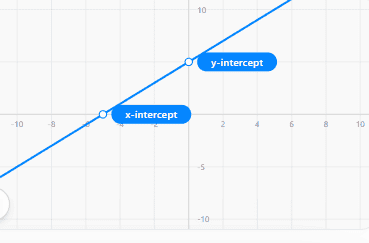
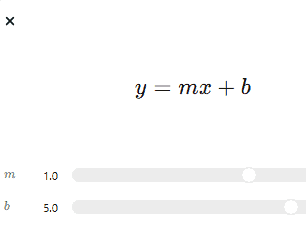
Once students see slope as movement and change instead of isolated symbols, the entire concept becomes more intuitive.
The brain naturally understands visuals faster than raw abstraction.
That’s not weakness. That’s human cognition working exactly as it should.
Real Life Is Full of Maths — Students Just Don’t Realize It Yet
One reason students disengage is because maths often feels detached from reality.
But mathematics quietly runs through almost everything:
- architecture
- music
- gaming
- sports
- business
- cooking
- technology
- design
- social media algorithms
Percentages shape discounts.
Probability influences strategy.
Statistics shape headlines.
Geometry builds cities.
The moment students recognize maths operating inside the real world, motivation changes.
Because now the subject has context.
And context creates meaning.
Maths Anxiety Is Often Emotional, Not Intellectual
A surprising number of people who “hate maths” are actually reacting to old emotional experiences.
Being rushed.
Being embarrassed.
Feeling slow.
Comparing themselves to others.
Those moments stay with people.
And anxiety directly interferes with working memory — the exact mental system needed for solving mathematical problems.
Which means fear literally makes thinking harder.
That’s why emotionally safe learning environments matter so much.
Students learn faster when they don’t feel threatened.
Simple things help:
- slowing down instruction
- celebrating progress
- rewarding effort
- normalizing confusion
- encouraging questions
Confidence grows through repeated small wins, not pressure.
The Future of Maths Education Looks More Human
Ironically, the rise of AI is making human thinking more valuable, not less.
The future won’t reward people simply for memorizing formulas.
It will reward people who can:
- solve unfamiliar problems
- adapt
- communicate clearly
- think creatively
- recognize patterns
- reason through complexity
That changes what maths education should prioritize.
The goal is no longer producing students who can rapidly repeat procedures.
The goal is developing thoughtful problem solvers.
And thoughtful problem solvers need space to think, question, experiment, and connect ideas meaningfully. In many ways, the future of maths teaching looks less mechanical and more deeply human
FAQs
Why do children lose confidence in maths so early?
Many children begin associating maths with speed, pressure, and fear of mistakes. Over time, repeated stress can shape identity and confidence.
Is memorization bad for learning maths?
Not entirely. Memorization becomes useful once understanding exists. Problems arise when students memorize procedures without understanding the concepts underneath them.
Why does talking help students learn maths?
Verbalizing reasoning strengthens comprehension and helps students organize thoughts more clearly. It also exposes misconceptions naturally.
Can maths anxiety really affect performance?
Yes. Anxiety interferes with working memory, making problem solving significantly harder even for capable students.
What makes maths more engaging?
Curiosity, real-world relevance, visual learning, storytelling, and collaborative exploration all increase engagement and retention.
Products / Tools / Resources
- Khan Academy — Free visual maths lessons and interactive practice for all levels.
- Desmos — One of the best visual graphing tools for helping students understand equations intuitively.
- GeoGebra — Excellent for geometry, algebra visualization, and interactive maths exploration.
- YouCubed — Research-backed maths mindset resources developed by educators at Stanford.
- Prodigy Math Game — Gamified maths learning platform that helps younger students engage through play.
- Brilliant — Interactive problem-solving platform focused on reasoning and conceptual understanding.
“}]]