
Tiny Forest, Big Opportunities: Youth-Led Nature Project in New Jersey Plants Seeds for Future STEM Careers
[[{“value”:”
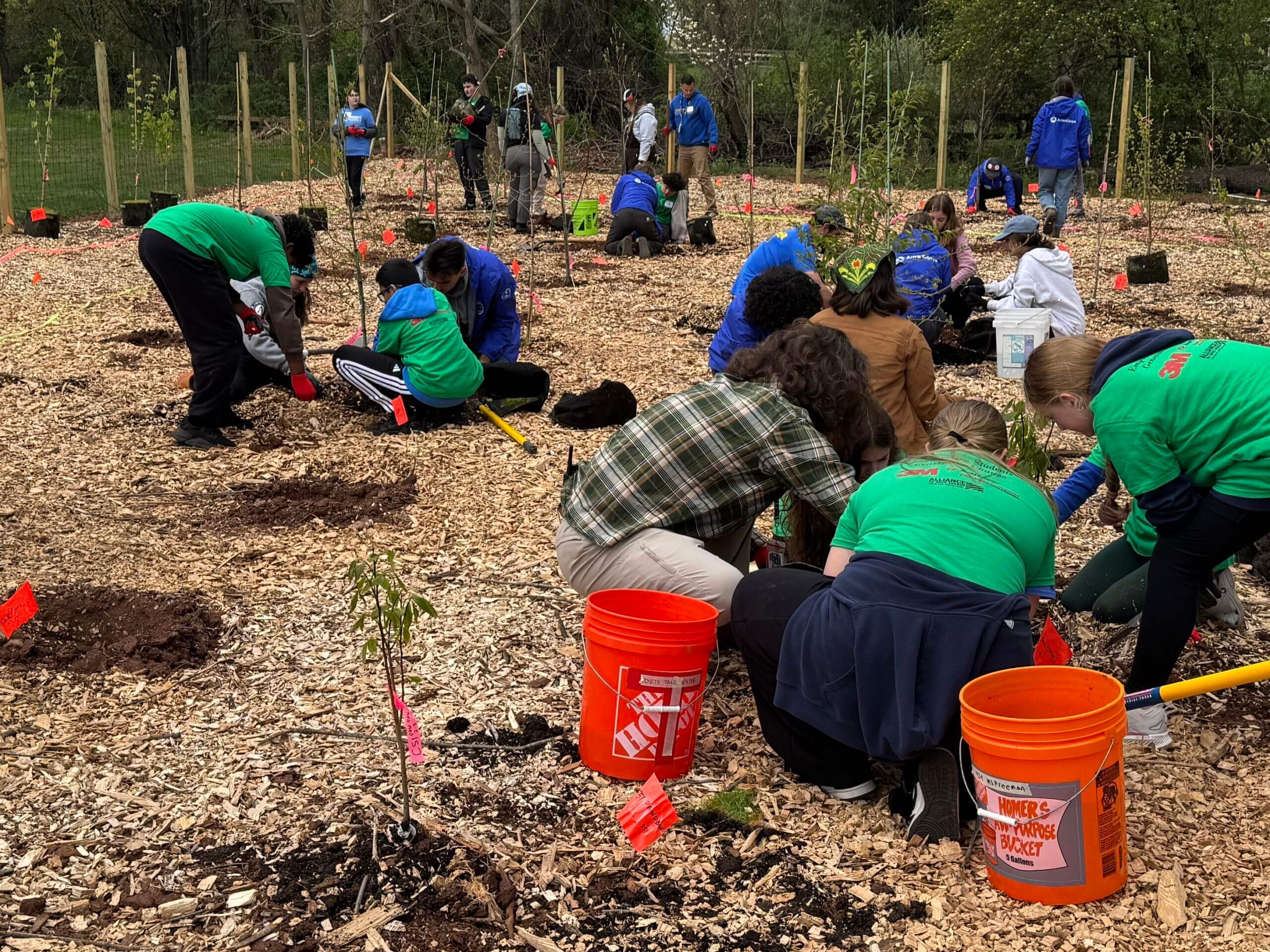
On Earth Day at Readington Middle School in New Jersey, the lab was buzzing with middle schoolers as they prepared to head out for their first planting day of the season — a milestone moment for a project they spent all winter planning.
Their excited questions rang out across the room: “Should we bring out our cameras?” “What about the drones?” “Where are the portable microphones?”
The day was one to be documented for their Tiny Forest Living Lab, an unused playground site on campus that they’re turning into a multi-zone outdoor learning and research site, complete with a native forest habitat, sensory gardens, and a student-run research lab.
The students developed the ambitious project as members of the EcoAmbassadors, an afterschool club focusing on nature and the environment in their community of Readington Township, NJ. The concept was one of four first-place winners of STEM Next’s national Nature Prize Challenge, which provided seed money that the students matched with other funds they raised over the past few months.
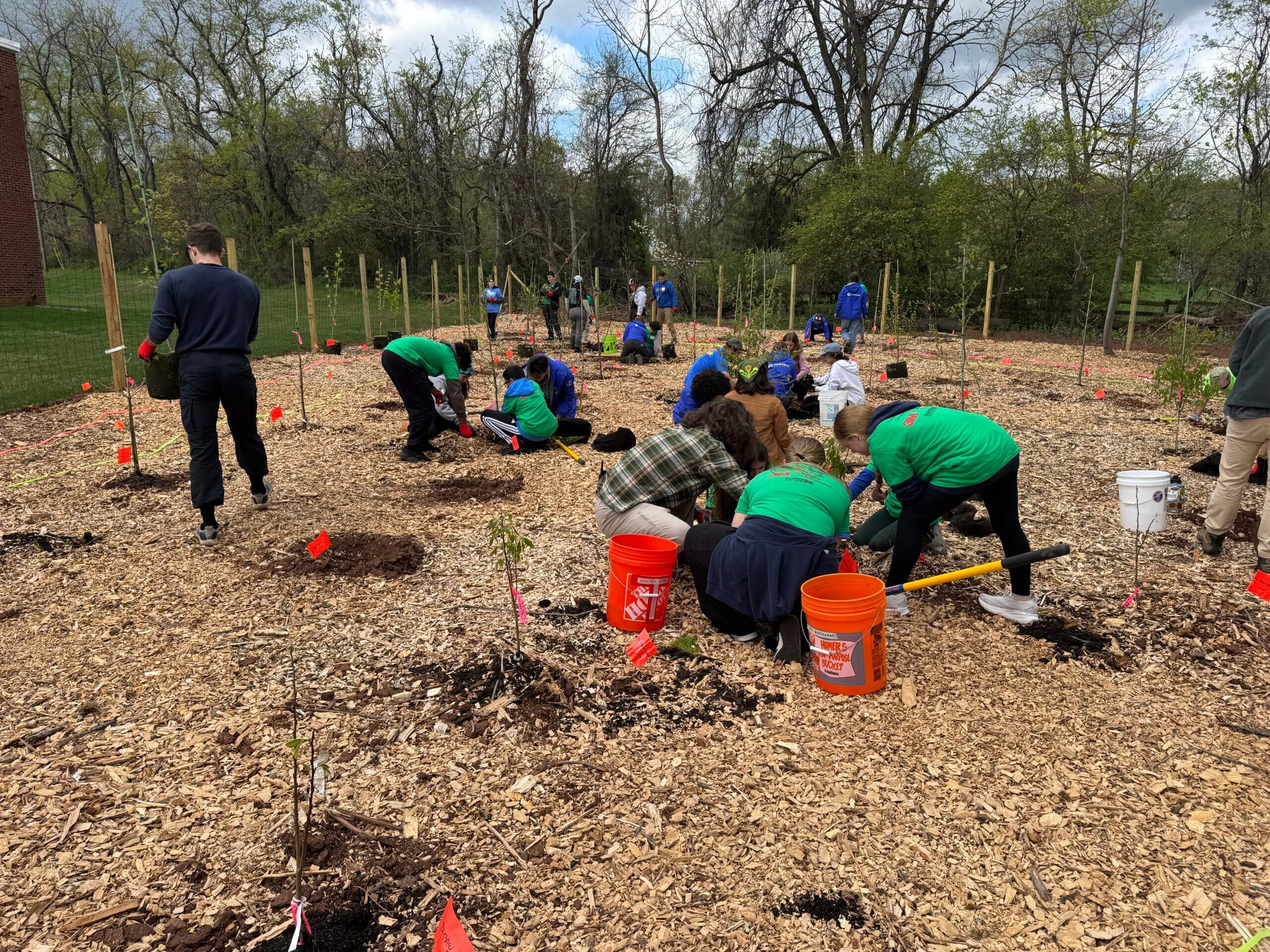
Now, as they headed out to plant the first crop of trees, the project could officially start springing to life.
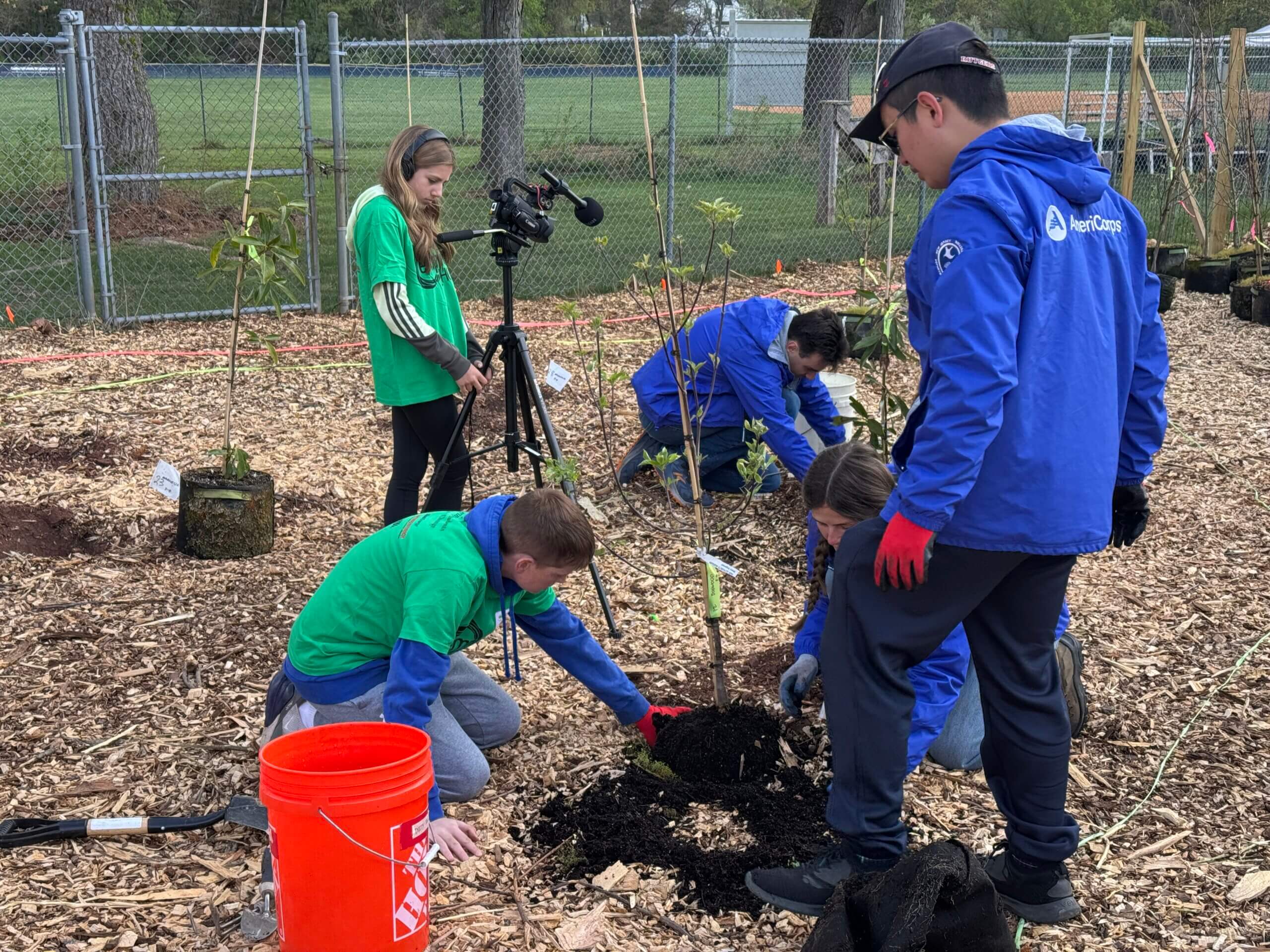
At the school to help were the AmeriCorps Watershed Ambassadors from around the state. Working in small groups, the Americorps members helped the EcoAmbassadors plant dozens of trees, giving impromptu college and career advice as they worked.
For Alexa, an eighth grader, collaborating with real professionals has been her favorite part about working on the Tiny Forest. “It’s great to meet other people who know different things about the project,” she said.
Through the Tiny Forest, youth are expanding not only their knowledge about nature and sustainability, but also what kinds of roles they can play in the future that can make a difference for the planet.
A Living Lab, Built by Young People
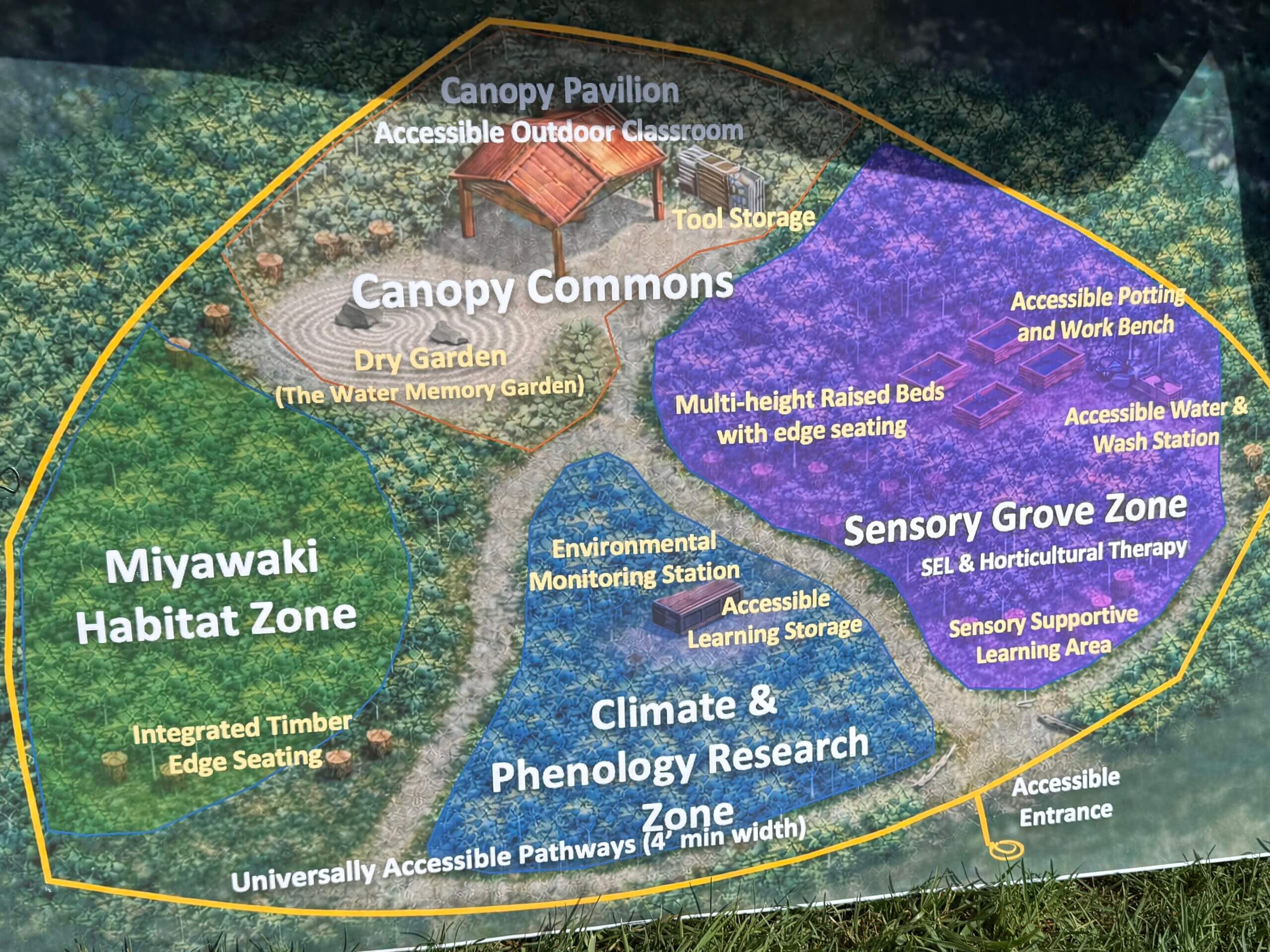
The Tiny Forest is designed to be a fully integrated learning environment, with zones dedicated to sensory exploration, climate research, and even a Miyawaki habitat zone that uses a fast-growing planting method to restore native forests.
Cameron McKenzie, a climate solutions research scientist at Yale University, has collaborated for years on EcoAmbassadors activities and helped support the latest project. He said similar schoolyard forests have been successful in other states, but fewer exist in more urban states like New Jersey.
“We wanted to bring that model here,” he said. “The project is full circle: it’s citizen science, workforce development, skill building, green skill building, and career exposure.”
Angel, who helped oversee tree placement and site design, described how the experience expanded his understanding of nature-related career pathways.
“It broadens your view,” he said. “It makes you realize that there’s more to this project than just being a scientist.”
Embree, another EcoAmbassador, said the same.
“It gives you different perspectives,” she said. “I didn’t really think of being an arborist as an option before this project.”
Making Career Connections
A key reason the EcoAmbassadors program won the Nature Prize Challenge is its alignment with STEM Next’s Career-Connected Learning Framework. While the idea for the Tiny Forest project was seeded by the students, they developed it into what it is today after seeking advice from adults in nature-related careers, including researchers like McKenzie, arborists, and leaders from the local Audubon society, who helped them explore what was possible.
The students then led fundraising efforts to turn what started as an idea for a 2,000-square-foot garden into an 11,000-square-foot forest that will provide opportunities for young people for years to come.
Connections like these between youth and real professionals in their communities are a core tenet of the Career-Connected Learning Framework. The Nature Prize Challenge, launched within STEM Next’s Earth & Space Learning Center of Excellence, challenged programs to develop youth-led ideas for projects in their natural environments that would also help them explore STEM career pathways.
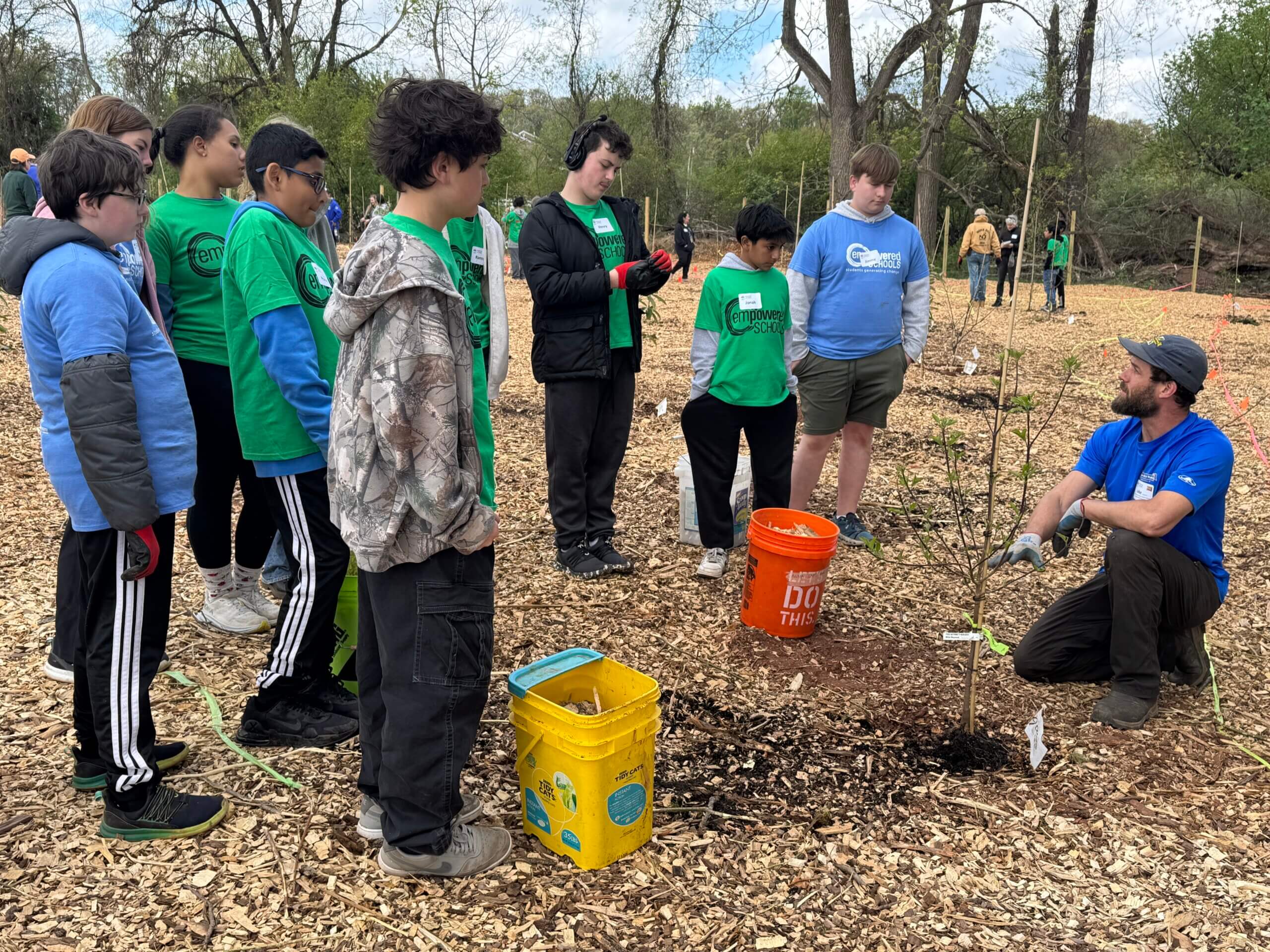
Betsy Freeman, the EcoAmbassadors program leader, said the students decided to use the Nature Prize Challenge funding for technology, including tools for data visualization, environmental monitoring, and student-led storytelling, like video gear.
“It’s about building tools and environments that empower kids to explore,” Freeman said. “The same [tools] can support data science, video production, or even school-wide events like esports competitions that get hundreds of students excited about computing and careers.”
While planting, young people showcased some of this tech in action, shooting footage of the event on drone cameras alongside on-the-ground student camera crews.
Jimmy is one of the students doing camera work as a crew leader for the Eco Action News, a youth-led broadcast about the program.
“It’s really fun to just hang out with other people while doing amazing stuff like this,” he said, adding that the Tiny Forest project has helped him in school, too. “It really connected to some of our curriculum in other classes… and then it’s also just something fun to do.”
Planting for the Future
What was planted that day goes beyond trees — it’s the beginning of a project designed to grow and endure.
Seventh graders Henry and Jonah are looking forward to continuing their work next school year once the trees have grown a bit. They excitedly shared that they’ve been preparing to add carbon sensors both to the Living Lab in the Tiny Forest and in the school’s parking lot.
With this, they hope to measure how the trees affect carbon levels around campus. This year, they’ve been working on a website to share the live data they collect.
While the environmental impact may take time to quantify, the Tiny Forest Living Lab’s greatest impact is perhaps already visible in the students themselves.
“Being part of this, definitely a lot of change happened for me,” said Embree. “I wasn’t really concerned about nature before, but after being in EcoAmbassadors, I definitely am.”
The EcoAmbassadors Tiny Forest Living Lab is one of four first-place winners of STEM Next’s Nature Prize Challenge that recognized innovative projects happening in afterschool programs across the country. Learn more about the winners leading youth-led ideas to make an impact on their environment, and how they’re exploring career connections along the way.
This Challenge was made possible with support from the Volgenau Foundation, whose partnership with STEM Next is inspiring a new generation that is scientifically proficient, environmentally responsible, and committed to making a positive impact on their communities. Together with our many partners, we’re building momentum for a future where every young person can make a difference in their community. Find out how to join us here.
The post Tiny Forest, Big Opportunities: Youth-Led Nature Project in New Jersey Plants Seeds for Future STEM Careers appeared first on STEM Next.
“}]]