
How did the pandemic affect children’s attitudes to singing?
[[{“value”:”
How did the pandemic affect children’s attitudes to singing?
The COVID-19 pandemic rocked society, affecting the daily lives of nearly everybody on the planet. Children were especially affected; schools closed down and opportunities for learning and socialising diminished dramatically. As a Professor of Music at the University of Alberta in Canada, Dr Ardelle Ries is a strong advocate for the developmental importance of singing from an early age. She is investigating how the pandemic affected children’s attitudes to singing, and what this means for their development.
Talk like a music education researcher
Advocacy — an activity that supports a particular cause
Qualitative research — research methods based on the collection and analysis of non-numerical data, such as words, observations and experiences
Quantitative research — research methods based on the collection and analysis of numerical data
Singing identity theory — the concept of how a person’s identity is linked to the use of and belief in their singing abilities which impacts how confidently and willingly they sing
Sociocultural — relating to groups in society based on cultural factors, such as art, music, values and beliefs
Socioeconomic — relating to groups in society based on economic factors, such as education, income and occupation
The COVID-19 pandemic was the biggest health crisis of modern times. From 2020 to 2023, the world witnessed massive disruptions that aimed to mitigate the spread of the SARS-CoV-2 virus, and these disruptions had knock-on effects on many other aspects of health and well-being. “Children are a particularly vulnerable demographic when it comes to big societal changes,” says Professor Ardelle Ries from the University of Alberta. “They saw significant shifts in their daily routines, learning environments and opportunities for social engagement.”
There has been a lot of investigation into how the pandemic affected children’s development, and how we can potentially remedy any negative effects. Ardelle has been researching how the pandemic affected one important developmental tool: singing. “From infancy, musical interactions contribute to language acquisition and early literacy skills,” she says. “Singing also boosts healthy social behaviour and cooperation between children.” But the pandemic meant that opportunities for singing, especially in social settings, were extremely reduced. “Prior to March 2020, the idea of a world without singing was unimaginable,” says Ardelle. “As efforts to rebuild continue, are future generations of singers under threat?”
From the Voices of Children
To investigate these questions, Ardelle founded the ‘From the Voices of Children’ (FVC) project. Supported by a team of undergraduate and graduate research assistants, FVC explores many different aspects of the pandemic’s impact on children’s attitudes towards singing. “We began with a review of existing literature about the pandemic’s effects on child well-being, arts education and community engagement,” explains Ardelle. “This led us to take a qualitative approach for our research, rather than a quantitative approach.” Ardelle and her team concluded that qualitative information – non-numerical information derived, in this case, from interviews and surveys – would lend additional insight to the questions they were asking.
Phase One of the FVC project involved conducting one-on-one interviews with children. “We put out an open call for participants between 6 and 12 years old, with the support of their guardians, from both rural and urban areas within 100 km of our campus,” says Ardelle. “The open call was issued to community choral organisations, school divisions and private studios.” The response was overwhelming. The team had aimed to interview 25 to 50 children, but interviewed 83. “We identified the child participants as co-researchers, to give them more agency in the research process – something that challenges the status quo,” says Ardelle.
Phase Two involved sending out an online survey to school jurisdictions over a broader geographical area. “In contrast to Phase One, we focused on just school settings, to provide a clearer picture of the pandemic’s impact on school music programmes,” explains Ardelle.
Two versions of the survey were designed for two different groups: one for children aged nine to 12 who had taken part in music-making in school prior to the pandemic, and one for children aged six to eight who had not had that experience due to lockdown restrictions. “We received a total of 18 student responses in total, far fewer than the 250 we had aimed for,” says Ardelle. “This was due to the stringent conditions for ethical research within the school system, combined with competing against the high workloads of school administrators and teachers.”
Phase Three built on the successes and challenges of the first two phases, using a combination of interviews and surveys. “These generated both qualitative and quantitative data from an even wider pool of participants within Alberta,” says Ardelle. In addition, the children were allowed to interview each other in Phase Three, providing yet more emphasis on the children as co-investigators in the process.
The results are in
Once all three data collection phases were complete, analysis began. “Our data revealed that children’s attitudes towards singing are both complex and incredibly varied,” says Ardelle. “Overall, it is clear that children naturally recognise that singing enhances mood and general well-being.” Many children spoke about why singing was important to them socially and culturally, and how their own singing identities were evolving. “It is evident that these identities are vulnerable to the influences of family, school and other environments,” says Ardelle.
Reference
https://doi.org/10.33424/FUTURUM669
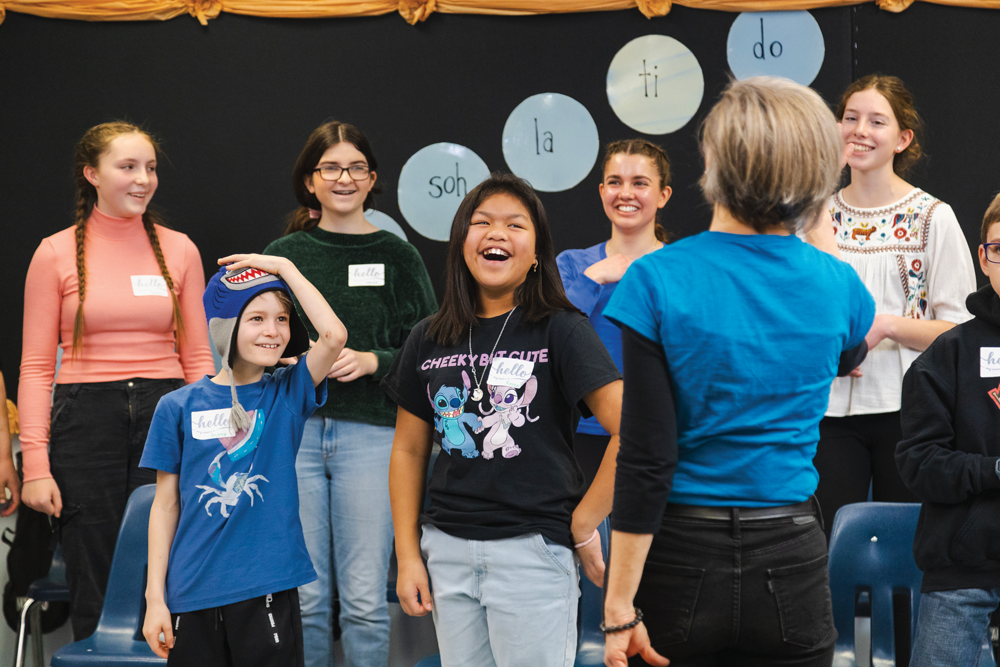
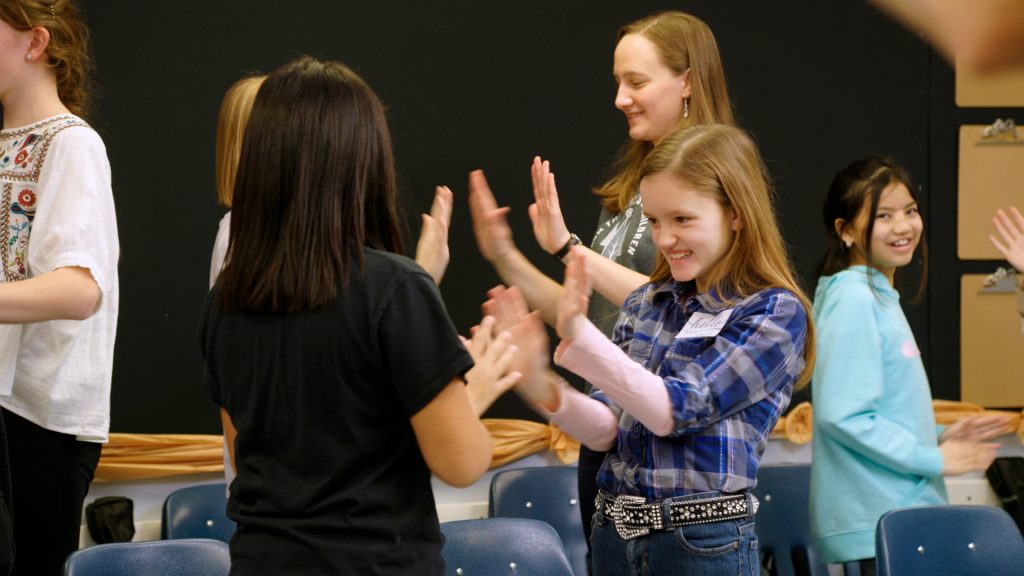
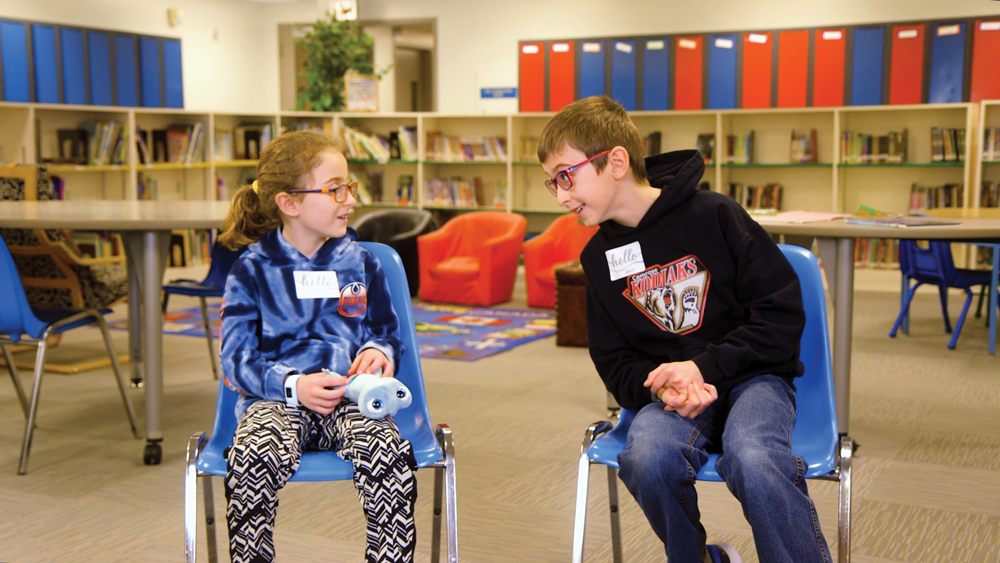
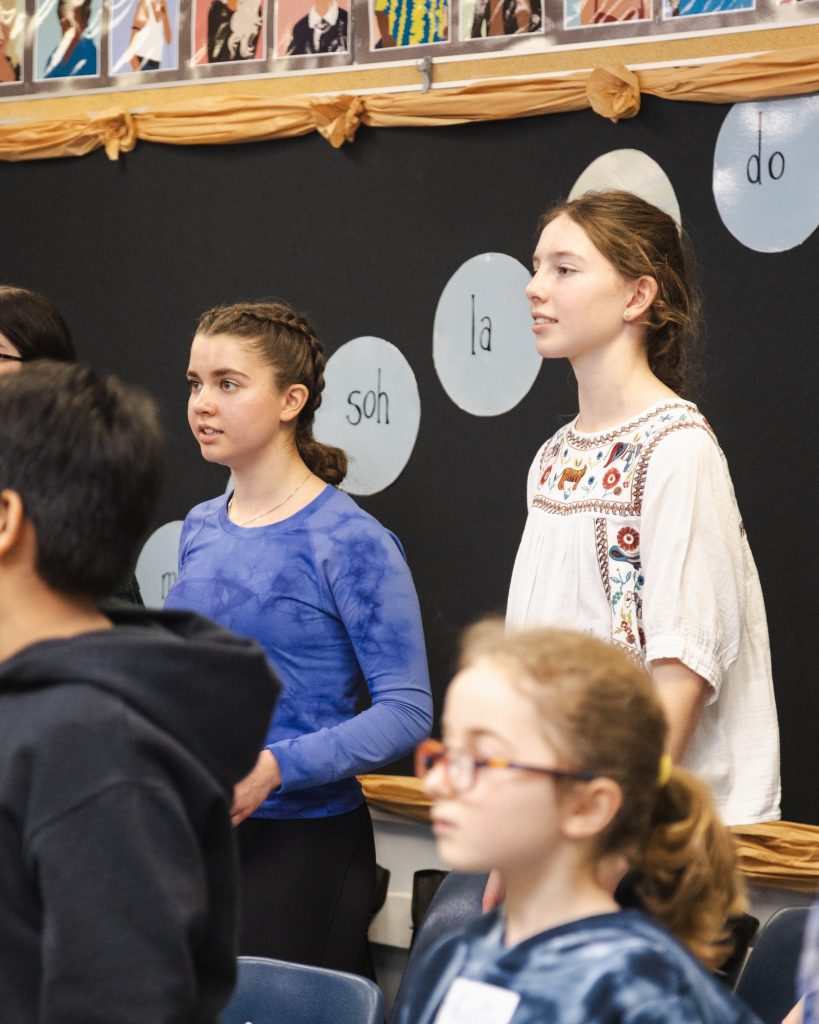

Out of 99 participants interviewed in Phase One and Phase Three of FVC research, 20 children volunteered to take part in the creation of the FVC advocacy documentary. These children were drawn randomly from urban and rural communities located in the western province of Alberta, Canada. While some children in this cohort had extensive opportunities to sing in their home communities, others had very little singing experience. The filming day was structured in the form of a singing workshop. Workshop activities were interspersed with time dedicated to children interviewing each other in pairs and trios. In order to honour, empower and authentically represent the opinions and agency of the children, adults were not present while the interviews took place.
© From the Voices of Children

When analysing the effects of the pandemic, the results were concerning. “The data suggest a complex interplay of negative factors, including reduced opportunities for participation and increased anxiety,” says Ardelle. “However, there are also potential positives, such as deeper appreciation for singing and increased opportunities for informal family singing.”
From data to documentaries
The team’s work is not yet over; the FVC project yielded a huge amount of data for analysis, which will take a long time. In the meantime, the team decided to communicate their established findings through the production of a short documentary. “We filmed additional footage to create a 15-minute documentary that reveals children’s own perceptions of singing first-hand,” says Ardelle. “The film will be used as an advocacy tool for music educators.” The documentary takes a unique approach, focusing almost entirely on the voices and perspectives of children; adult voices are mostly absent.
The team is also working on other communication tools. “We are aiming to compile and publish a collection of essays by esteemed music educators from Canada and beyond to accompany our findings,” says Ardelle. “We also have plans for the production of a second documentary.” These efforts will help educators to adjust their teaching approaches accordingly. “Understanding shifts in attitude is crucial for informing post-pandemic recovery strategies in music education,” says Ardelle. “We hope that our findings will provide music educators, arts service organisations and the general public with a deeper understanding of how children relate to singing.”
 Dr Ardelle Ries
Professor of Music, Department of Fine Arts & Humanities, Augustana Faculty,
University of Alberta, Canada
Fields of research: Music; music education
Research project: From the Voices of Children: Investigating how the COVID-19 pandemic affected children’s attitudes towards singing
Funders: University of Alberta Endowment Fund for the Future; University of Alberta Support for the Advancement of Scholarship; University of Alberta Kule Institute for Advanced Studies; University of Alberta President’s Fund for the Creative and Performing Arts; Alberta Teachers’ Association; Social Sciences and Humanities Research Council of Canada (SSHRC)
This work was supported by SSHRC, under award number 430-2022-00364. The contents are solely the responsibility of the authors and do not necessarily represent the official views of SSHRC. University of Alberta Ethics ID: Pro00159107, Pro00118431, Pro00111994, Pro00123426
Website: fromthevoicesofchildren.com
About music education research
Music education research typically involves working closely with both music teachers and students to understand best practices for music education and how this creative outlet influences students’ development beyond the classroom. The From the Voices of Children project focused on this process in young children. “Children are a source of unlimited wonder and awe,” says Ardelle. “Musicality begins even before birth, through vibration, the heartbeat and attuning to environmental sounds.”
While all children are naturally drawn to music, the opportunities open to them often depend on practical realities. “A broad and complex array of socioeconomic and sociocultural factors can either encourage or prevent access to quality music education experiences,” explains Ardelle. “It’s important to address preventative factors. Participation in music enriches child development and fuels passion, motivation and dedication.” Technological developments are also presenting challenges. “It’s easier to watch a YouTube video or an Instagram or TikTok reel than it is to sing or compose a song,” says Ardelle. “The next generation of music educators will need to consciously advocate for active, rather than passive, participation in music.”
The importance of active participation is highlighted by the singing identity theory – that a person’s identity is linked to singing and the use of their voice, and that what you believe about yourself as a singer affects how confidently and willingly you sing. With singing linked to self-perception, self-esteem and social belonging, song-based music education can play a hugely positive role in young people’s lives.
In any social science, it is important to think about how to interpret qualitative results – something Ardelle is very conscious of. “Research processes shouldn’t be considered fully reliable,” she says. “For example, it can’t be assumed that researchers are able to fully and objectively interpret the actions or statements shared by children.” Overcoming this is not easy – but is critical. “Understanding children’s attitudes to music, and the factors that contribute to these attitudes, is vital for the future of singing,” says Ardelle. “We need future generations to fully and freely embrace singing as a fundamental form of human expression.”
Pathway from school to music education research
At school, many subjects can lead to music education research, including music, humanities, mathematics (especially statistics), sciences, languages and fine arts.
Ardelle recommends nurturing your own musical tendencies. Take music lessons, participate in ensembles in or outside school, and build your musical knowledge. Gaining an understanding of teaching methods is also important.
Equally, many different university courses can lead to a career in music education research, including degrees in music, teaching qualifications, social sciences and psychology.
Explore careers in music education research
Ardelle suggests the International Society for Music Education (ISME) website for learning about the worldwide network of music educators.
Ardelle highly recommends talking to music educators close to you – potentially within your school and community – to seek opportunities for mentorship, work experience, networking and inspiration. The ISME Directory of Music & Music Education Institutions can help you locate music education institutions and organisations worldwide.
The Augustana Faculty at the University of Alberta, where Ardelle is based, enables undergraduate music students to act as teaching assistants for ensembles, among other opportunities.
Careers and their respective salaries vary widely in this sector. According to Glassdoor, a music researcher in Canada can expect to earn about CAN $61,000 per year.
Meet Ardelle
My mother played an integral role in my musical development. From my earliest memories and throughout my childhood and beyond, my mother was a font of support and encouragement, providing me with a rich and fertile environment where I could fall in love with music.
Singing has, quite literally, saved my life. While dealing with personal challenges as a young adult, it was singing in choral ensembles that kept me going. Once I’d completed degrees in music and education, I was hired to teach within a music programme in a primary school. I was determined to be the best teacher possible for my students. This was a deeply transformative experience; the sounds of those young voices sparked my dedication and passion for children’s singing.
Many gifts have launched and influenced my career. Aside from my good fortune studying with superb voice teachers and choral music educators, a successful audition for a professional Canadian choir led to amazing international travel, study and performance opportunities. My experiences at the Kodály Institute of the Liszt Academy of Music and teaching music in a Kodály school in Hungary for some years were life-changing!
I am very proud of and grateful for my work at the University of Alberta. I have provided quality educational and performance experiences for my students; successfully organised an international music educators’ symposium; secured numerous grant applications for music education research; and established a multigenerational, inclusive community choir, SingAble.
Singing is simply an essential part of life. Though I am moving through the final phase of a fulfilling 40-year career, until the end of my days I will continue to encourage one and all to embrace, explore and enjoy singing.
Ardelle’s top tip
Celebrate and have confidence in the gift of your beautiful and unique voice.
Do you have a question for Ardelle?
Write it in the comments box below and they will get back to you. (Remember, researchers are very busy people, so you may have to wait a few days.)
Read about the Royal College of Music’s Performance Laboratory:
The post How did the pandemic affect children’s attitudes to singing? appeared first on Futurum.
“}]]